• Skip to primary navigation
  • Skip to main content
  • Skip to primary sidebar
  • Texas A&M Forest Service
  • Texas A&M Veterinary Medical Diagnostics Laboratory
  • Texas A&M AgriLife Extension Service
  • Texas A&M AgriLife Research
  • Texas A&M College of Agrculture and Life Sciences
El Paso County Master Gardeners
El Paso County Master GardenersTexas A&M AgriLife Extension Service
  • Menu
  • Home
  • About Us
    • How to Become an El Paso County Master Gardener
    • History
    • Volunteer Duties
    • Application
    • Texas Master Gardener Association Awards
      • Texas Master Gardener Association Award for 2021
      • Texas Master Gardener Association Award for 2020
      • Texas Master Gardener Association Awards for 2019
      • Texas Master Gardener Association Award for 2018
      • Texas Master Gardener Association Awards for 2015
      • Texas Master Gardener Association Awards for 2013-2014
    • Master Gardener of the Quarter
    • Executive Committee
    • Association Members
      • 2024-2025 Class Handouts
    • Donate
  • Outreach
    • Help Desk
    • Good to Grow Radio Show
    • Speakers Bureau
    • Master Gardener Information Table
    • El Paso Community College (EPCC) Gardening Class
    • School Garden Program
  • Projects
    • Ascarate Teaching and Demonstration Garden
    • Ascarate Accessible Garden
    • Texas A&M AgriLife Vegetable Demonstration Gardens
    • El Paso Municipal Rose Garden
    • Transmountain Cleanup
  • Events
  • Learn
    • Gardening in El Paso-Articles
    • Gardening Topics-Links
  • Ask Us
  • Monthly Tips
    • January
    • February
    • March
    • April
    • May
    • June
    • July
    • August
    • September
    • October
    • November
    • December
  • Videos & More

Get Winter Color in the Desert with These Four Plants

by Eugene Garcia

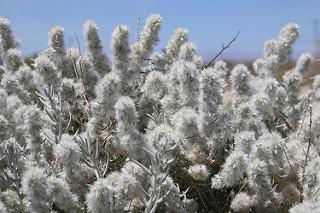
It’s wintertime, the garden is coming to a close and you’re thinking about going inside to keep warm. Keep your jacket handy because there are several native and adaptive plants that keep the garden an enjoyable place during our coldest season. Winterfat (Krascheninnikovia lanata), also known as Lamb’s Tail and Feather Sage, is a great addition to your winter garden. From September to December, Winterfat’s flowers turn into seeds that are fluffy and cottony looking (female plant being showier). Winterfat softens the area with a snow covered look. It reaches about three feet high by three feet wide. It is adaptable to El Paso’s sandy or clay soils and prefers morning over afternoon sun. To really make this plant stand out, try backlighting it.

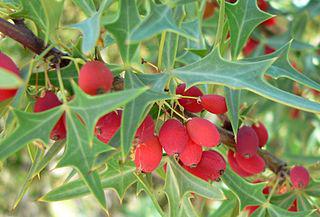
Barberry (Berberis trifoliolata) is beautiful in the winter with its yellow flowers. In the spring the birds are attracted to its bright red berries. This evergreen has dual interest and is often used as an informal hedge. Barberry is able to tolerate full sun. Its mature size reaches up to five feet tall by five feet wide.

Krascheninnikovia lanata (Winterfat)
Credit: Krascheninnikovia lanata (Winterfat) by Joe Decruyenaere (CC BY-SA 2.0)
berberis
Credit: Berberis trifoliolata by Stan Shebs (CC BY-SA 3.0)

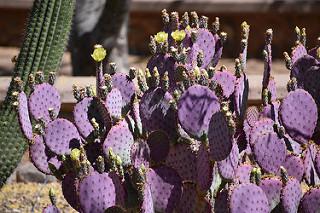
purple prickly pear
Credit: Desert Purple Prickly Pear by Laura Wolf (CC BY 2.0)
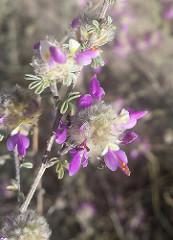
indigo bush
Credit: Indigo Bush (Dalea pulchra)by Alan Schmierer (CC0 1.0)

The winter garden can get a splash of purple color with the Purple Prickly Pear, the Red-joint Prickly Pear, or the Longspine Prickly Pear (Opuntia macrocentra or Opuntia violaceae var macrocentra). These cacti deepen in color in cold weather. In the spring they show off yellow flowers. They like well-drained soil in a sunny spot. At maturity, they can reach three feet tall and three feet wide. The Purple Prickly Pear is a great alternative to the standard green prickly pear because of its winter color, but it is less cold hardy than its green counterpart and care should be taken during very cold weather.

A more subtle purple than the Prickly Pear is the Bush Dalea (Dalea pulchra). Bush Dalea is an evergreen shrub with tiny gray, fuzzy leaves. It blooms in late winter with tiny purple flowers on the tips of its branches. At maturity it reaches five feet high by five feet wide. Bush Dalea can tolerate shade, but blooms more in the sun. It can also tolerate any well drained soil. Bush Dalea is also used as an informal hedge, and often as a background for more showy plants.

Related Links

Winterfat
Barberry
Purple Prickly Pear
Dalea pulchra – Bush Dalea

Upcoming Events

Mar 6
2:00 pm - 6:00 pm

Master Gardener Information Table–Spring El Paso Home & Garden Show

Mar 7
10:00 am - 6:00 pm

Garden Talks, Info Table, & Kids Korner–Spring El Paso Home & Garden Show

Mar 8
11:00 am - 5:00 pm

Garden Talks, Info Table, & Kids Korner–Spring El Paso Home & Garden Show

View Calendar

Month by Month Gardening Tips

  • Monthly Gardening Tips
  • January
  • February
  • March
  • April
  • May
  • June
  • July
  • August
  • September
  • October
  • November
  • December

El Paso Master Gardeners Facebook

El Paso Master Gardeners Facebook

Master Gardener Online Earth-Kind® Training

Master Gardener Online Earth-Kind® Training Modules (direct link) Learn environmentally friendly (Earth-Kind®) practices for use in the home landscape and garden. Available to the public.

Partners

El Paso Cactus and Rock Club

El Paso Chapter-Native Plant Society

El Paso Rose Society Facebook

KTEP Good to Grow Radio Show

Texas Master Gardener℠ Association

Texas Master Gardener℠ Program

UTEP Chihuahuan Desert Gardens

West Texas Urban Forestry Council

El Paso Public Library

El Paso Parks & Recreation Dept. Facebook

Texas A&M AgriLife Extension Service
Texas A&M University System Member
  • Compact with Texans
  • Privacy and Security
  • Accessibility Policy
  • State Link Policy
  • Statewide Search
  • Veterans Benefits
  • Military Families
  • Risk, Fraud & Misconduct Hotline
  • Texas Homeland Security
  • Texas Veterans Portal
  • Equal Opportunity
  • Open Records/Public Information