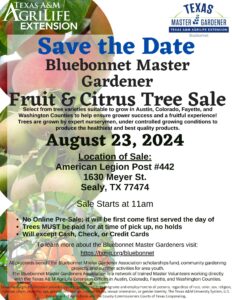
Fruit & Citrus Tree Sale
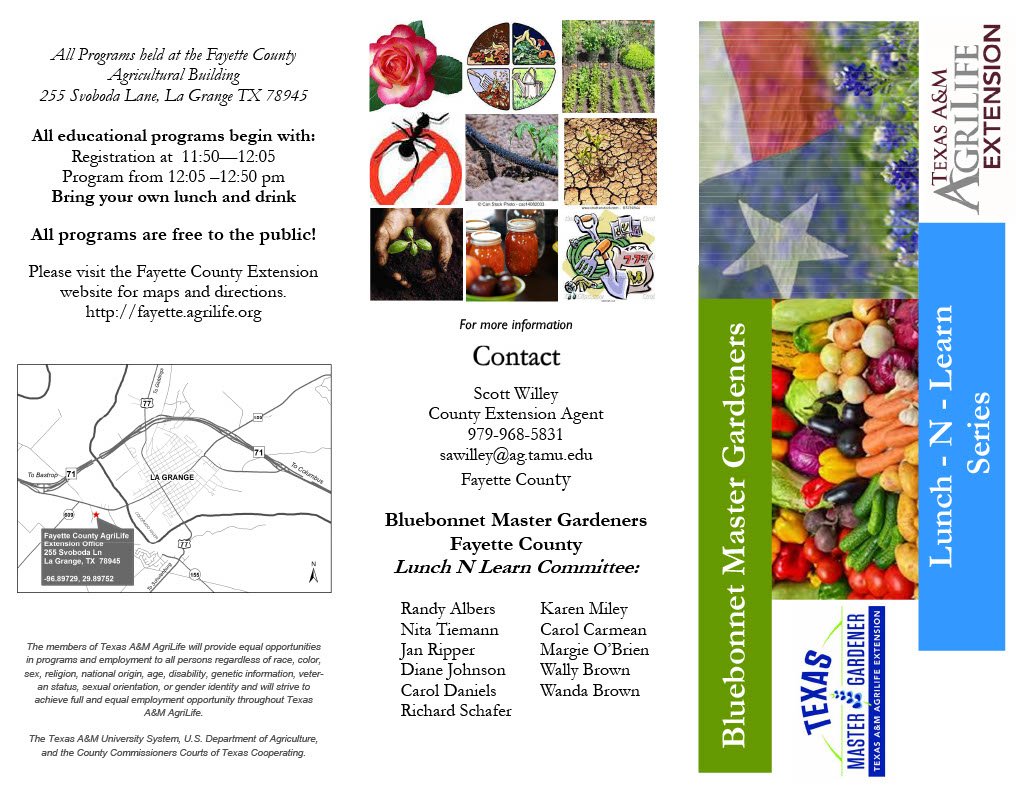
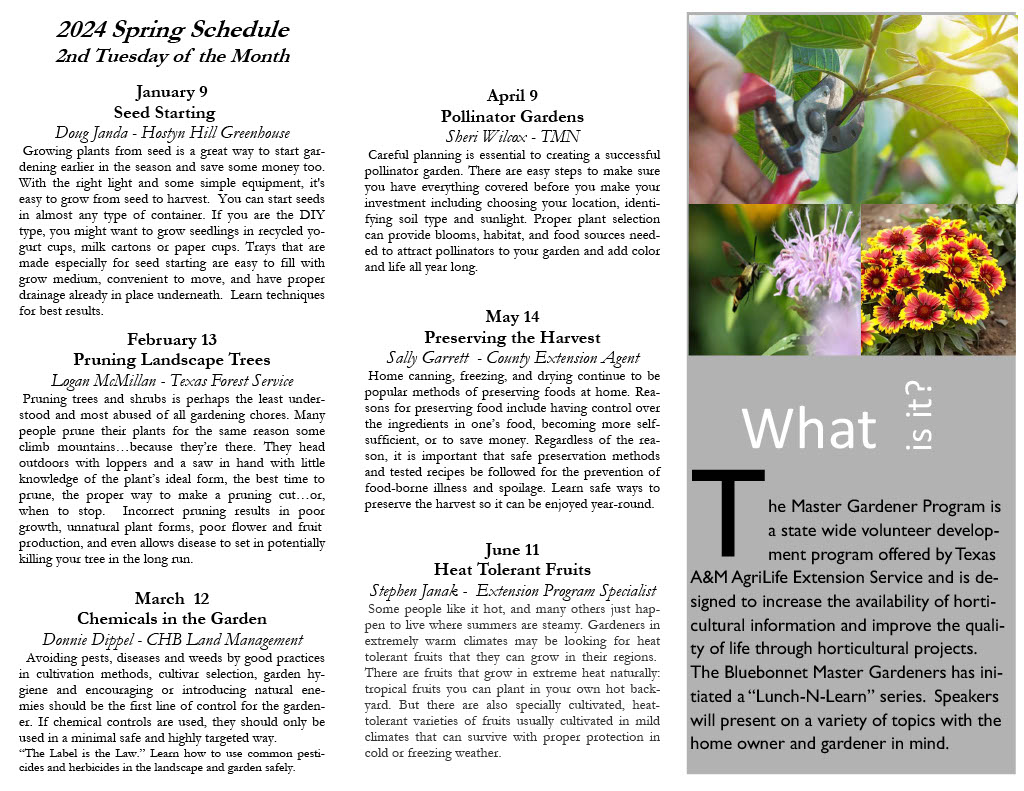
Lunch-N-Learn Fayette County
New Texas Superstar Brochure
The Texas Superstar brochure is updated. The new brochure is a beautiful, full color 44-page booklet with detailed descriptions, suggested uses and special notes for each plant with the Texas Superstar® designation. 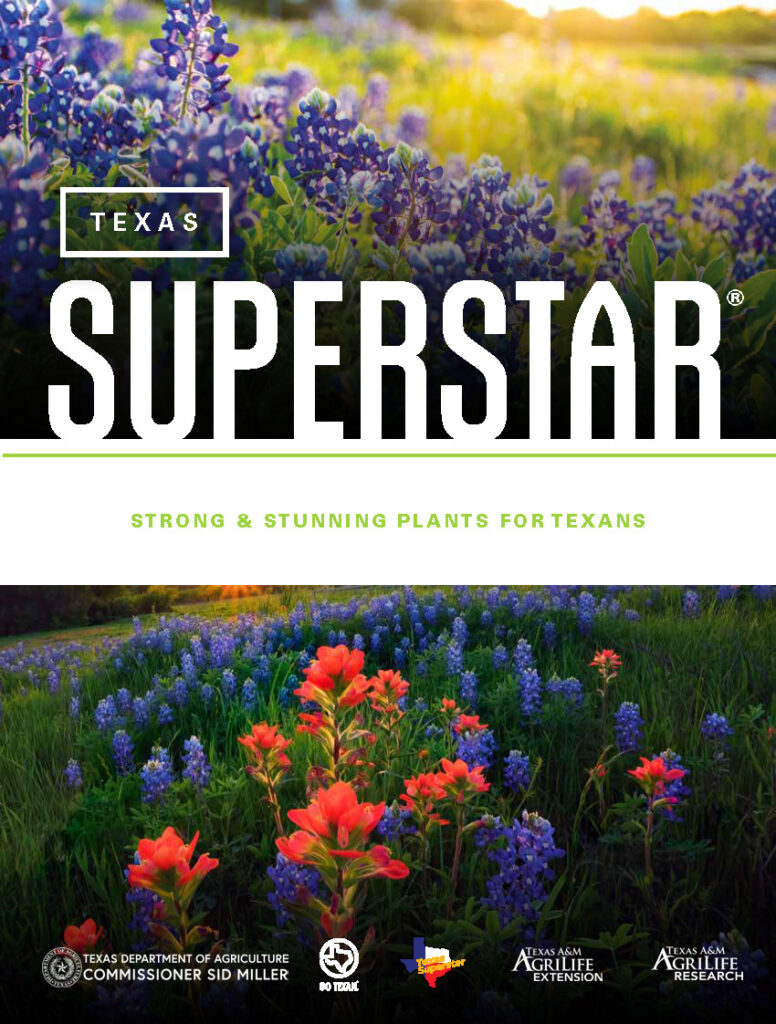
Link to the Texas Superstar: Strong & Stunning Plants for Texans brochure
You may print, download, view it in your browser or on device. Be sure to have it available when planning your landscape and vegetable gardens.
To be designated a Texas Superstar® a plant must be beautiful and perform well for growers throughout the state. Texas Superstars must also be easy to propagate, ensuring the plants are widely available and reasonably priced.
Texas Superstar® is a registered trademark owned by Texas A&M AgriLife Research, a state agency that is part of the Texas A&M University System. Plants are designated Texas Superstars by the Texas Superstar executive board, made up of nine horticulturalists from AgriLife Research, Texas A&M AgriLife Extension Service and Texas Tech University.
Texas Olive Update & Grower’s Seminar
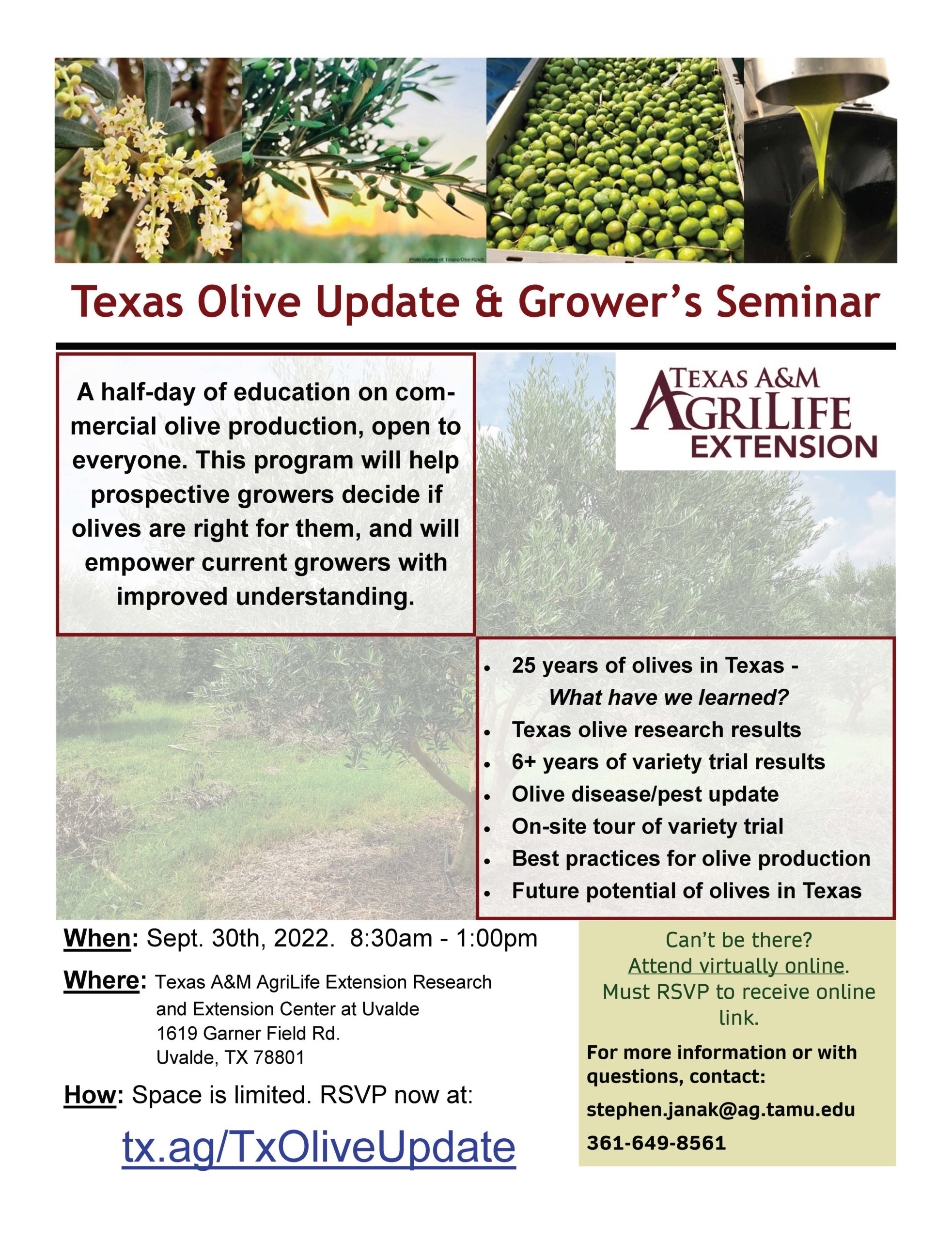
When: Sept. 30, 2022 8:30 a.m. – 1:00 p.m.
Where: Texas A&M AgriLife Extension Research & Extension Center, Uvalde
1619 Garner Field Rd
Uvalde, Tx 78801
Space is limited so RSVP now at: tx.ag/TxOliveUpdate
Summer Celebration in The Gardens at A&M-You’re Invited

|
The Gardens at Texas A&M Saturday, June 11, 2022 Free parking available in lot 97. Join us at our annual community Summer Celebration for food and fun for the family, including children’s educational activities, story time with Chance The Librarian, JJ’s snow cones, and more. You won’t want to miss this fun-filled morning! |

2021 Fall Citrus Tree Sale SOLD OUT
 All Trees are SOLD OUT
Only varieties suitable for growing in the Austin, Colorado, Fayette and Washington Counties are offered. Orders accepted from August 27, 2021 to September 7, 2021.
Pick-up: Buyer must pick-up trees:
September 10, 2021
12 noon – 3:00 p.m.
American Legion Post
1630 Meyer St.
Sealy, Texas 77474
2021 Fall Citrus Tree Sale! SOLD OUT
The Bluebonnet Master Gardener Association will kicks-off its Fall 2021 Citrus Tree Sale today.
Links to Citrus Growing Expert Resources:
Ambrosia from your Backyard, Growing Citrus on the Upper Coast of Texas
All Trees are SOLD OUT.
Only varieties suitable for growing in the Austin, Colorado, Fayette and Washington Counties are offered. Orders accepted from August 27, 2021 to September 7, 2021.
Pick-up: Buyer must pick-up trees:
September 10, 2021
12 noon – 3:00 p.m.
American Legion Post
1630 Meyer St.
Sealy, Texas 77474
2021 Fall Horticulture Seminar
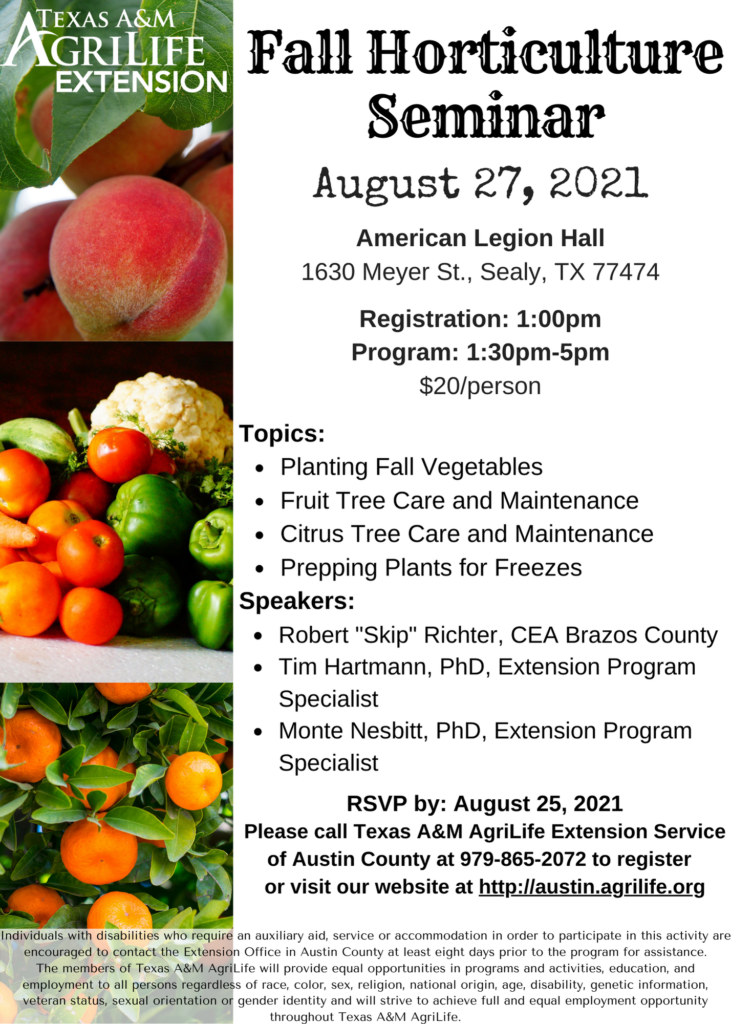
Please join Texas A&M Agrilfe Extension Service August 27, 2021 for the Fall Horticulature Seminar, hosted by Texas A&M Agrilfe Extension Service for Austin County. Topics, which will be presented by AgriLife Extentions Agent Robert “Skip” Richter and Specialists Tim Hartmann, Ph.D and Monte Nesbitt, Ph.D include:
Planting Fall Vegetables
Fruit Tree Care and Maintenance
Citrus Tree Care and Maintance
Prepping Plants for Freezes
RSVP HERE by August 25, 2021 or call 979-865-2072.
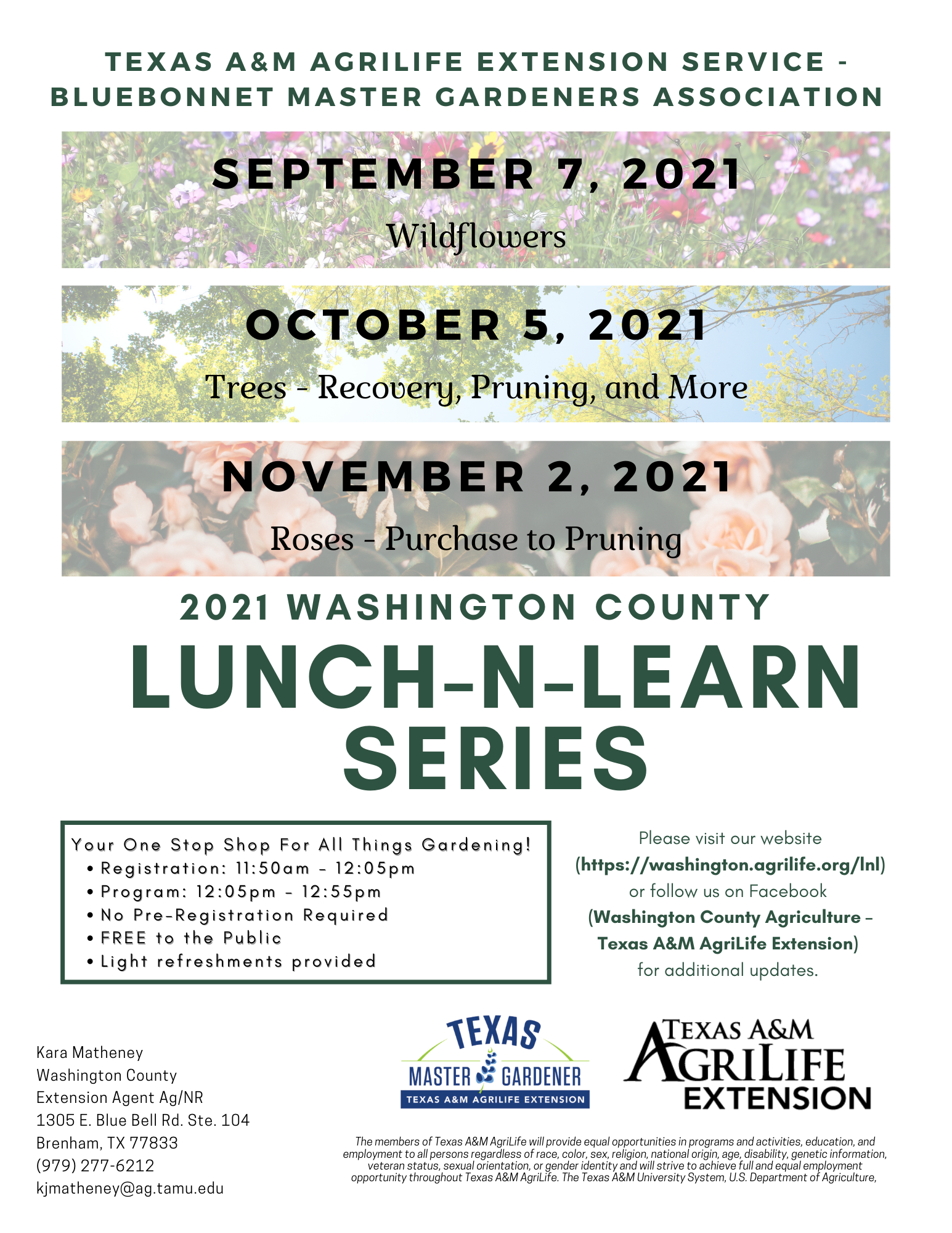
Lunch & Learn Series: Trees – Recover, Pruning and More
Lunch & Learn Series Resumes Fall of 2021 in Washington County
The Bluebonnet Master Gardeners of Washington County are pleased to present the 2021 “Lunch-N-Learn” series to be hosted on the first Tuesday of each month, September-November. The series boasts topics related horticulture with the homeowner and backyard gardener in mind! Speakers are experts in their fields and practical gardeners with great tips and information for everyone.
Programs are held in-person at the Washington County Expo Sales Facility; 1305 East Blue Bell Road, Brenham.
Program registration will begin at 11:50am with the program beginning at 12:05pm and concluding at 12:55pm. At the conclusion of each session the speaker and our Washington County Master Gardeners will be available to answer questions.
All Master Gardener Lunch-N-Learn programs are free to the public and you are welcome to bring your own lunch and drink.
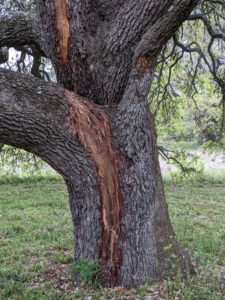
Lightning Damage on Live Oak Tree
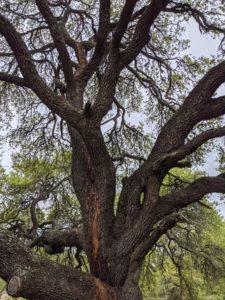
Bark blown off the “Lightning Tree” by lightning strike.
Lightning is a grand display of nature’s power.
Strong thunderstorms rolled through our area in March 2021. Afterwards, we suspected one of the mature live oak trees on our property was hit by lightning. I sent some photos of the tree to Daniel Lewis of the Texas A&M Forest Service. Mr. Lewis confirmed the photos showed a textbook pattern of a lightning strike. He also assured that most trees recover from lightning strike damage with no problem.
About 30,000,000 cloud-to-ground lightning strikes hit in the contiguous 48-states of the United States every year. Although lightning does not always strike the highest point around, it usually does so, according to NOAA’s National Severe Storms Laboratory. This makes tall trees, particularly on a hilltop or in a pasture, more vulnerable to lightning strikes.
NOAA’s NSSL says a typical lightning flash is about 300 million Volts and about 30,000 Amps. In comparison, household current is 120 Volts and 15 Amps. There is enough energy in a typical flash of lightning to light a 100-watt incandescent light bulb for about three months. Lightning heats the surrounding air anywhere from 18,000 degrees Fahrenheit to up to 60,000 degrees Fahrenheit.
Lightning damage wrapped around the tree.
Lightning traveling down a tree trunk turns water to steam. If it gets under the bark into the surface moisture of the wood, the rapidly expanding steam blasts pieces of bark and branches from the tree, and the wood along the path is often killed. The charge carried by the lightning is then dissipated along the surface of the Earth. This is explained on the NSSL website Severe Weather 101. The photos in this blog show the blasted pieces of bark from our live oak tree.
There are ways to protect trees of significance or that could endanger human life if struck by lightning. For more information go to Texas AgriLife Extension Tree Care Kit, Understanding Lightning & Associated Tree Damage.
One conclusion from the study of our lightning-struck tree (we now refer to it as the “Lightning Tree”) is that a mature Texas live oak tree, even jolted by the immense power of a lightning bolt, is mighty indeed.
By Christy Schweikahrdt
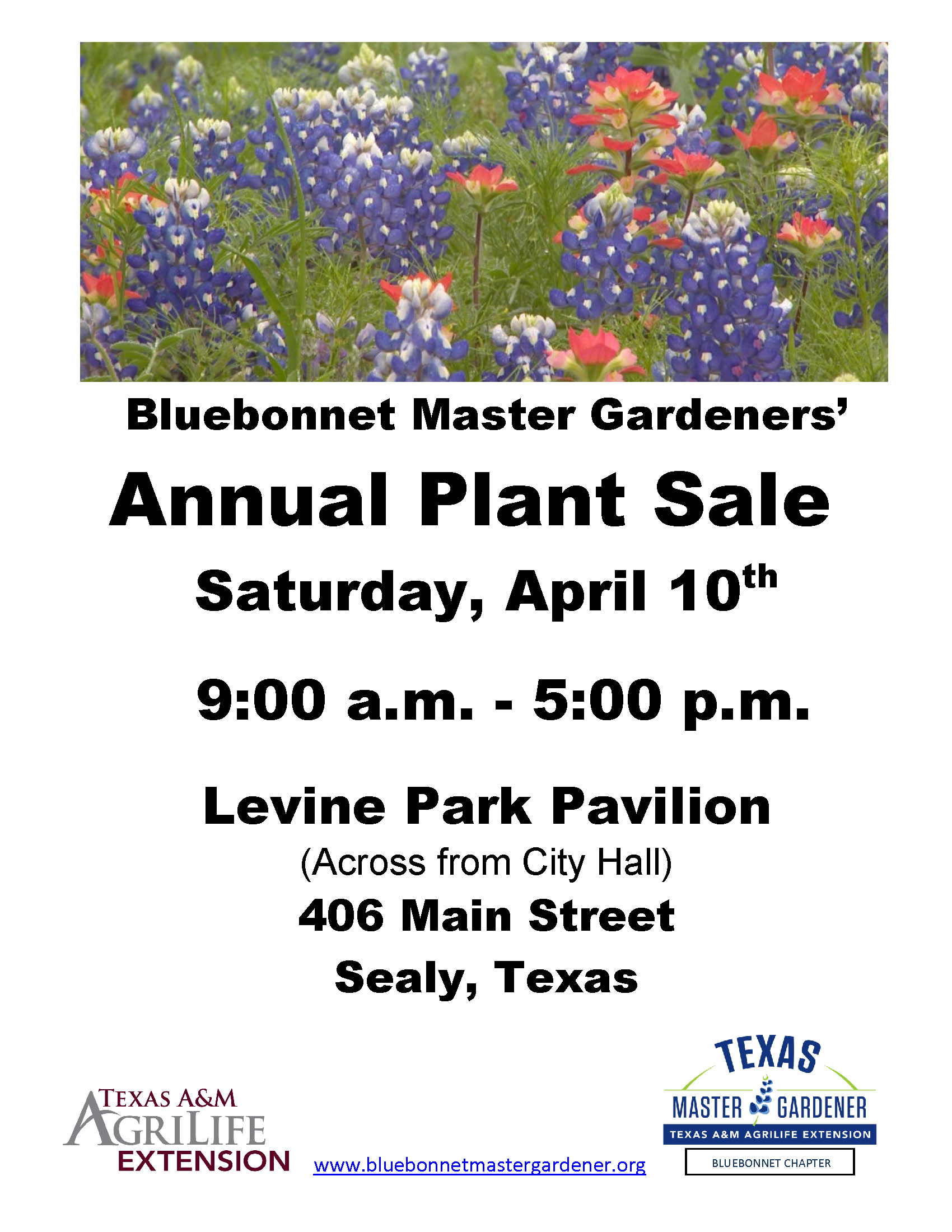
2021 Plant Sale in Sealy at Levine Park
Need to replace plants after this year’s winter blast?
The Bluebonnet Master Gardener Association’s 18th Annual Plant Sale is Saturday, April 10, 2021, 8:00 a.m. until 5:00 p.m.
New location: Levine Park Pavilion, 410 Main Street, Sealy, across the street from city hall.
Plants for sale include roses, “Texas Superstar” plants, “Texas Native” plants, “Earth Kind” plants, succulents, butterfly friendly plants, ground covers, herbs, bushes, and a few surprises – something for everyone. There will also be rain barrels, planters and other garden items.
All plants are locally sourced to insure they are climatized for this area. Master Gardeners will be on hand to help you find that special plant and give you guidance for its care. Master Gardeners’ knowledge and passion for each plant will inspire you!
Proceeds from the sale help Bluebonnet Master Gardeners support the four counties (Austin, Colorado, Fayette, and Washington) with college scholarships, community gardens, free-to-the-public “Lunch & Learns”, and other local activities. This is a sales-tax free sale.
More information: https://txmg.org/bluebonnet
Multi-County New Landowner Program: Trees, Pecans, Grapes for Small Acreages
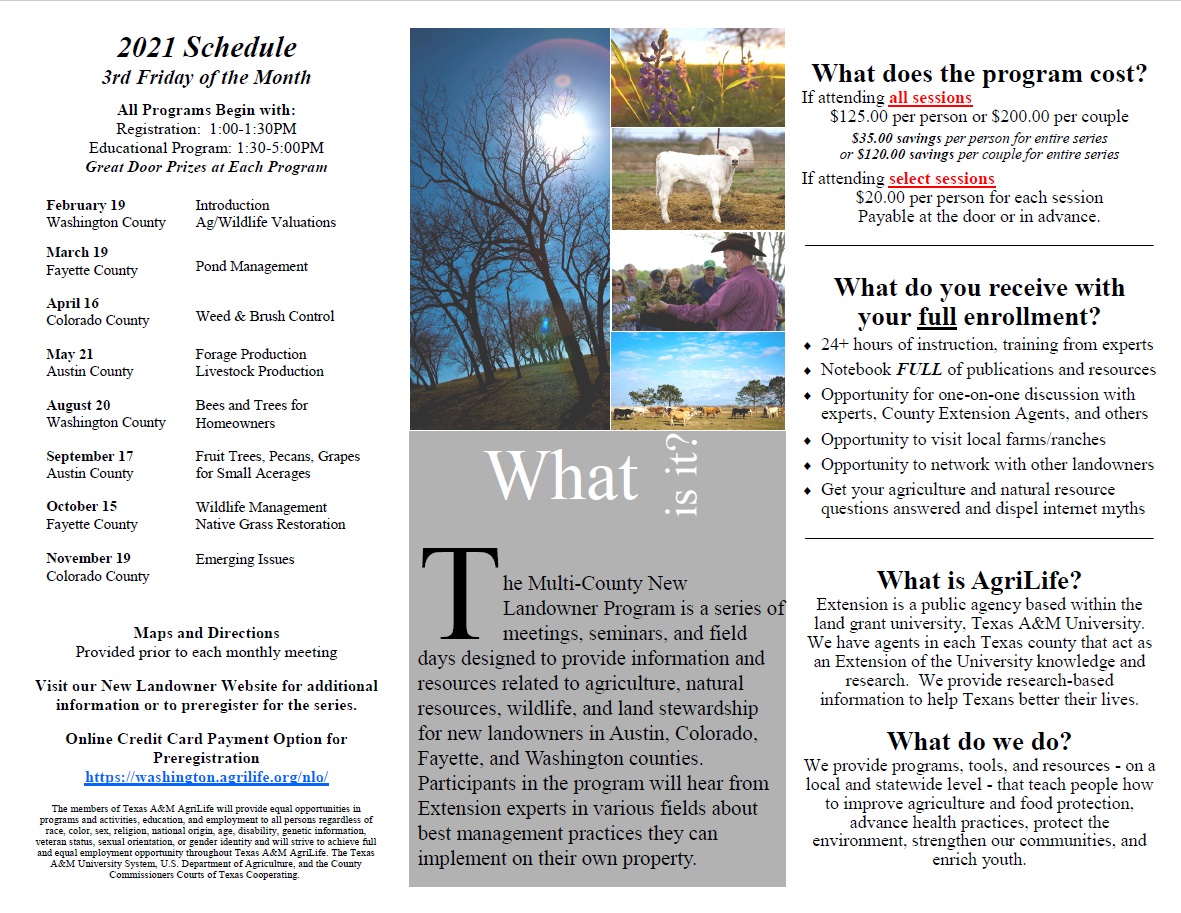
Multi-County New Landowner Program: Bees and Trees for Homeowners
Ask an Expert is now Ask Extension

Ask an Expert is now Ask Extension. This service offers one-to-one expert answers from Cooperative Extension/University staff and volunteers within participating Land-Grant institutions from across the United States. Before posting a new question, you may also search previously answered questions in the Knowledgebase catalogue.
DO YOU HAVE A QUESTION FOR EXTENSION EXPERTS?
Online Horticulture Learning Could Never be Easier
 So many online horticulture learning opportunities you don’t know where to start? This guide can get you started learning from horticulture experts.
Texas A&M AgriLife Extension recorded many of their programs for viewing on your own schedule. These recorded presentations are free to the public.
Bluebonnet Master Gardener Association members may claim Continuing Education Units (CEU) for these all AgriLife programs that pertain to gardening and horticulture; live or recorded. Just watch the presentation and record your time as CEU. BMGA members, remember to get your CEU credits recorded by December 31, 2020 to apply those hours to your re-certification requirement. For 2020, you need 6 CEU credits.
Below are links to some of these programs to start learning from our Aggie experts.
Gulf Coast Gardening Online Series
There are 22 videos for more than 24 hours of learning. Topics include:
Young Tree Care – Video #5
Earth Kind Pest Disease & Weed Control – Video #10
Texas Superstar Plants – Video #19
Horticulture & Gardening Webinar Series with David Rodriguez, County Extension Horticulture Agent, Bexar County
There are currently 17 of these recorded sessions for more than 13 hours of education. Topics include:
Getting Your Lawn and Landscape Ready for Summer Heat – Video #9
Tomato Basics 101 – Video #13
Butterfly Gardening – Nectar Plants – Video #5
Aggie Horticulture Facebook Live Recordings
There are 55 horticulture recorded events. Wow! You do not need a Facebook account to watch. Topics include:
Homeowner Greenhouses- Video #41
Transitioning to a Fall Garden, Two Parts – Video #40 & #45
Toys for Vegetable Gardening – Video #50
Fall Blooming Flowers & Biennials Planted in Fall – Video #51
Growing Blueberries in Containers – Video 18
Fall 2020 Fruit Tree Sale – Order Online
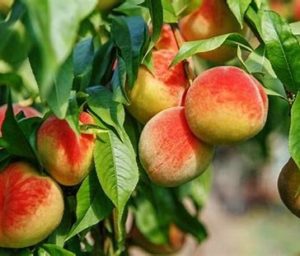
UPDATE: Orders Open to October 9, 2020

The Bluebonnet Master Gardener Association will kick-off its Fall 2020 Fruit Tree sale on September 28. Revisit this page to order and for updated information. In the meantime, review the tree list and plan your order!
Only varieties suitable for growing in the Austin, Colorado, Fayette and Washington Counties are offered. Orders accepted from September 28, 2020 to October 9, 2020.
Pick-up: Buyer must pick-up trees between 3:00 p.m. – 5:30 p.m. Friday, October 16, 2020 at one of the following locations, chosen when the order is placed:
Note Pick-up Locations
Austin County Colorado County
Koehler Ranch Colorado County Extension Office
1333 Downey Rd. 316 Spring Street
Sealy, TX 77474 Columbus, Texas 78934
Fayette County Washington County
AgriLife Building Washington County Fairgrounds-VIP Building
255 Svoboda Ln 1305 E. Blue Bell Rd
La Grange, TX 78945 Brenham, TX 77833-2436
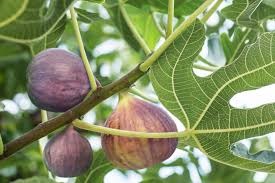
Everything listed will grow well in our area however, lemons must be protected from frost and freezing weather. Figs and citrus have to be protected when they are young.
Please note that the Chocolate Persimmon isn’t really chocolate. It just has brown stripes on the orange fruit.
Available Trees & Prices – 3 Gallon Containers
Availability may be limited
- APPLE – FUJI $24
- AVOCADO – LILA $58
- AVOCADO – PANCHO $58
- BLUEBERRY – CLIMAX $22
- BLUEBERRY – PREMIER $22
- BLUEBERRY – TIFBLUE $22
- DWARF IMPROVED MEYER LEMON $58
- DWARF KEY LIME $58
- DWARF PERSIAN LIME $58
- DWARF ORANGE NAVAL N-33 $58
- FIG – CELESTE $24
- FIG – TEXAS EVERBEARING $24
- GINGER – CULINARY $24
- GOJI BERRY $24
- LEMON – IMPROVED MEYER $44
- LEMON – LEMONADE $44
- LOQUAT $24
- ORANGE – VALENCIA RHODE RED $44
- PEACH – FLORIDAKING $32
- PEACH – LA FELICIANA $32
- PEAR – SHINSEKO $32
- PERSIMMON – GIANT FUYU $38
- PERSIMMON – CHOCOLATE $38
- POMEGRANITE – SALAVATSKI $38
- PUMMELO – CHANDLER $44
- SATSUMA – MIHO $44
- SATSUMA – OWARI FROST $44
Variety Descriptions
Apple, Fuji– 400 – 600 chill hours, yellow-green skin with red stripes. Ripens in early fall. More tasty than the red Fuji. Allow to ripen on the tree.
Avocado, Lula – Green skinned medium sized fruit. Ripens in late October-January. Hardy to about 24 degrees. Full sun
Avocado, Pancho – Originated as a seedling at Stuart Place, TX. The fruit is oval to slightly pear shaped and is light green in color with a very thin skin. Medium sized fruit. Cold hardy to mid teens, ripens Aug – September.
Berry, Goji- Nutritional and Medical benefits. Super food high in antioxidants. Known to promote longevity
Blueberry, Climax – rabbiteye blueberry, which is early ripening. Most of the fruit ripens in a short period of time. The crop load is moderate to high. 310-420 Chill hours. Requires a pollinator.
Blueberry, Premiere – This variety is an early season rabbiteye variety, that produces fruit of excellent color, size and flavor. The bushes are vigorous and productive, and have been suited to mechanical harvesting. 310-420 chill hours. Requires a pollinator.
Blueberry, TifBlue – is the most universally outstanding rabbiteye blueberry grown to date. The fruits are large, light blue and ripen late in the season. The bush is vigorous and very productive. Tifblue is more cold hardy than most rabbiteye blueberries varieties. 350-400 chill hours. Self fruitful
Fig, Celeste – medium sized sweet fruit, ripens in July. Requires lots of water with good drainage
Fig, Texas Everbearing (Brown Turkey) – medium sized fruit that is nearly seedless, mild sweet flavor
Ginger, Zingiber “Baby Ginger”– Great selection of yellow edible ginger, tender with mild flavor, does not need to be peeled.
Loquat, Japanese Plum – Evergreen tree. Tangy and sweet fruit. Can get 20-30 feet tall. Rich in vitamins, minerals and antioxidants.
Mulberry, Dwarf Everbearing- Sweet medium sized berry, Produces continuously in warm bright conditions, strengthens immune system, great for eyesight.
Peach, Flordaking – High quality, early season peach, large semi-freestone sweet fruit, 450 chill hours or less
Peach, La Feliciana- Heavy bearer of high quality fruit. Firm and flavorful. Yellow fleshed freestone. 550-600 chill hours.
Pear, Shinseiki– juicy, sweet crisp Asian pear with bright yellow-skin. 12 – 16’. Vigorous and heavy bearing. Cold Hardy, self fruitful best with pollinator. Resistant to fire blight.
Persimmon, Chocolate – Large fruit, delicious flavor, has chocolate brown stripes on orange skin. Ripens in September. Acorn shaped.
Persimmon, Giant Fuyu – Orange fruit is larger than the regular Fuyu and just as good. Ripens in October and November. Non-astringent, crisp and sweet.
Pomegranate, Salavatski – 6 – 8’ tall, heavy producer, slightly dwarf, fruit has hard seeds with sweet tart juice, self fruitful. Produces bright orange flowers edible over an extended time. Cold Hardy.
Citrus
Lemon, Improved Meyer – sweet and tangy, medium size fruit, thin yellow skin, very juicy. Least cold sensitive of all the lemons, but still needs to be protected from freeze.
Lemon, New Zealand Lemonade – delicious, sweet lemon hybrid with few seeds, very productive, very large fruit
Orange, Valencia Rhode Red – great for juicing, harvest between March & June. Only variety of orange in season during summer.
Pummelo, Chandler – large tree, dark green winged leaves, very large fruit, flesh is pink & sweet. Ripens in November
Satsuma, Miho – cold hardy, medium to large fruit, seedless, good flavor. Ripens in September and October.
Satsuma, Owari Frost – very cold hardy, medium sized sweet, seedless fruit, keeps well on the tree, ripens in early October
Dwarf Varieties
Dwarf Varieties are 30 to 40% smaller than standard trees which make them easier to grow in pots and to protect from the cold. They do well in a garden setting, have standard size fruit and are easier to pick.
Dwarf Improved Meyer Lemon – compact tree, medium size fruit, thin yellow skin, very juicy. Least cold sensitive of all the lemons, but still needs to be protected from freeze.
Dwarf Key Lime – Extremely cold sensitive, small tangy fruit, tasty
Dwarf Lime, Persian – dark foliage, medium-large fruit with delicious juicy flavor.
Dwarf Orange, Navel N-33 – fruit has thick orange rind, rich flavor, juicy & seedless
All About Trees: Forests – Living Pharmacies
All About Trees: Forests – Living Pharmacies
Registration: Please cut and paste the link into your browser.
https://tfs.webex.com/tfs/onstage/g.php?MTID=e46376572ab72e9dea2d947c49b06c626
June 25, Thursday
2 p.m. – 3 p.m.
All About Trees: Forests – Living Pharmacies is bringing the science, the chemistry, the biology to the field of wild edible and herbal medicine. Dr. Mark Merriwether Vorderbruggen is a chemist, with an MS in medicinal chemistry and a Ph.D. in physical organic chemistry.
“An estimated 50,000 plant species are used medicinally. Within the plant kingdom, trees make a substantial contribution to this figure, and many species are used in traditional and modern medicine.”
“Medicine from trees, extracted from the wood, bark, roots, leaves, flowers, fruits, or seeds is fundamental to the well-being of millions of people. Where access to modern pharmaceuticals is limited, trees offer living pharmacies open to anyone with traditional knowledge on their medicinal properties.” (Global Tree Campaign)
Texas A&M Forest Service’s ALL ABOUT TREES has moved our live presentations to a web-based platform. This is in response to the important stay-at-home ordinances related to the outbreak of COVID-19.
Join us for this presentation series created to bring experts in forestry, arboriculture, chemistry, and science to answer your questions interactively through a dynamic CHAT feature.
Check with your local Texas Master Naturalist or Texas Master Gardener chapters for Advance Training AT credits. For CEUs from ISA, SAF, TNLA, and other organizational providers, a certificate of participation may be sent to you upon request for verification of attendance.
This class will be live on our WebEx platform allowing experts to answer your questions in real-time meeting state AT requirements.
__________________________________
For more information, contact:
JOHN R. WARNER, CF, CA, AF
URBAN DISTRICT FORESTER IV
Texas A&M Forest Service
1328 FM 1488, Conroe, TX 77384
936/546-3169 cell
tfsweb.tamu.edu
Aggie Horticulture Live Facebook Events!
 Join Aggie Horticulture on Wednesdays & Fridays at 1 p.m. Central time on the Aggie Horticulture Facebook Page to watch Facebook Live events!
Aggie Horticulture Live Facebook Events
Upcoming Events:
- 5/22/2020 – Friday 1:00 pm – From Garden to Glass DIY Mocktails/Cocktails
- 5/27/2020 – Wednesday 1:00 pm – “Some Like it Hot” – Growing Vegetables in Summer
- 5/29/2020 – Friday 1:00 pm – TBD
- 6/3/2020 – Wednesday 1:00 pm – Check your crape (and other plants) for scale
Qualifies for Master Gardener CEU Credits.
Prior Live Event Videos Available on Aggie Horticulture’s Facebook page:
- Raised Garden Beds, Location, Soil Mixtures and more!
- Starting vegetable seeds at home
- Planting vegetable transplants or direct seed into your garden!
- Home Fruit Production – Tips for Success!
- Small fruits for the backyard
- Floral Designs from your backyard – Growing, Cutting, Using your flowers and shrubs!
- Growing Herbs: Basil Bounty
- Backyard Grapes/Vineyards
- Pecan Grafting
- How to Prune Your Trees
- Lawn Care & Fertilization
- Drip Irrigation Essentials
- Grapevine Planting & Training Demo
- Tidying up your Irrigation System
- Keys to Successful Peach Production
- Indoor Gardening
- Growing Blueberries in Containers
All About Trees: Forests, Water and People Online Class
Thursday, May 21, 2020 2:00 pm
Central Daylight Time (Chicago, GMT-05:00)
COST: FREE
Thursday, May 21, 2020
2:00 p.m. – 3:00 p.m.
Click below link to register:
https://tfs.webex.com/tfs/onstage/g.php?MTID=e2b809db1e53296189759595ec886e545
Healthy forests are critically important for protecting water supplies.
Forests play an important role in providing clean water. More than 50 percent of the nation’s freshwater resources originate from forests that cover about one-third of the United States. In addition to providing clean water, forests also absorb rainfall, refill groundwater aquifers, slow and filter stormwater runoff, reduce floods and maintain watershed stability and resilience.
Several municipalities and water utilities have already recognized the important role forests play in supplying fresh drinking water, and, as such, have taken action to conserve these critical landscapes. Efforts are underway to explore these approaches throughout the South.
Approximately 89 percent of the South’s forestland is privately-owned, making it the nation’s stronghold for private forestland ownership. To sustain healthy forests and protect water resources, viable economic markets, careful forest management and well-targeted forest, conservation efforts are critical. (Southern Group of State Forester)
Texas A&M Forest Service’s ALL ABOUT TREES has moved several of our live presentations to a web-based platform. This is in response to the important stay-at-home ordinances related to the outbreak of COVID-19.
Join us for this presentation series created to bring experts in forestry, hydrology and arboriculture to answer your questions interactively through a dynamic CHAT feature.
Check with your local Texas Master Naturalist or Texas Master Gardener chapters for Advance Training AT credits. For CEUs from ISA, SAF, TNLA, and others organizational providers, a certificate of participation may be sent to you upon request for verification of attendance.
This class will be live on our WebEx platform allowing healthcare providers, certified forest therapy guides, foresters and arborists to answer your questions in real-time meeting state AT requirements.
Program information is available by emailing or calling John Warner, [email protected] or 936/546-3169.
Online Backyard Basics Gardening Workshop -May 29, 2020
Texas A&M AgriLife Extension Service will a present a Backyard Basics: Gardening webinar on gardening and landscaping from 9 a.m.-noon May 29.
“This is a free workshop, and we hope folks from across Texas will join us,” said Matlin Sain, AgriLife Extension agent, Presidio County. “We’ll have a group of experts covering the backyard basics you need to know to have a more successful garden.”
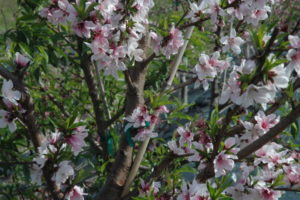
Tree disease and pruning will both be discussed at the Backyard Basics webinar. (AgriLife Research photo)
Participants need to register in advance for the event, which will be held on the Zoom meeting platform. Contact Sain with any questions.
Scheduled topics and expert speakers are:
- Integrated Pest Management for Your Garden – Jeanette Castanon, AgriLife Extension horticulture agent, Midland.
- How to Identify Tree Diseases in Your Yard – David Appel, Ph.D., AgriLife Extension plant pathology specialist, College Station.
- How to Properly Prune Your Trees – Jonathan Motsinger, Texas A&M Forest Service, Central Texas Operations department head, Idalou.
Each topic will be followed by a Q&A period. For more information, visit the website for the AgriLife Extension office in Presidio County.
Bluebonnet Master Gardener Association members participating in any AgriLife sponsored horticulure educational program may claim CEU credit for the program.
This post and the photo were taken from AgriLife Today’s article of May 13, 2020.
All About Trees: Forests & Human Health Connections
 EVENT – Forests & Human Health Connections – VIRTUAL CLASS
Immersion in forests and nature not only makes you feel better emotionally, it contributes to your physical well-being, reducing blood pressure, heart rate, muscle tension, and the production of stress hormones. It may even reduce mortality, according to scientists in public health. Join the conversation in science-based evidence and practices about health, forests, and natural landscapes.
Texas A&M Forest Service’s ALL ABOUT TREES has moved several of our live presentations to a web-based platform. This is in response to the important stay-at-home ordinances related to the outbreak of COVID-19.
Join us for this presentation series created to bring experts in forestry, healthcare, wellness, forest and nature therapy, and arboriculture to answer your questions interactively through a dynamic CHAT feature.
Check with your local Texas Master Naturalist or Texas Master Gardener chapters for Advance Training AT credits. For CEUs from ISA, SAF, TNLA, CME, and others organizational providers, a certificate of participation may be sent to you upon request for verification of attendance.
This class will be live on our WebEx platform allowing healthcare providers, certified forest therapy guides, foresters and arborists to answer your questions in real-time meeting state AT requirements.
COST: FREE
Thursday, May 14, 2020
2:00 p.m. – 3:00 p.m.
Program information is available by emailing or calling John Warner, [email protected] or 936/546-3169.
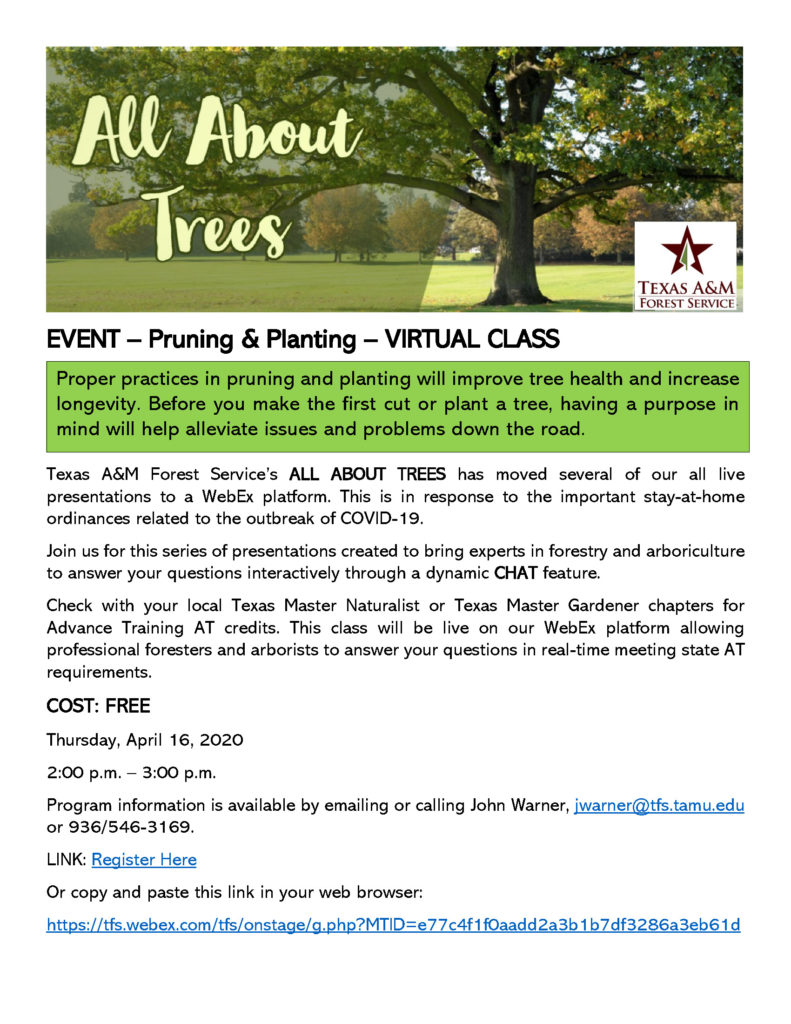
LIVE EVENT – Tree Pruning & Planting – VIRTUAL CLASS
Texas A&M Forest Service’s ALL ABOUT TREES has moved several presentations to a WebEx platform. This series of presentations was created to bring experts in forestry and arboriculture together to answer your questions interactively through a dynamic CHAT feature.
BMGA Members recieve 1 CEU credit hour for participating in this live program.
Proper practices in pruning and planting will improve tree health and increase longevity. Before the first cut or tree is planted, having a purpose in mind will alleviate issues and problems down the road.
COST: FREE
Thursday, April 16, 2020
2:00 p.m. – 3:00 p.m.