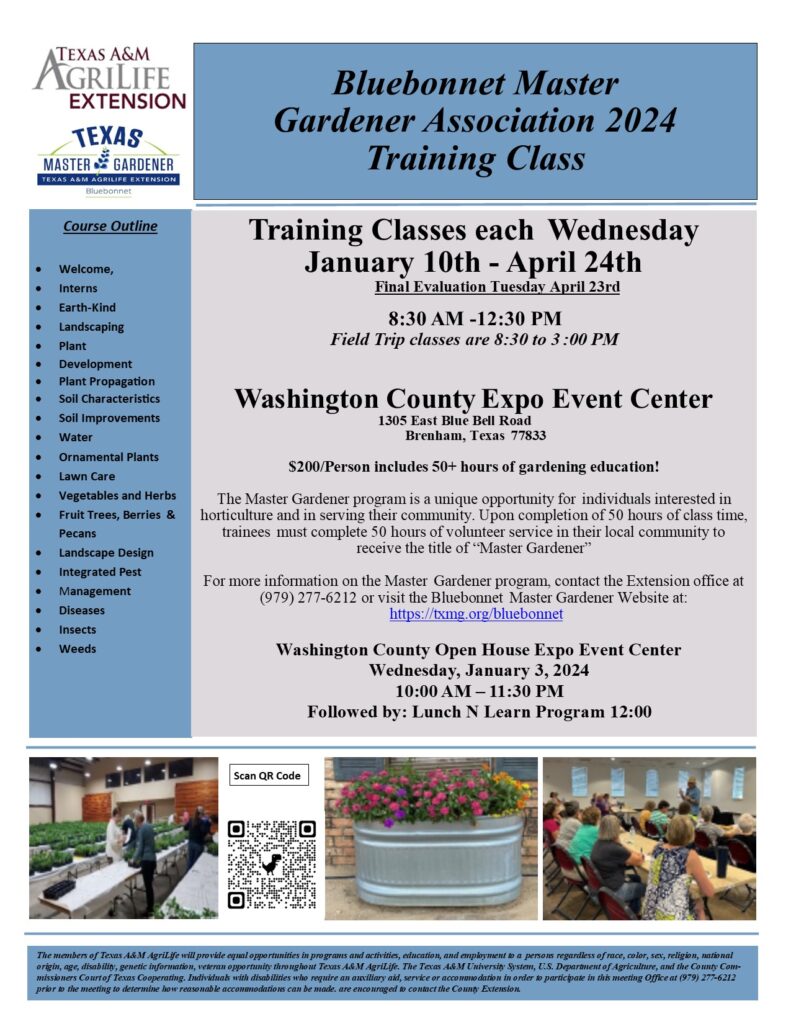
Board Meeting: 8:30 a.m – 10:00 a.m.
Social: 10:00 a.m. – 10:30 a.m.
Program: 10:30 a.m.– 12:00 noon
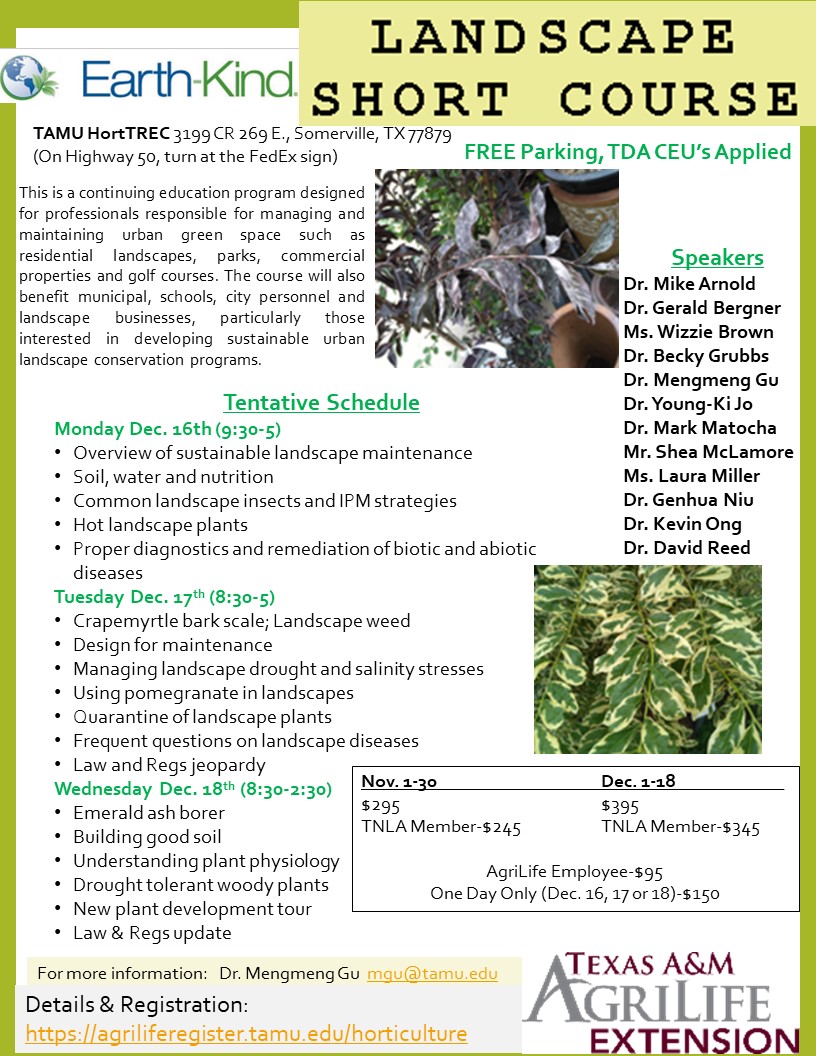
Presentation: Plant Diseases: Types, Causes & Prevention
Speaker: Lynda Duffy, Bluebonnet Master Gardener
by bluebonnet
Ask an Expert is now Ask Extension. This service offers one-to-one expert answers from Cooperative Extension/University staff and volunteers within participating Land-Grant institutions from across the United States. Before posting a new question, you may also search previously answered questions in the Knowledgebase catalogue.
DO YOU HAVE A QUESTION FOR EXTENSION EXPERTS?
So many online horticulture learning opportunities you don’t know where to start? This guide can get you started learning from horticulture experts.
Texas A&M AgriLife Extension recorded many of their programs for viewing on your own schedule. These recorded presentations are free to the public.
Bluebonnet Master Gardener Association members may claim Continuing Education Units (CEU) for these all AgriLife programs that pertain to gardening and horticulture; live or recorded. Just watch the presentation and record your time as CEU. BMGA members, remember to get your CEU credits recorded by December 31, 2020 to apply those hours to your re-certification requirement. For 2020, you need 6 CEU credits.
Below are links to some of these programs to start learning from our Aggie experts.
Gulf Coast Gardening Online Series
There are 22 videos for more than 24 hours of learning. Topics include:
Young Tree Care – Video #5
Earth Kind Pest Disease & Weed Control – Video #10
Texas Superstar Plants – Video #19
Horticulture & Gardening Webinar Series with David Rodriguez, County Extension Horticulture Agent, Bexar County
There are currently 17 of these recorded sessions for more than 13 hours of education. Topics include:
Getting Your Lawn and Landscape Ready for Summer Heat – Video #9
Tomato Basics 101 – Video #13
Butterfly Gardening – Nectar Plants – Video #5
Aggie Horticulture Facebook Live Recordings
There are 55 horticulture recorded events. Wow! You do not need a Facebook account to watch. Topics include:
Homeowner Greenhouses- Video #41
Transitioning to a Fall Garden, Two Parts – Video #40 & #45
Toys for Vegetable Gardening – Video #50
Fall Blooming Flowers & Biennials Planted in Fall – Video #51
Growing Blueberries in Containers – Video 18
Texas A&M AgriLife Exension offers a variety online gardning courses free of charge. One such offering is a self-directed course designed for Master Gardener interns to introduce the basic concept of plant disease development and an overview of the four common plant pathogen groups.
Plant disease is one of the most difficult topics for home gardeners. Although this course is designed for Master Gardener interns, experienced Master Gardeners may find this online course a good refresher on a complex topic.
These modules will provide some base information which will help participants gain a foundational understanding of the different plant-pathogen types, and will enhance better understanding of the material presented at classroom Master Gardener intern training on plant pathology.
See all available AgriLife online courses under the Plants and Garden.
by bluebonnet

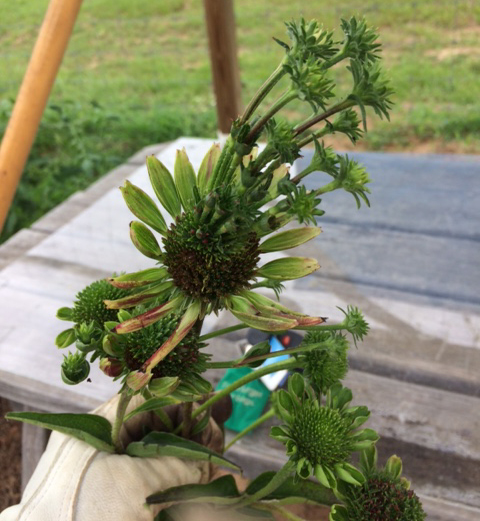
The coneflower oddities pictured came from Sens Center Vegetable Demonstration Garden that the Bluebonnet Master Gardener Association manages in Bellville, Texas in June 2019. Our research shows that these plants are infected with Aster Yellows disease caused by phytoplasma. However interesting the effect, Aster Yellows is a serious garden disease impacting more than 300 plants species in 38 plant families.
The Texas Plant Disease Handbook lists the following as the most important impacted plants of Aster Yellows disease:
Crops: broccoli, buckwheat, cabbage, carrot, cauliflower, celery, endive, flax, lettuce, onion, parsley, potato, parsnip, pumpkin, red clover, salsify, spinach, strawberry and tomato.
Flowers: aster, anemone, calendula, Centaurea, China aster, chrysanthemum, Clarkia, cockscomb, Coreopsis, cosmos, delphinium, daisies, Gaillardia, hydrangea, marigold, Nemesia, Paris daisy, periwinkle, petunia, phylox, Scabiosa, snapdragon, statice, strawflower, veronica, and zinnia.
Weeds: cinquefoil, daisy fleabane, dandelion, horseweed, plantain, ragweed, thistle, wild carrot, and wild lettuce.
Yellows diseases are caused by phytoplasma. All known forms of these small, specialized bacteria cause plant disease. Phytoplasmas are naturally spread from plant to plant by sucking insects, particularly leafhoppers. The insects pick-up phytoplasma during their feeding on infected host plants, then spread the disease when they move to feed on other plants. The phytoplasma can overwinter in leafhoppers and on perennial host plants and will re-emerge in the Spring.
Phytoplasmas commonly cause distorted, dwarfed, and yellowish leaves and shoots often referred to as “yellows”. Other symptoms include abnormal flower and leaf development, shortened internodes, and shoot proliferation (known as “witches’ broom”). The flowers of infected plants sometimes develop green, leaflike structures as seen the coneflower photo from the Sens Center Demonstration Garden.
Aster Yellows wreaks havoc on all parts of the plant. There are no chemical or organic treatments known to cure, suppress or kill the disease so once plants become infected, they remain infected and are a host plant for further infection throught the garden. Failing to destroy the infected plant means it survives as a constant source of phytoplasma to be spread to other plants. Garden sanitation is key to managing the disease. Once the disease is discovered, all parts of the plant including the root system must be removed and destroyed. Although heat may kill the pathogen, it is best not compost diseased plants. As with all phytoplasmas, the Aster Yellows pathogen cannot survive outside of the plant so the bacteria will not remain in the soil.
An integrated pest and disease management approach including destroying infected plants immediately upon discovery of the disease, maintaining proper garden sanitation practices and attempts to control the leafhoppers is recommended. If you believe you have plants of any kind infected with Aster Yellows or a similar disease, contact the Texas Plant Disease Diagnostic Lab for information about diagnostic testing and recommendations for minimizing the spread of disease in your garden.
Web sources used for this post include: Texas Plant Disease Handbook, Texas Plant Disease Diagnosic Lab, Missouri Botanical Gardens, Ohio State Cornflower Clean-up, Wisconsin Horticulture Division of the University of Wisconsin – Madison.
by bluebonnet
BMGA members Faye Beery and Carolyn Woodruff completed the two-day First Detector Training June 11-12, 2018 in Angleton. The Master Gardener Specialist First Detector-Plant Disease training course introduces participants to the National Plant Diagnostic Network’s effort to protect US agriculture and plants through awareness information of invasive, non-native pests and pathogens. Trainees learn basic plant disease diagnostic skills and symptom documentation skills. The ultimate goal of the training is to provide these trainees, all of whom are already certified Texas Master Gardeners, with expertise to assist Texas A&M AgriLife Extension Service with early detection of invasive and exotic pathogens & pests. This year’s class was sponsored by the Texas Plant Disease Diagnostic Laboratory, the Brazoria County Master Gardener Association and Texas A&M AgriLife Extension Service of Brazoria County.
While the classroom part of their training is complete, to obtain the First Detector Specialist designation recognized by the Texas Master Gardener Association, Ms. Beery and Ms. Woodruff must complete 20 hours of field work assessing citrus and palm plants for pathogens. If you have citrus or palm in your gardens, be sure to contact Ms. Berry or Ms. Woodruff to conduct an assessment of your plants for invasive, non-native pests and pathogens. Their completed assessments and information forms will be submitted to the Plant Disease Clinic for Dr. Kevin Ong’s approval. Additionally, Ms. Beery and Ms. Woodruff are equipment with photos and other information to use educating the public through presentations to interested groups, clubs and societies.