• Skip to primary navigation
  • Skip to main content
  • Skip to primary sidebar
  • Skip to secondary sidebar
  • Texas A&M Forest Service
  • Texas A&M Veterinary Medical Diagnostics Laboratory
  • Texas A&M AgriLife Extension Service
  • Texas A&M AgriLife Research
  • Texas A&M College of Agrculture and Life Sciences
Rockwall County Master Gardeners
  • Menu
  • Home
  • About Us
    • About Us
    • RCMG Community Service
    • Become a Master Gardener
  • Resources
    • Applied Science Research
    • Earth-Kind® Plant Selection
    • Get a Soil Test
    • Hardiness Zones
    • Junior Master Gardener
    • Newcomers Guide
    • Publications
    • Resources
    • Scholarship Application
  • In the Garden
    • Body-Kind in the Garden
    • Spring Flowering Bulbs
    • Favorite Annuals
    • Annuals That Reseed & Wildflowers
    • Cut Flower Gardening
    • Winter Sowing Method
    • Growing Vegetables
    • Harvesting and Saving Seeds
    • Lawn Maintenance
      • Inventory of Texas Turf Grasses
      • Grasscycling
      • When Grass Won’t Grow in the Shade
      • Preventing Spring & Summer Weeds
      • Successful Lawn Maintenance Does Not Have to be a Chore
      • Army worms are on their annual crime spree
    • Perennials For Rockwall County
      • Native and Adapted Plants
      • Ground Cover
      • Shade Gardens
      • Ornamental Grasses
      • Growing Hostas in North Texas
    • Plant Care (Plant Sale Instructions)
      • Annuals- RCMG plant sale info
      • Perennials
      • Day Lilies
      • Seeds and Cut Flowers
      • Bulbs
      • Winter Sowing Method
    • Pollinator Basics
      • Attract Wildlife
      • Bees in North Texas
      • Gardening for Bats
      • Hummingbird Garden
      • Monarch Migration
    • Texas Superstar® Plants
  • Landscape Tasks
    • Composting 101
      • Vermiculture (Worms!)
    • Spring Pruning
    • Mulch
    • Prepare for Summer Heat
    • Trees
      • Living Christmas Tree
      • Trees for North Texas
      • 10 steps to planting and maintaining a healthy new tree
      • Fall is the Time for Trees
    • Texas Water Guides
      • Water My Yard
      • Catch Can Test
  • Insects
    • Bees in North Texas
    • Butterflies of North Texas
      • Herb Garden for Swallowtails
      • Milkweed for Monarchs
    • Fall Armyworm
    • Fire Ant Control
  • Indoor Gardening
    • Container Growing Tips
    • Houseplants and You
      • “Easy” House Plants
    • “Air” Plants
    • Orchids
    • Succulents
  • Speakers Bureau
  • Members Only

Hummingbird Garden

Attracting beneficial wildlife to your landscape will help you create a bustling ecosystem for optimal plant growth and a natural habitat for beneficial animals.

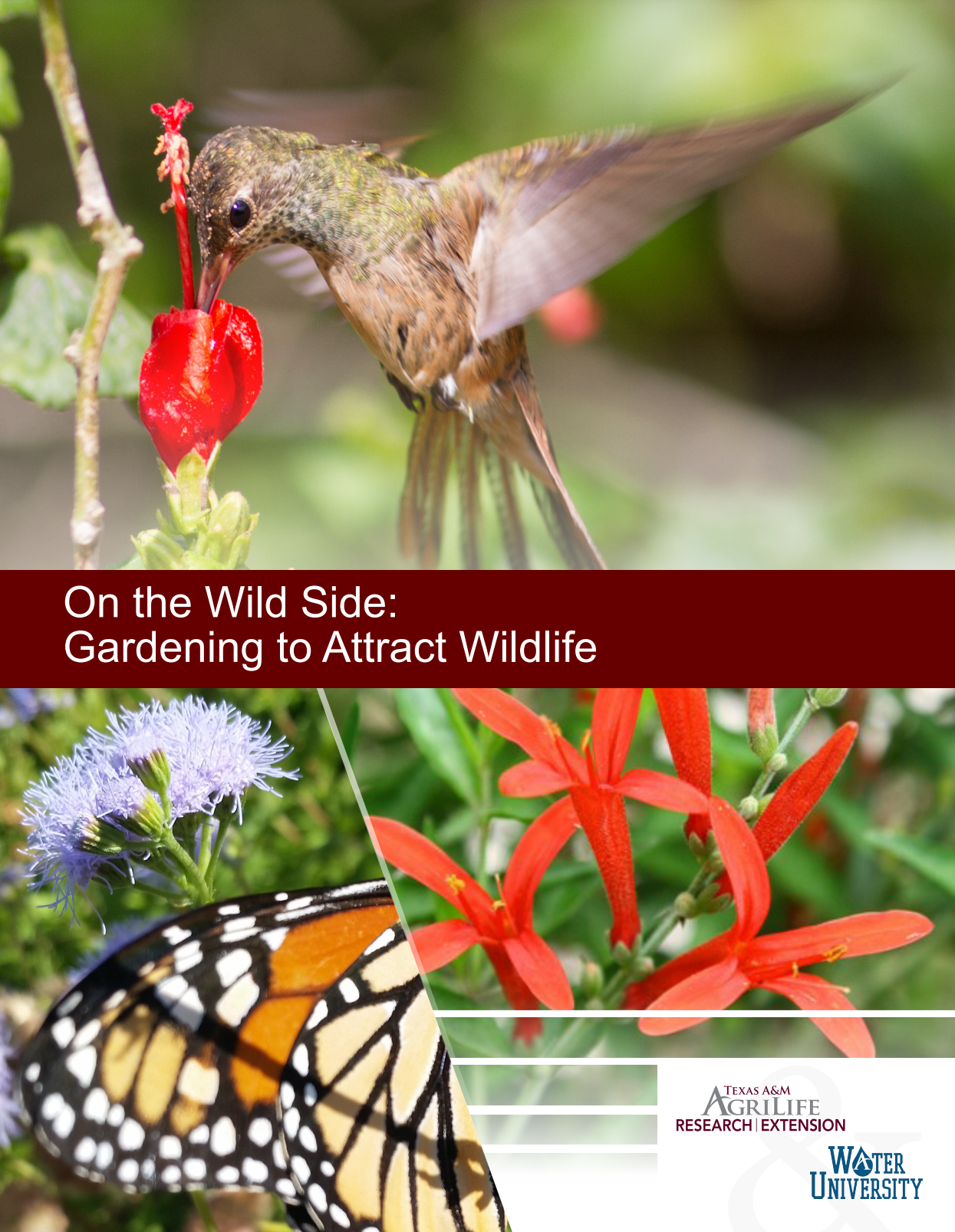
A ruby-throated hummingbird uses its long beak to get nectar from a flower at The Gardens at Texas A&M University. (Michael Miller/Texas A&M AgriLife)

The ruby-throated hummingbird is the most common species sited in the North Texas area.  They normally begin arriving in Texas between mid-March to mid-May.  They are particularly visible in the North Texas area from July to mid-October when they depart to their wintering grounds in Mexico and Central America.

Because of their high metabolic rate, hummingbirds eat every 10 -15 minutes, consuming half of their body weight in nectar and small insects.  The nectar provides the energy requirement for their rapid maneuvering.  Catching small insects such as gnats, flies, aphids, mosquitoes and spiders in mid-air or in webs provides them with vital protein, fats and nutrients.

Hummingbirds prefer tubular shaped blooms that match the way they feed with their specialized beaks.  They are particularly attracted to bright colors such as red, orange, pink, purple and yellow.  Choose native and adapted plants as they can do well in our soil and without excessive water.  Adding 3 inches of compost to the top 8 inches of soil will improve soil drainage.

It is best to stagger bloom times to have a continuous nectar supply from early spring through the late fall.  Early blooming spring plants from March through May are Columbine, Coral Honeysuckle and Texas Betony.  Bee Balm blooms from late May to late July.  Flame Acanthus and Trumpet Creeper Vine bloom June through September.  Late spring and early summer bloomers continuing through first frost are Autumn Sage Salvia, Turk’s Cap, Lantana, Mexican Petunia, Esperanza and Firebush.  Zinnias bloom in June to first frost, and Cannas bloom mid-summer to frost.  A late bloomer is Mexican Bush Sage, blooming August until first frost.

Scenes from The Gardens Laura McKenzie Texas A&M AgriLife Marketing and Communications.

Hummingbirds love hummingbird feeders, so when there are not enough blooms in your garden to provide the needed amount of nectar, use hummingbird feeders to satisfy your feathery friends.  Mix 4 parts boiled water to 1-part granulated sugar and let cool before adding to the feeder.  Do not add unnecessary dyes to the nectar, as hummingbirds are attracted to your brightly colored feeder rather than the color of the nectar.  It is important to change the nectar and clean your feeders every 2-4 days, especially during periods of high heat to avoid developing mold which can be harmful to the hummingbirds.  Therefore, fill your feeders with just enough nectar as will be consumed during that time.  Try not to place the feeders in direct sunlight to avoid excessive heat.  Locate the feeders where you can enjoy watching the activity from inside your home, but not so close to windows that the hummingbirds will be confused by the reflection and fly into the glass.  Feeders should be placed outside two weeks prior to expected arrival and left in place for two weeks after seeing your last hummingbird to accommodate any straggling migrators.

Follow these guidelines and enjoy watching these playful and energetic little birds all summer.  Be sure to select bright colors, varying bloom times, and place hummingbird feeders in the garden to complement the blossoms of the flowers. Hummingbirds will beat a path to your garden gate! After they have migrated south in the fall, take time to evaluate and make notes on which plants performed best, and start planning for next year’s hummingbird cycle.

Spring Flowers

Bee balm
Butterfly Weed
Canna
Cardinal Flower
Coral Bells
Indian Paintbrush
Scarlet Runner Bean
Columbine

Summer Flowers

Autumn Sage
Cross-Vine
Cypress Vine
Firebush
Firecracker Plant
Lantana
Lyre-leaf Sage
Majestic Sage
Mexican Cigar Plant
Mexican Bush Sage
Mexican Honeysuckle
Penstemon
Pineapple Sage
Shrimp Plant
Red Morning Glory
Tropical Sage
Scarlet Sage
Yellow Bells
Zinnia
Salvia

Trees

Desert Willow
Red Buckeye
Texas Olive

For more information about pollinators check out these pages:
Attract Wildlife 
Bees in North Texas
Gardening for Bats
Monarch Migration

Upcoming Events

Feb 18
4:30 pm - 5:15 pm

Youth Worm Composting

Rockwall County Library
Mar 7
9:00 am - 12:00 pm

2026 Homeowner’s Guide to Landscaping

Rockwall County Courthouse
Mar 12
6:00 pm - 7:30 pm

How to Garden in Our Soil

Rockwall County Library
Apr 1
April 1 @ 12:00 am - April 11 @ 11:59 pm

Online Order Form – Spring Plant Sale

Apr 9
6:00 pm - 8:00 pm

Oshibana: Pressed Flower Design

Rosini Vineyards
View Calendar

Subscribe to our mailing list and receive our quarterly e-newsletter, EnviroSmart, and information on events.

Rockwall Farmers Market

See you in May 2026!

  • Email
  • Facebook
  • Instagram
Texas A&M AgriLife Extension Service
Texas A&M University System Member
  • Compact with Texans
  • Privacy and Security
  • Accessibility Policy
  • State Link Policy
  • Statewide Search
  • Veterans Benefits
  • Military Families
  • Risk, Fraud & Misconduct Hotline
  • Texas Homeland Security
  • Texas Veterans Portal
  • Equal Opportunity
  • Open Records/Public Information