• Skip to primary navigation
  • Skip to main content
  • Skip to primary sidebar
  • Texas A&M Forest Service
  • Texas A&M Veterinary Medical Diagnostics Laboratory
  • Texas A&M AgriLife Extension Service
  • Texas A&M AgriLife Research
  • Texas A&M College of Agrculture and Life Sciences
Somervell County Master Gardeners
Somervell County Master GardenersTexas A&M AgriLife Extension Service
  • Menu
  • Home
  • About
  • Contact Us
  • AgriLife Extension Service
  • News
  • SCMG Gardening Resources
  • Members Only
    • Members Hour Form
    • Meeting and Financial Documents
    • Constitution and By- Laws

Poinsettias – Our Favorite Christmas Plant

November 30, 2025 by jkirksey

Our gardens may be resting for the winter, but there’s one plant that’s blooming like gangbusters everywhere you turn – grocery stores, discount centers, dollar stores – everywhere.  It’s the Poinsettia.   

Poinsettia (Euphorbia pulcherrimo) is native of southwestern Mexico and Guatemala where it grows wild in rocky canyons and typically “blooms” in December.  It was cultivated and valued by the Aztecs and Mayans long before the arrival of Europeans.  Indigenous peoples used Poinsettias for decoration, dye production, and as a fever reducer.

Poinsettias were first associated with 17th century Christian Christmas celebrations in Central America. Since Poinsettias bloom in December, they became elaborate decorations for Christmas celebrations, alters, and nativity scenes.  The star shaped leaf patterns reminded Franciscan priests of the Star of Bethlehem. The bright red bracts – red colored leaves – symbolized the blood of Christ.  Folk tales soon developed around this beautiful plant.

One Local legend tells of a poor, young Indian girl named Pepita. One Christmas Eve, Pepita was on her way to church when she realized she had forgotten an offering for baby Jesus. She gathered a bouquet of roadside weeds as a gift for the Holy Infant. When Pepita placed her bouquet at the base of the altar, the weeds burst into the vibrant red Poinsettia leaves.  This is how the plant came to be called “la flor de Nochebuena” – literally “the Christmas Eve flower,” or simply “the Christmas flower.”


The Poinsettia came to the United States in the 1820s when, a US diplomat to Mexico named Joel Robert Poinsett (yes – he’s the plant’s namesake) sent specimens home to his South Carolina greenhouse. And the rest- as they say – is history.

Today the Poinsettia is estimated to be the world’s most economically important potted plant. In the U.S. alone, about 70 million Poinsettias are sold each year during the six week “holiday period” at a value of $250 million.  There are over 100 patented Poinsettia cultivars in the United States.

 

Filed Under: Newsletters

Arbor Day Means Tree Planting in Texas

October 13, 2025 by jkirksey

November 1st is Arbor Day in Texas, and that means tree-planting season is here!!!  The Somervell County Master Gardeners are celebrating.  We’ll be giving away free trees and much more at our annual Texas Arbor Day event.  If new trees are in your future, you don’t want to miss this event.

DOING YOUR HOMEWORK

Selecting and planting a new tree is a big deal.  The wrong tree, at the wrong place, planted incorrectly spells disappointment. Don’t fret –  the Texas A&M and the Texas Forest Service can help.  Their Texas Tree Planting Guide (https://texastreeplanting.tamu.edu) will help you find and care for just the tree you are looking for.

Start with the basics in the “Tree Planting & Care” section.  Here you can learn about how to properly plant a tree as well as how to plan for energy efficiency and space/landscaping considerations.  Learn what to look for and problems to avoid when shopping for trees. 

The “Custom Tree Selector” helps you get just the right tree for your needs.   The Selector is customized by your Texas county.  With this tool you can filter trees for characteristics such as tree size, soil condition, Texas Native,and more.  You’ll get a list of trees recommended for your county .  For each tree you’ll see leaf type, tree shape, and a graphic of how the tree will look in Summer and Fall.   For each tree there is a link to more care and tree information such a “Problems”, “Features”, “Water Needs”, and more.

Pressed for time?  Try the site’s “Express Tree Selector” feature.   It lets you quickly search by County and Tree Size.

MARK YOUR CALENDER.  The Somervell County Master Gardeners’ Arbor Day Celebration and will be November 1 at Heritage Park in Glen Rose.  We’ll be there from 10am to Noon.  Come on by, visit our education stations and get your free tree.  See you there.

Filed Under: Newsletters

PWordPesticides

September 23, 2025 by jkirksey


Right and Write.  Too and Two.  See and Sea.  Words that sound the same, but they’re not.  That’s kind of like pyrethrin and permethrin – two active ingredients found in hundreds of garden pesticides.  They sound the same, but they aren’t.   Gardeners should understand how they differ. 


PWORD PESTICIDES
Pyrethrin and Permethrin are powerful pesticides available to gardeners in hundreds of products.  Sadly there is a dizzying array of PY-Words you might see when shopping for a bug killer.

Pyrethrum and pyrethrins are insecticides extracted from certain species of flowers in the chrysanthemum family.

Pyrethrum is the total extract from the flowers, while Pyrethrins are the refined 6 esters (these are the insect killing agents) from the chrysanthemum. 

Pyrethroids are different.  Pyrethroids are synthetic compounds produced to mimic the insect killing action of the Pyrethrin esters. 

Permethrin is a Pyrethroid.


WHAT’S IN A NAME?
When it comes to zapping bugs Permethrin and Pyrethrin work the same way – they interfere with certain channels in the bug’s brain.  That’s not the end of the story.

Since pyrethrin is plant based, its quality can vary based on the condition of the plants used.   Rainfall, heat, humidity and other factor can affect blossom quality.  This means the performance of pyrethrin can vary based on the condition/quality of the plants.

Permethrin, on the other hand, is synthetically produced.  This means the result is consistent performance.  Permethrin also lasts longer (residual toxicity).

Now the bad news.

Both Permethrin and Pyrethrin are highly toxic to bees and other pollinators. Permethrin, since it a synthetic and longer lasting, is considered more toxic to humans and pets than Pyrethrins.  However, to improve killing power, Pyrethrin is frequently mixed with other dangerous additives such as piperonyl butoxode.


CHOOSE WISELY
When it comes to garden pesticides containing Permethrin and Pyrethrin, there are hundreds of choices.   Don’t choose too quickly. Some companies offer several products with the same brand name, but with different active ingredient concentrations for different applications (e.g. stable pesticides, building use, etc.).   When it comes to gardening, active ingredient concentrations for ornamentals can be much different than  for fruits and vegetables For safety and effectiveness, choose the right product with the right active ingredient concentration for the right application.    Before you buy, let the label be your guide. 

Filed Under: Newsletters

A Somervell County Master Gardeners Public Education Event

September 15, 2025 by jkirksey

Filed Under: Newsletters

Catfacing Tomatoes

August 24, 2025 by jkirksey

Many thanks to SCMG Mary Ann Steele for suggesting and researching this article.

Tomatoes looking a little weird – maybe like a whiskerless, snarling cat?   Don’t worry.  Your garden hasn’t been invaded by evil feline spirits.  Those weird looking tomatoes may just be suffering from a condition known as Catfacing.  Don’t worry.  It’s not as bad as it looks.

A Catfaced tomato is easy to spot.  Symptoms include
Deep grooves and scars, usually at the blossom end

  • Puckering or folding of the fruit surface
  • Deep grooves and scars, usually at the blossom end
  • Lumpy, irregular bulges or indentations
  • Holes or open cavities that give the tomato a “distorted” look
  • Brown, corky tissue around the scarred areas


Catfacing Causes

Catfacing is a physiological disorder, not a disease, and is primarily caused by environmental stress during the early stages of fruit development—specifically, during pollination and the immediate post-pollination period. When the tiny tomato fruit is just beginning to form, disruptions in cell division and growth can cause the fruit to develop abnormally. There are several key factors that contribute to catfacing:

Temperature Fluctuation
One of the most common culprits is exposure to cool temperatures, especially nighttime lows below 50°F (10°C), during flowering and early fruit set. Cold weather interferes with normal pollination and fertilization, which can result in incomplete or uneven development of the tomato’s internal tissues. Conversely, sudden warm spells after a period of cool weather can also stress the plant and contribute to the disorder.

Physical Damage to Blooms
Injury to flowers—whether from strong winds, rough handling, or pests—can also result in catfacing.

Chemical Exposure
The use of certain herbicides, especially phenoxy types such as 2,4-D, can cause deformities in tomato fruits if they drift onto plants or are carried in contaminated compost. Even small amounts can disrupt hormonal balances and result in catfacing.

Excessive Pruning and Nitrogen
Some studies suggest that heavy pruning, especially at flowering time, or excessive application of nitrogen fertilizer can increase the risk of catfacing. These practices may cause growth spurts or stress responses that interfere with normal fruit development.


Varieties Most Affected

While any tomato can develop catfacing under stressful conditions, certain varieties are more prone to the disorder:

  • Large-fruited beefsteak types
  • Heirloom tomatoes with deeply lobed fruit
  • Early-maturing varieties exposed to spring temperature swings

Smaller-fruited and cherry varieties are generally less susceptible, as their fruit structure is simpler and less likely to be disrupted by environmental changes.

How to Prevent Catfacing

While catfacing cannot always be eliminated—especially in regions with unpredictable weather—gardeners can take steps to reduce its incidence and severity:

Time Planting Carefully
Wait until after the last expected frost and until nighttime temperatures are reliably above 50°F (10°C) before setting out tomato plants. Transplanting too early exposes young plants to cold stress, increasing the risk of catfacing.

Choose the Right Varieties
Select tomato varieties known for resistance to catfacing, especially if you live in an area with cool or fluctuating spring weather. Smaller fruited types and hybrids are often less susceptible.

 Protect Young Plants
Use row covers, cloches, or other protective devices during cold snaps to shield young plants from low temperatures. Remove covers during the day to avoid overheating.

Avoid Excessive Pruning and Nitrogen
Prune plants judiciously and avoid over-fertilizing, especially with nitrogen, during flowering and early fruit set. A balanced fertilizer program is best.

Prevent Chemical Drift
Be cautious with herbicide use in and around your garden. Avoid using contaminated compost or manure and ensure that drift from spraying nearby lawns or fields does not reach your tomatoes.

Gentle Handling
Handle plants carefully during flowering to avoid damaging blooms, and protect plants from strong winds with supports or windbreaks.


Is Catfacing Harmful?

The good news is that catfacing is primarily a cosmetic problem. The affected tomatoes are still safe to eat—simply cut away the scarred or deformed tissue. The areas around the catfaced scars are usually unaffected in flavor or texture, though the fruit may not store as well.

Catfaced fruits should be checked for signs of rot or insect infestation in open cavities, but otherwise, there is no food safety risk.


Filed Under: Newsletters

Giant Prairie Robber Fly

July 27, 2025 by jkirksey


YIKES!!!!! – might be your first reaction if you see this critter in your garden.  Don’t panic.  This is not an alien bug from outer space or an escapee from a mad scientist’s laboratory.  This is a Giant Prairie Robber Fly (Microstylum morosum,).  Turns out these are fascinating creatures.  And the good news is – they are good to have in your garden. 

 The Giant Prairie Robber Fly (GPRFly) is a predator, which means it won’t eat your plants.   It is large and powerful with some individuals reaching the size of a small humming bird.  The first thing you may notice is the fly’s eerie iridescent green eyes.  Scientists believe these large compound eyes help the Fly locate its prey in dense vegetation (think tinted shooters glasses for humans).    There are over 200 species of Robber Flies found in Texas

The GPRFly feeds on beetles, dragonflies, other flies, grasshoppers, leafhoppers, wasps and other flying insects. When hunting, the GPRFly will perch or hang upside down from foliage waiting for its prey to pass by.    The Fly then launches and captures its target in flight.  A sting injects a unique venom paralyzing the victim.

Robber Fly With Its Prey

Here is an interesting side note…
The Robber Fly’s venom is unique in that it is a brew of what experts call “novel” proteins.  Most other insect venoms are mixtures of enzymes.  The effects of many of these proteins are not well understood, however some scientists believe Robber Fly venom could be the base for a family of powerful organic pesticides. 

The words “sting” and “venom” caught your attention.  Don’t worry – these flies rarely sting humans.  If a GPRFly lands on you DON’T SWAT – gently brush it away.

Yes – at first glance the Giant Prairie Robber Fly may look bizarre and menacing.  If you see one in your garden, remember the age-old adage – “you can’t judge a book by its cover.”

Filed Under: Newsletters

Zinnias

June 27, 2025 by jkirksey

What do the Aztec Emperor Montezuma, Marie Antoinette, and a theater in London have in common? You guessed it – Zinnias (did the title of this article give it away?).  Spanish conquistadors reported Zinnias in the Aztec ruler’s massive decorative garden.  French Queen Antoinette grew Zinnias at Trianon, Versailles.  Designer Basil Ionides (1884-1950) renovated London’s Savoy Theater in 1929 based on colors of Zinnias in the Hyde Park Zinnia beds. 

Their illustrious history aside, Zinnias may just be the perfect plant for your garden – especially in the Texas summer.  They are low maintenance; heat and drought tolerant, fast growing, and deliver long lasting splashes of brilliant colors.  Who could ask for more?

CHOOSING YOUR ZINNIAS
About 22 species of blooming shrubs and “sub-shrubs” make up the genus Zinnia in the Aster family.  Zinnias are usually considered an annual but can be grown as a perennial in the Southern United States and parts of South America.  Zinnia’s spread quickly by annually reseeding.

When shopping for Zinnias, there are several Zinnia “Types” to choose from.  The Common Zinnia (Zinnia Elegans) has large, showy blooms and can grow up to 4 foot tall with a bushy, upright habit.  Zinnia Angustifolia is compact (about 15”) with a creeping growth habit, narrow leaves and a smaller, “daisy-like” bloom. Zinnia Haageana is small and compact, usually growing between 8 and 18 inches.  Zinnia Marylandicais a compact hybrid known for its vibrant color and exceptional disease resistance.

With over 80 Zinnia varieties to choose from, you are sure to find just the right flower type and color combination for any garden space.  See the Texas Super Star Fall Zinnia recommendations at https://texassuperstar.com/fall-zinnias/.

Common Zinnia (Zinnia Elegans)
Zinnia Angustifolio
Zinnia Haageana


GROWING AND CARING FOR YOUR ZINNIAS
Growing Zinnias from seeds is easy.  Seeds sprout best in warm soil (70-75°).  Start seeds indoors 4 to 6 weeks before the last killing frost. When starting seeds inside, a humidity dome usually isn’t needed. Sow seeds in the garden when soil temps consistently reach 70.   Avoid planting seeds too deep.  Be sure to keep the soil damp – but not soggy.     Zinnia seeds typically sprout 4-10 days after planting. Some gardeners report Zinnias can be sensitive to root shock, so handle you plants carefully when transplanting.

Powdery Mildew on Zinnia Leaves

Powdery Mildew (PM), a fungal disease, is a common problem for Zinnias’. Wind carried spores and contaminated garden tools can quickly spread the disease.  Watch for powdery splotches on leaves and stems .  Purchase PM resistant varieties when you can (Profusion and Zahara are two varieties known for their PM resistance).  Water only when needed.  Avoid splashing leaves and stems, and Mulch, Mulch Mulch.  Some gardeners recommend regular treatment with a cooper fungicide spray as a preventative.  Prune infected leaves and remove severely infected plants.  To avoid spreading the fungal spores, place infected plant debris in a plastic bag and immediately remove from the garden.  Be sure to disinfect and garden tools that may have come in contact with infected plants. 

Filed Under: Newsletters

Public Education Event

June 2, 2025 by jkirksey

Filed Under: Newsletters

Azo-What?

May 24, 2025 by jkirksey

How can a volcanic eruption that happened 30 million years ago help your garden? The answer is Azomite.  Now, about that volcano.

Volcanic ash from the eruption settled in a vast seabed in what is now central Utah. This seabed was fed by hundreds of mineral rich rivers.  The unique combination of volcanic ash minerals, nutrient rich sea water, and 30 million years created Azomite.  Today Azomite is mined, and sold as an organic (OMRI listed) soil amendment for adding trace mineral elements to garden soils.

Technically speaking Azomite (0-0-0.2) is a “highly mineralized complex silica ore.”  It supplies soil micronutrients totally from mined sources.  These minerals include calcium (1.8%), magnesium (0.5%), chlorine (0.1%), sodium (0.1%). Several grades of Azomite including granulated and ultrafine are available.


USING AZOMITE AND “THE LAW OF THE MINIMUM”
In the world of plant fertilizers there is something called “The Law of the Minimum”.  The law states that “plant growth is determined by the scarcest limiting nutrient.”  This is where Azomite comes in.  While conventional fertilizers deliver macronutrients Nitrogen(N), Phosphorus (P), and Potassium (P), Azomite supplies important micronutrients.  Azomite should be used with other fertilizers to create a well-balanced diet for your plants. 

Regardless of application, Azomite must be in the plant’s root zone to be effective.  Here are some Azomite use guidelines;

Established Beds
Sprinkle Azomite around each plant and work into the soil.

Seedlings and Transplants
Mix  a teaspoon of Azomite in the planting hole.  Add Azomite to  your favorite seed starting mix.

Container Plants
Mix 1 teaspoon per 2-inch pot diameter with potting soil before planting, then give 1 teaspoon of Azomite each quarter


THE AUTHOR’S DIY SEED STARTING MIX

This recipe adapted from the Rodale Institute.

8 Cups Screened Compost

2 Cups Perlite

2 Cups Vermiculite

4 Cups Screened Sphagnum Peat Moss

6 Tbsp Azomite

Filed Under: Newsletters

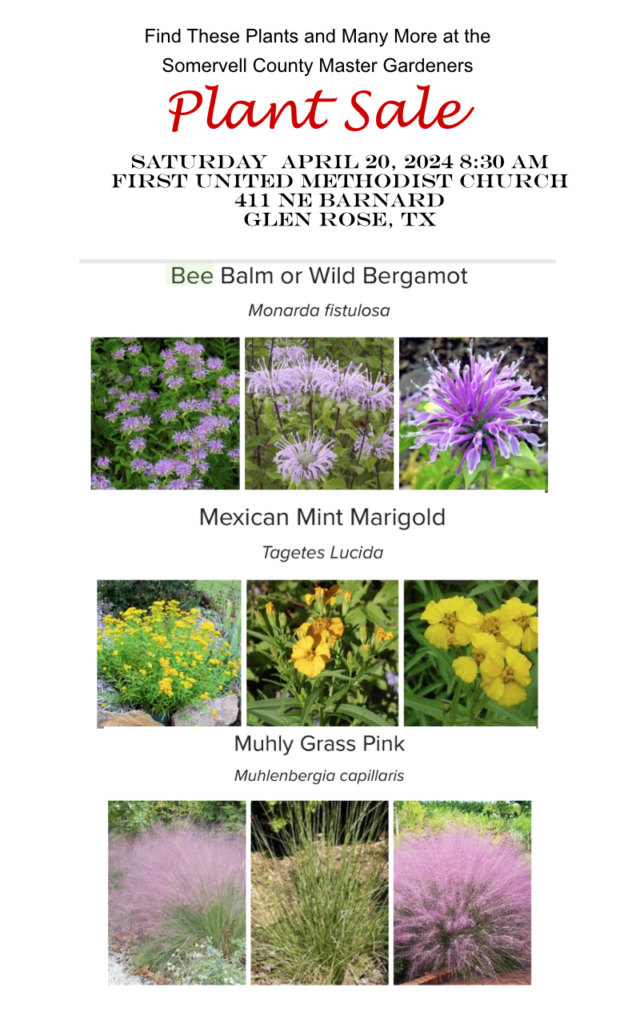
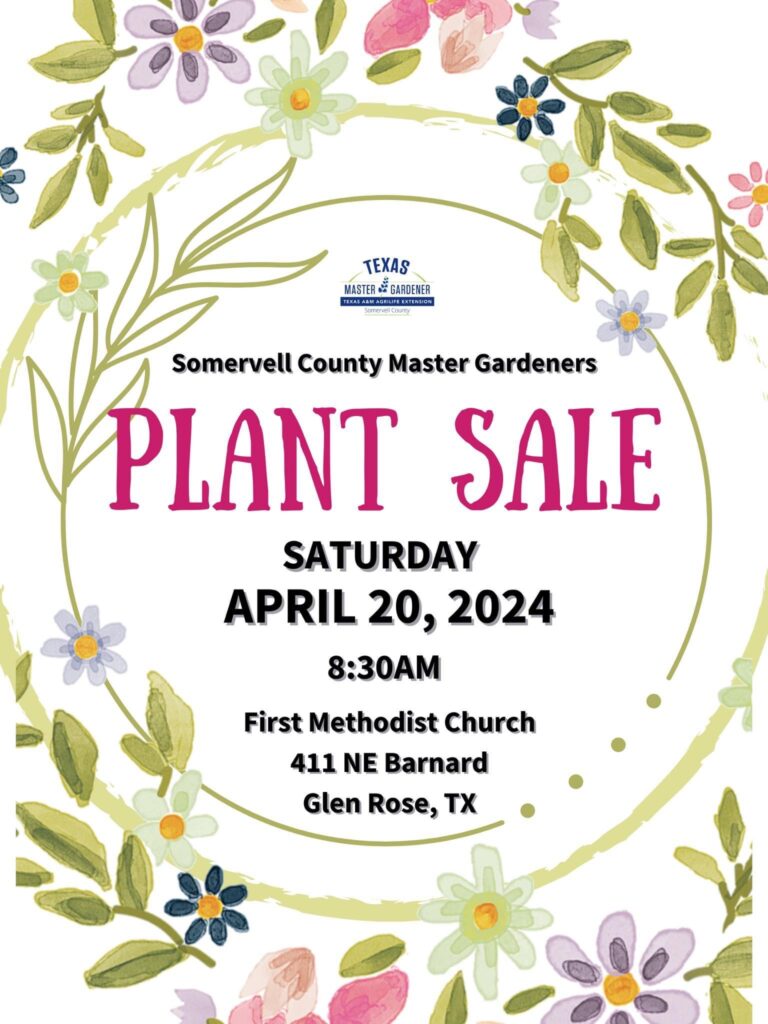
Pop Up Plant Sale 2025

May 5, 2025 by jkirksey

Filed Under: Newsletters

  • Page 1
  • Page 2
  • Page 3
  • Interim pages omitted …
  • Page 43
  • Go to Next Page »

Upcoming Events

Notice
There are no upcoming events.

Get Updates

Subscribe to Our Newsletter

RSS Recent Posts

  • Poinsettias – Our Favorite Christmas Plant
  • Arbor Day Means Tree Planting in Texas
  • PWordPesticides
  • A Somervell County Master Gardeners Public Education Event

Administrator Only

  • Log in
  • Entries feed
  • Comments feed
  • WordPress.org
Texas A&M AgriLife Extension Service
Texas A&M University System Member
  • Compact with Texans
  • Privacy and Security
  • Accessibility Policy
  • State Link Policy
  • Statewide Search
  • Veterans Benefits
  • Military Families
  • Risk, Fraud & Misconduct Hotline
  • Texas Homeland Security
  • Texas Veterans Portal
  • Equal Opportunity
  • Open Records/Public Information