
by Lydia Holley July 13, 2020
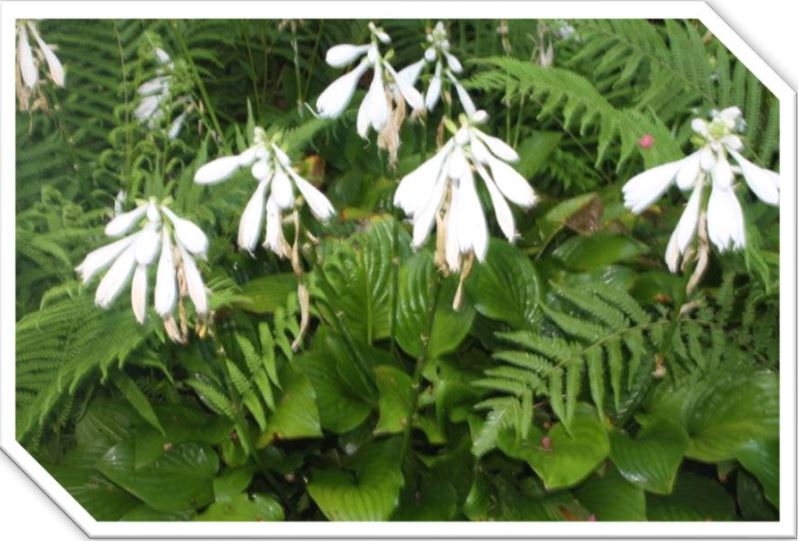
Hostas are almost the perfect plant for the shade garden. These perennial plants come back year after year, and in the summer, send up stalks of white or soft violet bell-shaped blooms. However, hostas can be a bit tricky to grow in Texas because they do not appreciate our heat and humidity. They especially resent summer nights that stay warm.
Hostas like moist, organic soil. I plant mine with hydrangeas because the hydrangeas are a leading indicator that the soil is dry. Plant in full shade, or in a bed with a couple hours of morning sun. If the tag says full sun, that is labeled for a garden much more northern than Texas.
Organic matter helps the soil to drain, since hostas do not like their roots standing in water. To keep slugs at bay, it is recommended that you use pine straw instead of bark mulch. The pine needles are less attractive to those hungry, slimy creatures.
Even if you do everything right, you have to understand that your hostas may never achieve the size and beauty of those grown in their perfect climate. To grow hostas the best they can be in Texas, try a couple of tricks. The first is to research its lineage.
Hostas are divided into several species, with numerous cultivars. Researchers at Louisiana State University (LSU) found that many of the hostas that do best in a hot and humid climate are hybrids of H. plantaginea. Hostas from this species grow well without a long, cold winter because they originated from Southeast Asia.
Of LSU’s top 10 performing hostas, six have H. plantaginea in their parentage. They are: Frangrant Bouquet, Guacamole, Iron Gate Delight, So Sweet, Stained Glass, and Royal Standard.
Other hostas recommended by LSU are: Albomarginata, August Moon, Francee, and Krossa Regal. Since there are so many varieties of hosta, it is impossible to trial them all. You may have some that grow well that have not been trialed. But if you want to make an educated guess before purchasing a hosta, its parentage may give you a clue to its performance.
Another trick is to grow hostas in pots. This will help keep them happy because the winter soil temperature in a pot tends to be around 15 degrees cooler than in the ground. This provides more of that winter chill they crave.
Even if you are successful in growing hostas, they do go completely dormant in winter, so remember to add some winter interest. I have aucuba, boxwood, Japanese sweet flag grass (Acorus gramineus), liriope, and other evergreens in my hosta bed.
The third trick is not to grow hosta at all. Substitute African false hosta (Ledebouria petiolata formerly Drimiopsis maculata) instead. This plant’s leaf is similarly-shaped, but its blooms are smaller and not nearly as showy.
For more information, call 903-675-6130, email hendersonCMGA@gmail.com.
Follow us on Facebook: https://www.facebook.com/HCmastergardener.