Lantana ‘Trailing Purple’
Lantana montevidensis
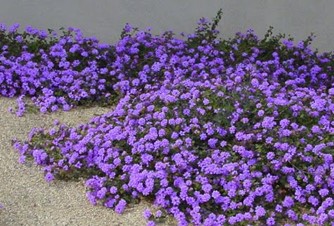
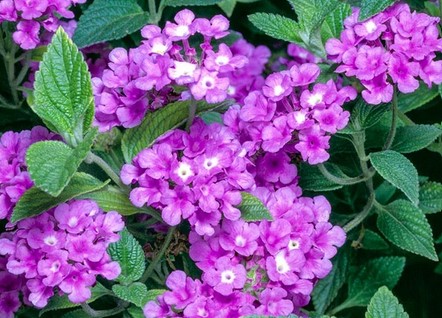
Characteristics
- Type: Perennial
- Type: Broadleaf Evergreen
- Family: Verbenaceae
- Native Range: Tropical South America
- Zone: 8 – 10
- Height: 1 – 1.5 Feet
- Spread: 3 – 5 Feet
- Bloom Time: June – Frost
- Flower: Showy
- Bloom Description: Lilac to Purple-Pink with Yellow Throat
- Sun: Full Sun
- Water: Medium
- Maintenance: Low
- Leaf: Fragrant
- Attracts: Butterflies, Bees
- Texas Superstar®
Culture
Lantana ‘Trailing Purple’is winter hardy to USDA Zones 8-10 where plants will thrive outdoors as sprawling, low-growing shrubs featuring continuous bloom throughout the year. Lantana ‘Trailing Purple’ plants are easily grown in average, medium moisture, well-drained soils in full sun. Plants tolerate part shade, but best flowering is in full sun. Plants thrive in lean, sandy, slightly-dry soils. Container plants are less tolerant of dry soils than plants grown in the ground, and accordingly should be watered regularly and never allowed to dry out.
Noteworthy Characteristics
Lantana montevidensis, commonly called trailing lantana or weeping lantana, is native to tropical areas of South America. In frost free areas, it grows as a low, trailing, woody shrub to only 12-20″ tall, but spreads by vine-like stems to 5′ wide or more. It is typically grown as a dense ground cover. It features hairy, opposite, coarsely-toothed, ovate, dark green leaves (unpleasant aroma when bruised). Leaves can be a skin irritant. Clusters (to 1 1/2″ across) of tiny lilac to purplish-pink flowers with yellow throats bloom profusely throughout the year in frost free areas. Flowers are attractive to bees and butterflies.
Problems
No serious insect or disease problems. Powdery mildew may occur, particularly if plants are grown in less than full sun locations. Leaf spot and stem rot may also occur. Watch for whiteflies and spider mites, particularly on overwintering plants.
Garden Uses
Flowering, shrubby, low-maintenance ground cover for frost-free areas. Good for erosion control on banks or hillsides. Where not winter hardy, it serves as an excellent annual for bedding or ground cover. Cascading stems make this a superior selection for hanging baskets, containers or growing along the tops of walls.
Courtesy of Missouri Botanical Garden Plant Finder