Flame Acanthus or Hummingbird Bush
Anisacanthus quadrifidus var. wrightii (A. wrightii)
Characteristics
- Type: Perennial
- Zone: 7- 10
- Height: 3 – 5 Feet
- Spread: 3 – 4 Feet
- Bloom Time: June – September
- Bloom Description: Reddish Orange
- Texas Native
- Sun: Full Sun
- Water: Dry
- Maintenance: Low
- Flower: Showy
- Attracts: Hummingbirds, Butterflies
- Tolerates: Deer, Drought, Clay Soil, Shallow-Rocky Soil
- Other: Winter Interest
Culture
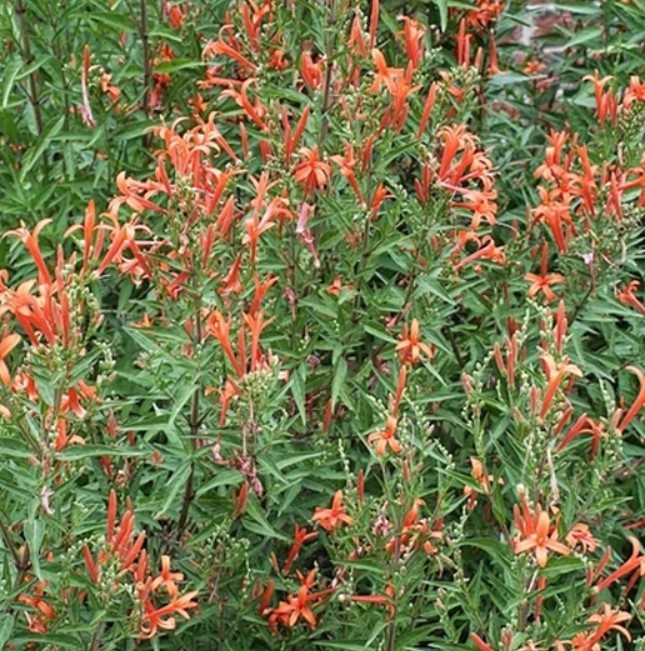
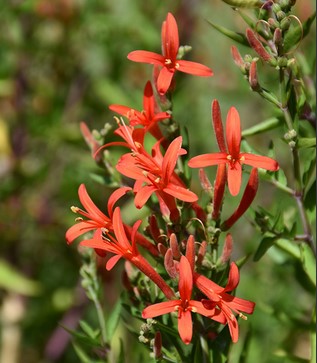
From midsummer through frost, flame acanthus is covered with long, slender, red or orange blooms that hummingbirds love. It is a drought tolerant, heat-loving small shrub that works as well in the perennial border as it does as an informal hedge or specimen plant. The bark is light and flaky and makes an interesting winter and early spring accent. Flame acanthus is late to come out in the spring, and benefits from periodic shearing or even severe cutting back in early spring. It grows in the Edwards Plateau on rocky banks and floodplains, but is adaptable to sunny, well-drained exposures throughout the state, even Houston. It is a good choice for sites with poor soils and reflected heat – although supplemental water in dry summer months will encourage flowering. Best grown in medium to dry, well-draining soils in full sun, but is adaptable to many soil types including poor, rocky soils and heavy, clay soils. Tolerant of drought, and takes well to pot culture.
Noteworthy Characteristics
Anisacanthus quadrifidus var. wrightii, is an upright, deciduous shrub reaching up to 5′ tall and 4′ wide with an informal, spreading appearance. It is native to extreme south-central Texas and adjacent northern Mexico, where it is found growing on rocky, calcareous slopes and floodplains. The slender, brittle stems have attractive, peeling bark. The leaves are small, nearly clasping, and lanceolate in shape. Bright redorange tubular flowers (1-1.5″ long) appear in abundance during bloom periods, which most often fall from spring to late summer after rain. Extremely attractive to hummingbirds, butterflies, and other pollinators. Deer tend to avoid this plant. The specific epithet quadrifidus means “divided into four”, possibly in reference to the four symmetrical petals of the flowers. The infraspecific epithet wrightii honors Charles Wright (1811-1885), an American botanist who chiefly collected in Texas, Hong Kong, and Cuba.
Problems
No known pest or disease issues.
Garden Uses
Informal hedge or specimen plant. Does well in mixed borders, containers, rock gardens, and xeriscaping.