Potatoes – A Great Winter Crop
By Joanne Curley
Grayson County Master Gardener
Did you know? Potatoes are high in vitamin C and potassium, which is an electrolyte
that aids the workings of our heart, muscles and nervous system. They are virtually free
of fat, saturated fat, sodium and cholesterol, and they are also a good source of dietary
fiber. 1 What better food can you grow in your winter garden!
Potatoes are an edible tuber, a swollen stem designed for storage and propagation with
nodes or eyes on the outer surface. 2 They are used in home-cooked dishes throughout
the world. It is estimated that Americans consume approximately 125 pounds of potatoes
or potato products each year! 3 Growing potatoes in your own backyard is not only
healthy and inexpensive, it is a surprisingly easy crop to try this winter. Potatoes can be
grown in garden spaces as small as 10 square feet, producing up to 80 pounds of
potatoes. By growing your own potatoes, you can enjoy the fresh flavor of homegrown
produce as well as the personal satisfaction most gardeners enjoy from growing their
own food.
Getting ready: You will want to have your potatoes planted 21-30 days before the last
frost as they prefer cool weather and moisture throughout their growing season. Many
use Valentine’s Day as the date to get potatoes started. Since there are many different
varieties of potatoes, your first job will be deciding which type of potato you want to try
this season. Kennebac and Red LaSoda are two popular types grown in our area. 4
Normally a single potato plant will produce 3-4 pounds of potatoes and one seed potato
will produce 4-5 plants.
Next, you will need to prepare the soil. Potatoes need adequate fertilization early in their
growth, you will want to plant in healthy soil and fertilize prior to planting them. You can
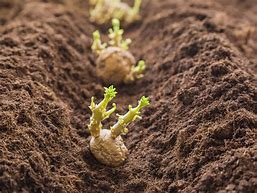
use seed potatoes that you purchase, or use your own potatoes. Simply cut the potatoes
into 1 ½-2 inch pieces, each having at least one eye which will produce a new plant. Be
sure to allow cut pieces to sit for a few days so the edges turn into a corky substance that
will deter harmful microbes to enter.
4 Texas Agrilife Extension Resource, Path to Plate – Potatoes. Information gathered by Aggie Horticulture.
3 Texas Agrilife Extension Resource, Path to Plate – Potatoes. Information gathered by Aggie Horticulture.
2 Texas Master Gardener Handbook, Texas A&M Agrilife Extension, Jayla Fry-Editor.
1 UC Davis, Good Food as Good Medicine:
https://health.ucdavis.edu/blog/good-food/potato-health-benefits-and-why-you-should-eat-more-spuds/2022/0
5
Planting: You will plant your potato pieces in 6 in deep trenches and cover them with
3-4 inches of dirt. If you don’t have space in your garden area outdoors, you can plant
them in large bags, buckets or deep containers, and then cover them with soil. Plant the
potato pieces 10-12 inches apart, covering them with 2-3 inches of soil. As they begin to
grow, you will need to pull 3-4 inches of dirt up around the plants when they are 4-6
inches tall, and repeat this process periodically so that the potatoes are not exposed to
sunlight.
When your potato plant flowers, you will want to cut off the flowering stems. This will
increase your potato crop and the size of your potatoes.
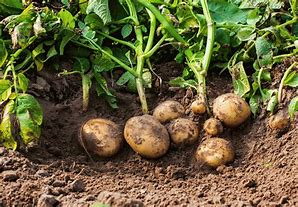
Harvesting: When the plant is dead, approximately 60-90 days (depending on the type
of potato you chose to grow) after planting, your potatoes will be ready to harvest. Gently
pull up the plant and shake away the dirt, and you will have homegrown potatoes in the
root system. Wash them and store in a cool, dry, well-ventilated area. Typically, potatoes
store well for 3-5 weeks.
Once harvested, you are ready to try them out in your favorite potato recipe or share with
friends and family!