

• Skip to primary navigation
  • Skip to main content
  • Skip to primary sidebar
  • Texas A&M Forest Service
  • Texas A&M Veterinary Medical Diagnostics Laboratory
  • Texas A&M AgriLife Extension Service
  • Texas A&M AgriLife Research
  • Texas A&M College of Agrculture and Life Sciences
Texas AgriLife Extension Service
  • Menu
  • Home
  • Events
    • Events
    • Annual Events
  • Community Services
    • Academic Scholarship
    • Master Gardener Intern Training
    • Speakers Bureau Services
    • Ask A Master Gardener
    • Junior Master Gardener
    • Local Garden Projects
  • Resources
    • Newsletter
    • Local Articles
    • Garden Topics
    • Recommended Books
    • Area Research Gardens
    • Garden Checklist
    • Gardening Zones
  • Plant Library
  • About US
    • Contact Us
    • Join our Team!
    • Grayson County Texas A&M Extension Education
    • Grayson County AgriLife Extension Contacts
  • Interns

Archives for June 2023

Master Gardener Intern Experiences

June 22, 2023 by meltonbarn


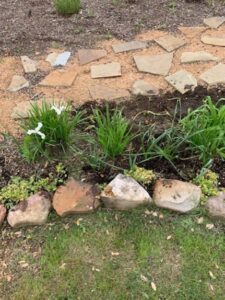
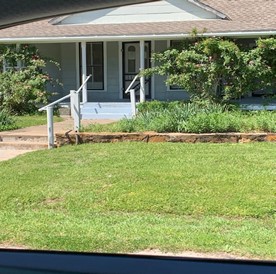
(Photos from Harmony Park project site, Eisenhower Birthplace project site, and a volunteer day at Lowes-Sherman)


Grayson County Master Gardener Shares Her Experiences as an Intern 

By: Liz Johnson, Grayson County Master Gardener Intern 

It has been my desire for quite a while to expand my plant and gardening knowledge and become a Master Gardener. Sharing knowledge is something I enjoy. Turning a plain piece of ground into something beautiful is a good and joyful thing, and I want to share my experience and enthusiasm with the community. 

To become better acquainted with the processes and procedures of the Master Gardener Office, I spent several hours with Master Gardener Donna Nesbitt and learned about the library and phone protocol. I had time to become acquainted with Joyce White, Grayson County Extension Agent at Texas AgriLife Extension Service, and learned what her duties are. I offered my Microsoft Office skills as well as calligraphy skills if needed to Joyce and Donna. 

Harmony Park and Eisenhower Birthplace are oases in the Sherman/Denison area. Both are peaceful even though their locations are so diverse. Spending time there helped acquaint me with the native plants and other plants that thrive here. The Sherman/Denison area is much different than any place I have lived. I have encountered the “Gumbo” soil in the southeast part of Houston, and it was a challenge there also! The classes regarding the different soils in our area – what to do and not to do – have served me well in several instances. 

I have visited the Sherman Library-Harmony Park several times and each time, whether pulling weeds or planting new plants (I am an excellent weed puller and hole digger!), there is a tranquil peace in the garden. This is amazing since it is in the downtown area. The grounds are beautiful and full of healthy plants well suited to the location. Children and parents take advantage of the musical instruments at the far end of Harmony Park. Their lovely sounds make the job at hand easier somehow. It is delightful to see parents and children enjoying the grounds and stopping to admire the lovely plants. 

During the visit noted, weeding was done, and plants were planted. All the plants did not thrive but the ones that did looked healthy when I returned in May. Each time I go there, plants are pointed out and I learn a little more about the grounds at the Sherman Library-Harmony Park. 

Because it is the birthplace of one of our Presidents, the Eisenhower Birthplace State Historic Site, located in Denison, Texas, should be beautiful. Thanks to David Turner, Grayson County Master Gardener and Master Naturalist, it is. Having had the opportunity to attend several workdays, I have learned much about the native plants and what is and is not a weed! Our main activities have been weeding and trimming. 

If Eisenhower’s Birthplace had to be described in one word, that word would be peaceful. Even with five Master Gardeners diligently working, the peaceful serenity that is found there was not lost. In the world we live in, that is a good thing. The Master Gardeners cleaned out flower beds of unwanted or dead plants near the office. A little trimming was also done. It doesn’t sound 

like much, but there were four or five of us and we had several large piles of debris to carry away. Everything looked much tidier when we finished. 

After working at several places and attending the weekly Master Gardener meetings, I volunteered at Lowe’s for Community Outreach. What a great experience. Besides me, there were two Master Gardeners and several Interns who volunteered their service that day. Between helping customers, we had the opportunity to get to know each other better-what a gift. We greeted customers, talked about our program and the Texas A&M extension program, assured customers we weren’t selling anything, and helped a lot with questions. It was awesome to recall answers to questions from our classes and/or our book. The managers at Lowe’s were very happy. 

The combination of classroom training and practical experience has given me a much better appreciation for selecting the best plants for a given location and how to nurture them to healthy maturity. I value what I have learned from the Master Gardener program. I look forward to sharing my knowledge and experience with the community. 
Filed Under: Local Articles

All About Fire Ants: Beware!

June 21, 2023 by meltonbarn


All About Fire Ants: Beware! 

By: Joanne Curley, Grayson County Master Gardener 

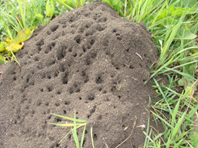
There is no way of avoiding the periodic mounds that appear in your landscape beginning in early Spring. With only one true predator, the phorid fly, and minimal other possible predators, Fire Ants definitely present a challenge for Texans who spend any amount of time outdoors. 

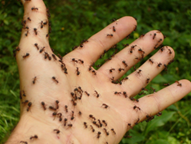
Fire Ants are not native to Texas or even North America. They arrived from South America in a port in Mobile, Alabama in 1918, and have been an ongoing pest ever since! 1 Colonies often have tens of thousands of ants in them, and when left untreated, colonies can get as large as 200,000. The mounds are filled below with tunnels that can extend as long as 25 feet. This is partly why they are so difficult to treat and eliminate. Many treatments kill many of the ants, but if the queen is not killed, the colony will simply repopulate. 

1 Fire Ant Frequently Asked Questions. Texas Imported Fire Ant Research and Management Project 

2 Welcome to Texas: Avoiding the Sting of Fire Ants, pg. 2. Wizzie Brown, Extension Program Specialist, Texas A&M AgriLife Extension Services. 

3 Fire Ant Control Methods Around Pets, pg. 4. Paul R. Nester Extension Program Specialist-Integrated Pest Management, Texas A&M AgriLife Extension Services. 

4 Welcome to Texas: Avoiding the Sting of Fire Ants, pg. 1 Wizzie Brown, Extension Program Specialist, Texas A&M AgriLife Extension Services. 

Fire Ants are attracted to open sunny areas.2 They tunnel deep or deeper to seek cooler temperatures and moisture down below when it gets hot and dry above ground. In doing so, they often go unnoticed. It isn’t until rain or hose/sprinkler water floods their tunnels that we see mounds appear, and by then, there could be a well-established colony underground. Common areas you might find colonies include sidewalks, gardens, landscaped areas, fields, and basically anywhere Fire Ants have adequate food and water sources. 

Fire Ants attack any time the mound is disturbed. Children can become fascinated watching the movement of Fire Ants in action when the mound is disturbed and don’t realize the danger of being in such close proximity. Even pets are at risk of being attacked.3 Fire Ants rush out in great numbers, often from the holes on top of the mound. They use their jaws to cling to their victim and sting away, causing a burning sensation, localized swelling, itchiness, and later a pustule forms at the site where the victim was stung. Some people have greater sensitivity to the venom, and this causes greater amounts of swelling. Others have developed a more severe allergy that can cause life-threatening allergic reactions that need immediate attention.4 

Cautions: 

1. Be careful where you step! Sometimes the colony is difficult to detect because there is no mound, and you may find yourself standing right in a pile of Fire Ants. Oftentimes, you don’t even realize it until you feel the first sting. 

2. Fence posts and trees: Fire Ants often have colonies at the base of both, and even sometimes up in the tree, so be careful where you lean, sit, or climb. 

3. When camping, thoroughly scour the area you intend to set up your tent, sleeping bag, and near the campfire, walking over it to make sure there are no fire ant colonies underneath. 

4. Fire Ants love oil-containing seeds, seed pods, and insects, both pests and beneficial insects.5 Gardens provide abundant moisture, rich organic soil, and a wide variety of foods for Fire Ants, so be careful when working in your garden beds. 

5 Managing Fire Ants in Vegetable Gardens. Molly Keck Extension Programs Specialist II – Integrated Pest Management, Texas A&M Extension AgriLife Service. 

6 Two-Step Method, Texas Imported Fire Ant Research and Management Project. 

7 Fun Facts About Fire Ants, Gregory Pest Control Solutions 

There are many options for controlling Fire Ants. Some suggest creating more shade in your yard as Fire Ants like open sunny areas. Others suggest using Purple Martin Houses as these birds seem to feed on Fire Ants. Armadillos, spiders, and horned lizards also reportedly feed on Fire Ants, although I am not so sure how many of those you might want to invite to your yard. Some mulches such as cedar bark mulches may discourage or even claim to repel Fire Ants. Mowing and disturbing the mound may cause Fire Ants to relocate; however, none of these methods are research-based or proven. Texas Imported Fire Ant Research and Management project has come up with a Two-Step process to manage Fire Ants in your yard. This is “currently the best-proven approach to effectively manage Fire Ants.”6 

The Two-Step Method involves Baits as well as Individual Mound Treatments. The use of baits is a slower approach but 80-90% effective. It attracts the fire ant workers to the pesticide-covered grits, which they take to the queen, making her infertile or eliminating her completely. Once this happens, the colony will not continue to be viable. Individual Mound Treatments work more quickly but are less effective in the long term. This can include the use of chemicals, granules, or even organic methods such as flooding with boiling water or using Spinosa. Be sure to read the label on any chemical or granular method you use for safety in vegetable gardens and follow instructions for appropriate use in controlling Fire Ants. 

The bottom line is that Fire Ants are simply a part of life in Texas. Simply being aware is the best way to stay safe. Let’s be realistic – Fire Ants will not be eliminated. 

More Interesting Facts About Fire Ants:7 

1. Queen Fire Ants live up to 7 years and lay between 800-1600 eggs per day. Queens never leave their nest. 

2. Fire Ants are aggressive and have been known to invade beehives, completely killing all the bees and creating havoc in the hive. They also will attack anything they perceive to be a threat to their colony. 

3. Fire Ants float. In floods, they have been known to create a giant floating mass and have also been known to form chains to cross short distances and transport the larvae out of flooded tunnels in their colony. They can lift 20 times their weight. 

4. Most Fire Ants we see are females that are sterile worker ants. Their job is to maintain the colony and take care of the young. 

5. Fire Ants sleep up to 9 hours a day and do not have ears. They have a life span of approximately 5 weeks. 

Filed Under: Local Articles

The Broadfork-An Essential Garden Tool for Clay Soil

June 13, 2023 by meltonbarn

The Broadfork is an Essential Garden Tool for Clay Soil 

By: Karis Johnston, Grayson County Master Gardener 

The broadfork or U fork is a French tool that Eliot Coleman brought to the US in the 1990’s. It’s not a classic tool like the hoe or shovel, but its use is increasing as homesteaders, market gardeners and small acreage farmers realize the vast benefits that come with loosening tight clay soils without disturbing structure and microbial habitat. 

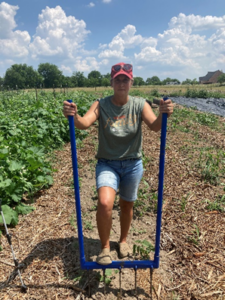
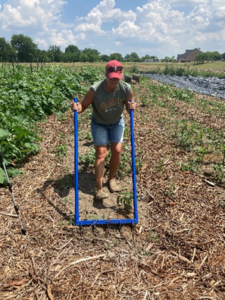
The broadfork has two long wood or metal handles connected to a flat bar that has between four to seven, 8-to-16-inch spikes on it. To use it, the gardener puts the prongs into the ground and steps onto the bar pushing or wiggling the spikes into the ground with their body weight. The gardener steps off the bar and pulls the handles toward them, aerating the soil. This process is repeated over and over in preparing new planting beds or reinvigorating current ones. 

Because broadforks are designed to open the ground without turning it over, it’s extremely beneficial in decreasing compaction and erosion. This action allows oxygen and water to penetrate more deeply. Using a broadfork regularly in the garden can eliminate the need to till which protects the soil structure and beneficial soil organisms. The deep penetration and lifting action of the broadfork also allows access to very deep-rooted weeds and grasses that can be removed more easily. 

My own personal experience with the broadfork has proven these benefits. I bought a used metal broadfork last summer for $75 compared to the price of a good rear tine tiller which is about $500. This spring we broadforked 26, fifty-foot rows. As a result of using the broadfork, we no longer have any water pooling in any of the uneven or low areas. We were also able to remove much of the Johnson grass rhizomes and Bermuda grass stolons from the growing areas. Two months into this growing season my tomatoes, brassicas, beans, and cucurbits are all much larger and healthier than all our previous years combined. I have also noticed less squash bugs, cucumber beetles and harlequin beetles. 

In conclusion, small acreage farmers and gardeners who choose to try the broadfork will be rewarded with increased crop yields, improved soil health, and experience a very cost-efficient alternative to tilling. #cropfit #theresilientfarmer 

Filed Under: Local Articles

Hummingbirds are Drawn to Texas Native Plants

June 13, 2023 by meltonbarn


Hummingbirds Are Drawn to Texas Native Plants 

By: Joanne M. Curley, Grayson County Master Gardener 

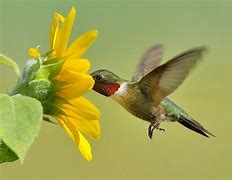
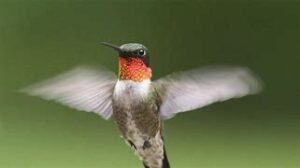
Hummingbirds are considered one of the most beloved birds. They are tiny, beautifully colored, and can be quite entertaining. They are the only bird that can hover, move forward and backward as well as up and down. They are true aerial acrobats and fascinating to watch! They are also very loyal creatures who, once they find a habitat that satisfies their needs, will faithfully return to it year after year. 1 

1 Hummingbirdguide.com for Hummingbird enthusiasts. 

2 https://www.audubon.org/content/how-create-hummingbird-friendly-yard 

Every year, hummingbirds travel from their winter homes in Central America and Mexico up to North America. They are responsible for their own flight all that way and do not “catch a ride” on other birds, animals, or any other means. After traveling so far, they arrive hungry and are relatively easy to attract to your yard. The most commonly thought way is to provide nectar from a feeder, 1:4 parts sugar to water ratio. Red dye is not needed and may, in fact, not be good for them. If you choose to hang a feeder, or multiple feeders, be sure to thoroughly clean and refill them every few days to not pass on any dangerous or even deadly bacteria to the birds. It is also a good idea if you choose to have more than one hanging feeder, to space them out. This will help diminish the birds fighting over the food source. 

While hanging a feeder is the most commonly thought of way to attract hummingbirds, it is not the only way, nor the easiest way. Planting the right flowers is a wonderful way to both beautify your garden and lure in hummingbirds. By simply incorporating flowers in your yard, garden or landscape that provide a source of nectar for the birds to feed and nourish themselves on, you will create a prime environment to attract these beautiful birds. 

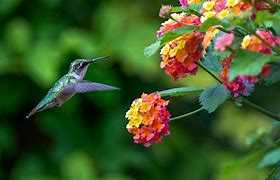
Hummingbirds, also known as Hummers, love red and orange flowers, of which there are many native perennials that require very little care or maintenance. Any plant with nectar-bearing, tubular shaped blossoms will be inviting to hummingbirds. Interestingly, hummingbirds get their protein from small insects and spiders, and have been known to easily snatch insects right out of the air. If you are using any pesticides, be very careful that they are not harmful to pollinators and wait on brushing down those spider webs so the hummingbirds can get their fill. 

Hummingbirds do expend quite a bit of energy beating their wings thousands of times a minute, averaging about 50 times a second. Due to expending so much energy, they typically feed every 10-15 minutes and visit 1000-2000 flowers for nectar each day. 2 Having a variety of flowers will also help there to be a continuous supply of blossoms available for them all season long. Texas Native plant, Turk’s Cap, is a sure way to draw them to your yard. It has red blossoms that the hummingbirds love, grows in full sun or partial shade and will get up to about 3 ft high. Other natives such as Lantana, Bee Balm, Salvias, Petunias and Zinnias are all great plants for attracting hummingbirds and require very little maintenance. If you have room, you might consider some flowering vines such as Cardinal Climber, Hyacinth Bean Vine, Crossvine, or 

Honeysuckle to add some variety to the nectar sources in your garden.3 Hummingbirds are truly fascinating birds that have many wonderful adaptations that help them survive. 

3 “What to do in your Texoma Yard & Garden,” by Jessiie Gunn Stephens 

4 https://birdwatchingbuzz.com/do-hummingbirds-die-when-they-stop-flying/ 

5 5 Ways to attract Hummingbirds to your years, by Katie Parker, Univ of Illinois Agrilife Extension 

6 5 Ways to attract Hummingbirds to your years, by Katie Parker, Univ of Illinois Agrilife Extension 

Here are 5 interesting facts about hummingbirds you might not have known: 

1. While hummingbirds are very active, it is a common myth that they never stop flying. How would they rest or sit on their nest of eggs? 4 Besides buzzing around being extremely active looking for food, hummingbirds love to perch. They often pick a spot high up where they can rest and survey their surroundings. They often perch in trees, shrubs, at the top of swing sets and even on clothes lines.5 If you are curious, just watch where they go after feeding in your yard and you will see their favorite spot! 

2. Did you ever wonder what happens to hummingbirds when the temperature is cold or even at freezing levels? Or how do such little creatures survive cold nights or mornings? Well, another fascinating adaptation is their ability to slow their metabolic rate down up to 95%. This helps them to survive freezing temperatures by allowing them to enter a deep sleep called Torpor. It is like hibernation. It takes about 20 minutes to an hour for the hummingbird to “wake up” from this state. 

3. Many people think hummingbirds have straw-like tongues that suck the nectar from flowers, but that is another myth. They have specially shaped tongues with grooves in them and tiny hairs. They lap up the nectar like a cat. 

4. Hummingbirds’ nests are very tiny, about the size of a half dollar coin, often found in the bend of branches. They use spider webs to help bind the structure together. Hummingbird eggs are no bigger than small jellybeans and weigh about 1/50 off an ounce. Female hummingbirds are very shy and skittish and may abandon their nest if they do not feel secure. If you are fortunate to spot a hummingbird nest, it is always best to keep your distance and watch it from a distance rather than risk harming the nest or hatchlings.6 

5. Hummingbirds are often called “hummers”. A group of hummingbirds is called a “charm”. 

Go ahead and invite them to your garden and enjoy the endless hours of entertainment and beauty they provide! 


3 “What to do in your Texoma Yard & Garden,” by Jessiie Gunn Stephens 

4 https://birdwatchingbuzz.com/do-hummingbirds-die-when-they-stop-flying/ 

5 5 Ways to attract Hummingbirds to your years, by Katie Parker, Univ of Illinois Agrilife Extension 

6 5 Ways to attract Hummingbirds to your years, by Katie Parker, Univ of Illinois Agrilife Extension  

Filed Under: Local Articles

  • Email
  • Facebook
  • Phone

Website Admin

  • Log in
  • Entries feed
  • Comments feed
  • WordPress.org

Search

Texas A&M AgriLife Extension Service
Texas A&M University System Member

Article Archives

  • Compact with Texans
  • Privacy and Security
  • Accessibility Policy
  • State Link Policy
  • Statewide Search
  • Veterans Benefits
  • Military Families
  • Risk, Fraud & Misconduct Hotline
  • Texas Homeland Security
  • Texas Veterans Portal
  • Equal Opportunity
  • Open Records/Public Information