• Skip to primary navigation
  • Skip to main content
  • Skip to primary sidebar
  • Texas A&M Forest Service
  • Texas A&M Veterinary Medical Diagnostics Laboratory
  • Texas A&M AgriLife Extension Service
  • Texas A&M AgriLife Research
  • Texas A&M College of Agrculture and Life Sciences
Texas AgriLife Extension Service
  • Menu
  • Home
  • Calendar
    • Calendar
    • Annual Events
  • Community Services
    • Academic Scholarship
    • Master Gardener Intern Training
    • Speakers Bureau Services
    • Ask A Master Gardener
    • Junior Master Gardener
    • Local Garden Projects
  • Resources
    • Newsletter
    • Local Articles
    • Garden Topics
    • Recommended Books
    • Area Research Gardens
    • Garden Checklist
    • Gardening Zones
  • Plant Library
  • About US
    • Contact Us
    • Join our Team!
    • Grayson County Texas A&M Extension Education
    • Grayson County AgriLife Extension Contacts
  • Interns

Archives for December 2022

Winter Gardening & Outdoor Guests

December 24, 2022 by meltonbarn


Winter Gardening, Including Outdoor Guests

by: Joanne Curley

There isn’t much that needs to be done in your garden in December. It’s a good

month to take off, rest, rejuvenate and think about what you want your garden to

look like, produce, or attract come Spring.

December is a good time to fertilize your grass if you planted Rye or another type

of cool-season grass. 1 If you didn’t, your grass is probably dormant and doesn’t

need fertilizing. Dormant grass doesn’t need watering either. Usually nature’s

rainfall is plenty. If you want specific watering criteria, visit Water My Yard . 2

The months of December and/or January are a good time to prune fruit trees.

Right now is also a great time to plant new trees and roses too. This will give

plenty of time for the roots to become well established before the summer heat

arrives. Just make sure the root balls are kept moist but not wet or over-watered.

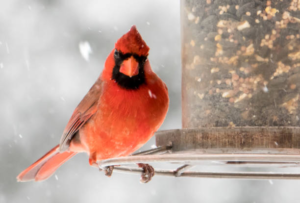
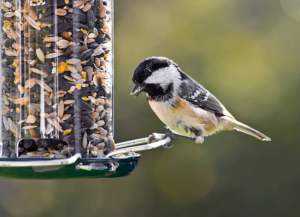
One of my favorite things to enjoy are the birds visiting my yard and feeders –

finches, cardinals, chickadees and many more. If you are not seeing many

varieties, it isn’t hard to attract them, especially in December, January and

February as these are the toughest months for birds to find food. 3 By offering

some white millet and/or black sunflower seeds, you should attract quite a

variety. If you are trying to attract goldfinches, you can put out some thistle seed.

Because it can get cold in December and January, you might even try putting out

some fresh water and other treats for the birds such as suet cakes, unsalted

peanuts or you can even make your own and incorporate dried fruit bits, peanut

butter and corn meal. (Note: Do NOT put out peanut butter without mixing it with

flower or corn meal as it can be harmful or even fatal to the birds.)

If you decide to put out stale bread, leftovers or any food scraps, you will NOT

attract songbirds. Instead you will attract crows, starlings, grackles and sparrows.

You will also have a difficult time getting rid of these birds, as once they have been

attracted, they rarely go away. So, be careful what you offer!

3 Texas Agri-Life Extension, Bexar County. Winter Backyard Birding

2 Aggie Horticulture, Aggie-Horticulture.tamu.edu , and Water My Yard by Location .

1 Texas Master Gardener Handbook,7th Edition 2019, Texas A&M Agrilife Extension, edited by Jayla Fry, Table 6-11
Filed Under: Local Articles

Composting – A Simple Way to Recycle Yard Trimmings

December 22, 2022 by meltonbarn

Composting – A Simple Way To Recycle Yard Trimmings

by: Joanne Curley

Did you know that George Washington, America’s Founding Father, was “an avid

composter” and James Madison, America’s 4th president, stressed the

“importance of returning fertility to the soil…equivalent to that which had been

taken from it?”1 Among other interesting facts, Compost Magazine reports that

he had great appreciation for the soil and performed experiments to find the best

way to compost. Another interesting fact is that earthworms in your compost pile

can “eliminate harmful bacteria such as e-coli and other diseases.” 2

“Simple composting is both good for the environment and good for your garden,”

says Ross Penhallegon, horticulturist with Oregon State University’s Extension

Service.3 It is a sustainable system that truly involves minimal effort and yet, the

benefits are tremendous!

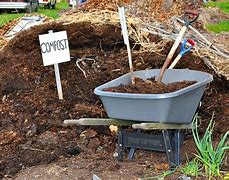
It’s this easy: As leaves pile up, you can just rake them into a pile and begin to

layer them with other “extras” such as grass clippings and any other garden

leftovers. (Do not use plants that have evidence of disease or evidence of pests.)

All you have to do is water it, cover it with plastic or even scrap wood, occasionally

turn it and leave it. It will decompose and turn back into nutrient-rich organic

material that you can add back to your garden come Spring.

The simplest method for beginners is the one-third ratio: one-third carbon,

one-third nitrogen, and one-third soil. Carbon includes things like leaves, twigs,

sawdust, and other “brown” stuff. Nitrogen includes grass clippings, coffee

grounds, and manure. Soil is just the soil you already have in your yard.

Things to remember when setting up your compost system:

Well-drained areas work best. Too much moisture or water will prevent

decomposers from doing their work. If your pile gets too wet, just add some dry

material and mix it in.

3 Clueless about Compost?  Expert shares timely tips. OSU Extension Office.

2 22 Fascinating Facts About Composting , Composting Tips, Advice and Science

1 22 Fascinating Facts About Composting , Composting Tips, Advice and Science

You can purchase composting containers or build your own, but making a pile in a

well-drained area of your yard will work just as well. (Note: If you are going to add

kitchen scraps, this may attract unwanted pests and a container may be more

desirable. This would also likely be something to consider when determining the

location for your compost area.)

Maintenance: When using a “pile” your entire pile should be about 3 feet tall to

begin with. As things break down, the pile will reduce in size. It is a good idea to

turn the pile every 1-2 weeks to keep air circulating throughout.

“Composting is a resourceful way to recycle yard trimmings and manage waste

sustainably. It is one of the eco-friendliest ways of getting rid of yard waste and

anyone can do it.4”

What have you got to lose? Composting is a great way to clean up your yard for

winter and be ready with some fresh organic soil come Spring. You will be amazed

at the process as you watch it happen!


4  environment.co online article by Steve Russell, Feb 11, 2022. Is Composting Worth It?

Filed Under: Local Articles

  • Email
  • Facebook
  • Phone

Website Admin

  • Log in
  • Entries feed
  • Comments feed
  • WordPress.org

Search

Texas A&M AgriLife Extension Service
Texas A&M University System Member

Article Archives

  • Compact with Texans
  • Privacy and Security
  • Accessibility Policy
  • State Link Policy
  • Statewide Search
  • Veterans Benefits
  • Military Families
  • Risk, Fraud & Misconduct Hotline
  • Texas Homeland Security
  • Texas Veterans Portal
  • Equal Opportunity
  • Open Records/Public Information