written by Jacque Kyle, Fannin County Master Gardener
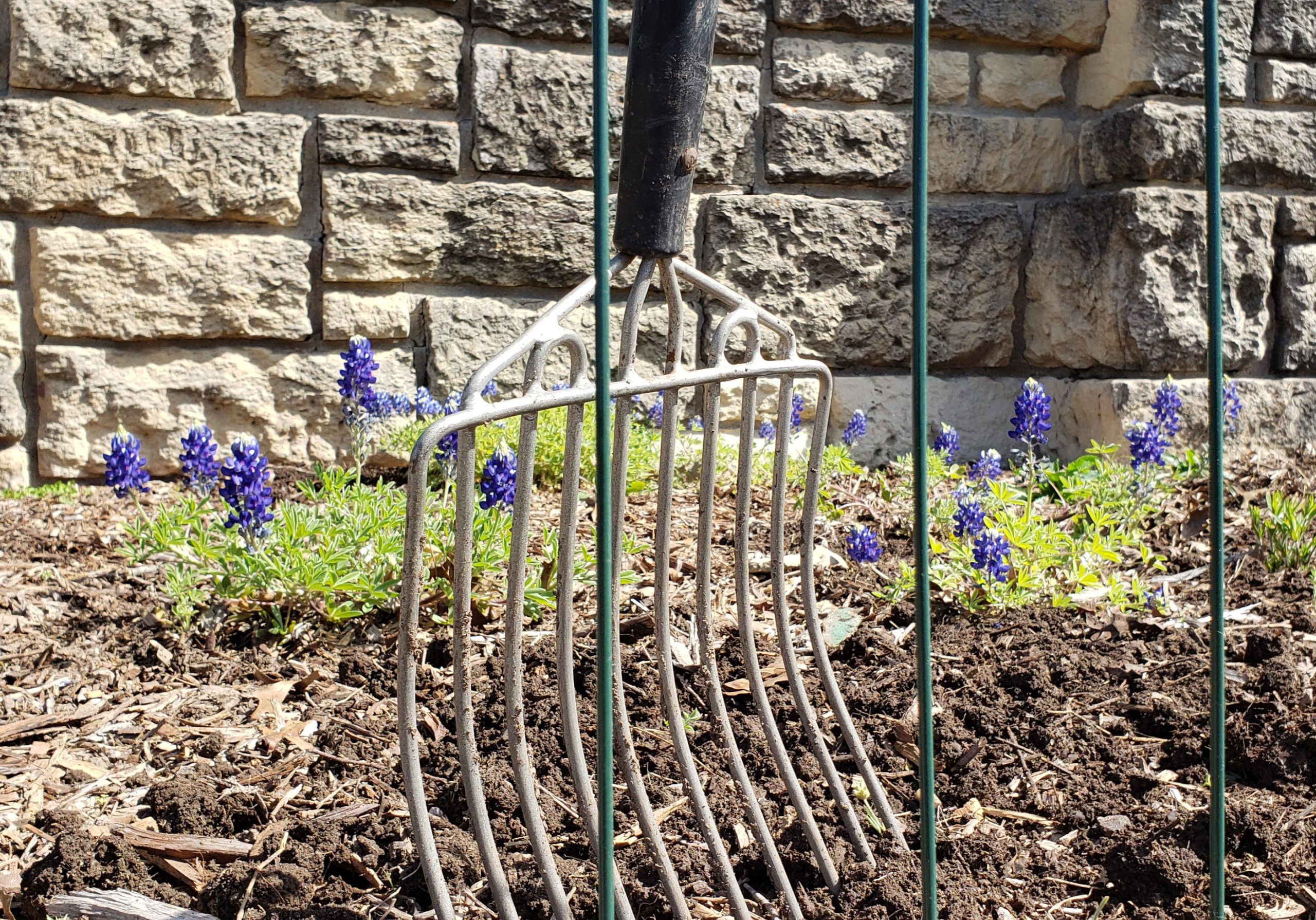
Soil is a storehouse of minerals, organic matter, air and water for growing plants. Soil provides nutrients, moisture, and support for plants. When properly prepared and cared for, soil will improve each year. In Fannin County gardeners work with a wide variety of soils: sandy, sticky clay, and rocky shallow soil. Sandy soil does not hold water; clay soil holds too much water and limits air entering the soil; and rocky, shallow soil severely limits root growth.
It is important to add organic material every year. Vegetables and flowers need deep, well-drained soil with adequate organic matter. Good garden soil with proper moisture will not form a hard ball when squeezed in the hand. It crumbles easily when forced between the fingers. It should not crack or crust over when dry. Addition of organic matter improves most types of soil. Organic matter loosens tight clay, helps sand hold more water, makes soil easier to dig, and adds nutrients.
Common organic matter additives are:
Plant materials: This includes leaves, straw, and grass clippings. Months before planting, work material into the soil to allow it adequate time to decompose. Most gardeners do this during the winter.
Manure: Use composted manure and incorporate it into the soil well ahead of planting. Do not use fresh manure, as it can damage plants and introduce disease. Apply 30 to 40 pounds of composted manure for every 100 square feet.
Compost: Compost consists of decayed plant materials. Work compost into the soil before planting.
Before planting, till deeply as possible, at least 8 to 10 inches. Deep tilling loosens soil and allows roots to grow deeper. This is especially important before the first planting in a specific area. Turn each shovelful of soil completely over. Till soil when it is moist but not wet. Working soil when it is too wet can cause it to become rough. Spade the soil in the winter when temperatures and moisture help mellow the soil and prepare for spring planting. Work all plant material into the soil. Before planting, rake the soil clean and level it. Remove sticks, rocks, and other material. Raised beds are another way to plant vegetables and flowers. Raised beds allow water to drain away from plant roots, provide furrows for irrigation, allow air to enter soil and help plants through periods of high rainfall.
After completing the steps required to properly prepare the soil for planting, gardening might seem anything but “easy.” But with proper soil preparation, gardening will get “easier” every year.
Information from AgriLife Extension Publication E-284. For more information contact the AgriLife Extension office. The Texas A&M AgriLife Extension Service, Fannin County office is located at 2505 N. Center St., Bonham. Phone – (903)583-7453. E-mail: cody.maxwell@ag.tamu.edu