Oxblood (Schoolhouse) lilies, Red Spider lilies and Rain lilies are or will soon be popping up, but this article isn’t about them. Put these bulbs on your “Plant in Spring” list. Fall is the time to plant spring blooming bulbs and September is the time to find sources, buy bulbs and corms, plan your spring garden, and prepare your soil for a show that starts five to six months from now.
Late September through November is the time to plant most bulbs for spring in our area. Dutch hyacinths and tulips need weeks of chilling and are planted in late November or December. Plant most bulbs and corms two to three times the height of the bulb. With Crinum Lilies, you can see at the top of the bulb where foliage starts. Plant so that foliage starts at ground level.
Spring bulbs can be planted in areas that get springtime sun, including under deciduous trees. By the time our blistering Texas summer sun is out, the listed plants except for the Crinums will have lost their foliage and gone dormant. Most Crinums are tough enough to thrive in heat and are drought tolerant although they like supplemental watering.
Loosen up your soil with compost in areas with good drainage. Plant in clusters for a good show while blooming. Put bulbs in beds where you can put annuals in between bulbs since they will go dormant and disappear after spring. Seeding annuals over the bulbs will prevent a bare flower bed. You can also plant some of the smaller bulbs out in the lawn, but the plants need their foliage to store nutrients in the bulbs to produce blossoms in the next year. You can’t mow them down until the foliage dies.
The following bulbs and corms are old fashioned varieties that naturalize to come back each spring.
Amaryllis, St. Joseph lily (Hippeastrum x johnsonii) This fragrant flower is red with white stripes and was the first hybrid amaryllis ever produced (1790).
Byzantine gladiolus (Gladiolus communis spp. Byzantinus) Not a bulb, but a corm, this plant has a stalk of magenta flowers with sword shaped leaves.
Crinum lilies (Crinum spp.) Large bulbs make a large (3’ to 7’) mound of strappy leaves. They send up a stalk with several blooms at various times from late spring to early fall. Try these varieties:
- Crinum x “Mrs. James Hendry” White flowers with pink tips,
- Crinum bulbispermum Varieties have white, pink or striped flowers. This Crinum was mentioned in Charles Darwin’s “Origin of Species”,
- Milk and wine (Crinum x gowenii) White flower with pink stripes,
- Crinum asiaticum White, narrow petals for a “spider flower” look
Dutch hyacinths. Chill in a 45-degree refrigerator (i.e. vegetable bin, not freezer) for at least 45 days before planting in December. Grow as annuals although some may naturalize if left in the flower bed. Naturalized, they will have fewer blooms until well acclimated (after several years).
Grape hyacinth (Muscari armeniacum), (Muscari neglectum) These small (4-6”) plants are sized and shaped like Bluebonnets with blue to purple flowers. These look good planted in a lawn.

Narcissus, jonquils, daffodils (Narcissus spp.) Not all varieties of this best-loved spring flower do well in our area. Try the following:
- Campernelle jonquils (Narcissus x odorus) Has large yellow flowers,
- Grand Primo narcissus (Narcissus tazetta x “Grand Primo”) A cluster of white flowers with pale yellow inside the cups,
- Narcissus tazetta italicus white with lemon yellow cups,
- Narcissus tazetta x “Erlicheer” A double form of Grand Primo,
- Narcissus tazetta x “GoldenDawn” A cluster of yellow flowers with golden cups,
- Narcissus tazetta x “Ice Follies” A medium sized flower in white with a pale-yellow cup,
- Narcissus tazetta x “Carlton” Single yellow flowers with a darker yellow cup,
- Paperwhites (N. tazetta papyraceous) White clusters of small flowers,
- Chinese sacred lilies (Narcissus tazetta orientalis) White flower with a yellow cup

Oxalis (Oxalis crassipes) Also known as wood sorrel, this plant grows in small clumps of green shamrock shaped leaves and pink or white blossoms.
Oxalis, purple-leafed (Oxalis triangularis) White blossoms really show up against the dark color of the leaves. In shade and well-watered, this variety does well in containers and may not go dormant in summer.
Philippine lilies, Formosa lilies (Lilium philippinense or Lilium formosanum), White flowers with a pale maroon stripe resemble Easter lilies with a trumpet shape.
Roman hyacinth (Hyacinthus orientalis albulus) These plants make a blue or white fragrant spike with fewer flowers than Dutch hyacinths. They are small (8”) plants.
Starflower (pheon uniflorum) White to blue six petaled flowers grace this small (6”) plant. This is another plant that looks good in a lawn.
Star of Bethlehem (Ornithogalum umbellatum) This is a small (10”) plant that sends up a stalk of white flowers with greenish/pale yellow centers. It has grass-like foliage.
Snowflake (Leucojum aestivum) These are the bell-shaped white flowers with green dots at the tips. The plants are about 10” tall.
Tulip (Tulipa spp.) Most tulips don’t get enough hours of cold temperatures to do well in Texas and are grown as annuals. Buy and store in a 45-degree refrigerator for 45- 60 days. Wait until our first freeze to plant.
References
https//aggie-horticulture.tamu.edu/newsletter/horticulture/2012/oct/spring-flowering-bulbs.
https://aggie-horticulture.tamu.edu/plantanswers/flowers/BULBS.html
https://aggie-horticulture.tamu.edu/syllabi/308/Slides/PLTL4.pdf
The Bulb Hunter, Chris Wiesinger & William C. Welch, Texas A&M University Press, College Station, TX, 2013
Lone Star Gardening, Neil Sperry, Neil Sperry’s Gardening Magazine, McKinney, TX, 2014
Heirloom Gardening in the South, Yesterday’s Plants for Today’s Gardens, William C. Welch & Greg Grant, Texas A & M University Press, College Station, TX, 2011
Article by Marj McClung, Master Gardener
Recent Blog Posts
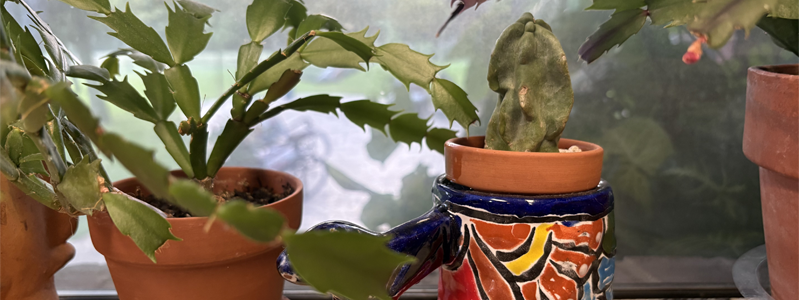 Thrive on Neglect: How to Love Your Succulents by Leaving Them Alone - I recently had the pleasure of interviewing my friend, Deborah Kennedy, for a spot on ourMaster Gardener radio program on KBEC. I have long-admired Deborah for many reasons,including her green... Read More →
 What is the AgriLife Extension? - Those of us who are active volunteers for Ellis County Master Gardeners know about our AgriLife Extension and what that is all about. However, some of our readers who are... Read More →
 How to Grow Plumeria - Plumeria is a small tree or shrub in the Apocynaceae family. Its flowers are well known in making leis, which the Hawaiian culture uses to greet visitors It is fairly... Read More →
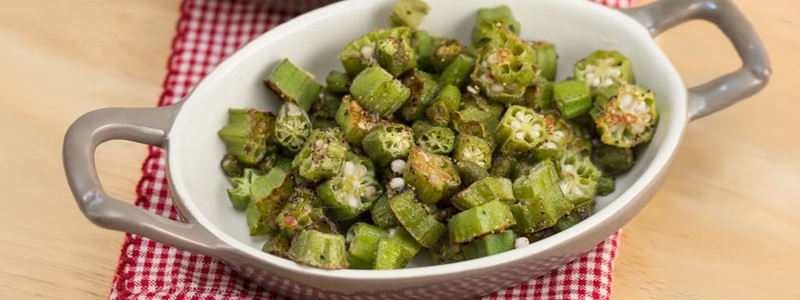 Roasted Okra - Southern Living magazine recommends several tips to avoid slimy okra: use only small, bright green pods; make sure the pods are dry before cooking; cook in small batches; use high... Read More →
 Gardening When You Are Tired (or just older…) - Having a great yard and garden is tough when you are getting older. Yard work is impossible when the temperature is over 100 degrees and there hasn’t been a drop... Read More →
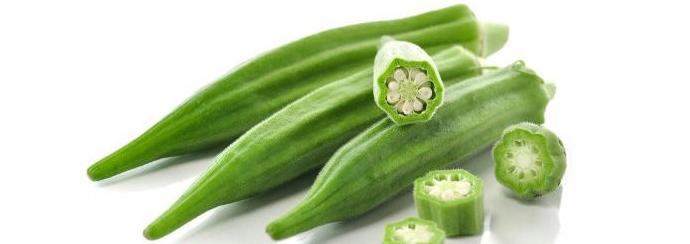 Okra 101 - Okra – love it or hate it, it has a rich, worldly history beyond Texas. This hairy annual from the Malvaceae family is believed to have originated near Ethiopia or... Read More →