THE VERSATILE HERB-CILANTRO: Why some like it and some just don’t
by Betty Tovar/Victoria County Master Gardener
September 13, 2025


I am a fan of cilantro, but others insist it tastes like soap and don’t care for it.
Why is that? Are they just picky eaters? The issue may be genetic. This group of folks may have a variation in a group of olfactory-receptor genes that allows them to strongly perceive the soapy-flavored aldehydes in cilantro leaves. Aldehydes are flavor compounds found in cilantro but also used in soap production.
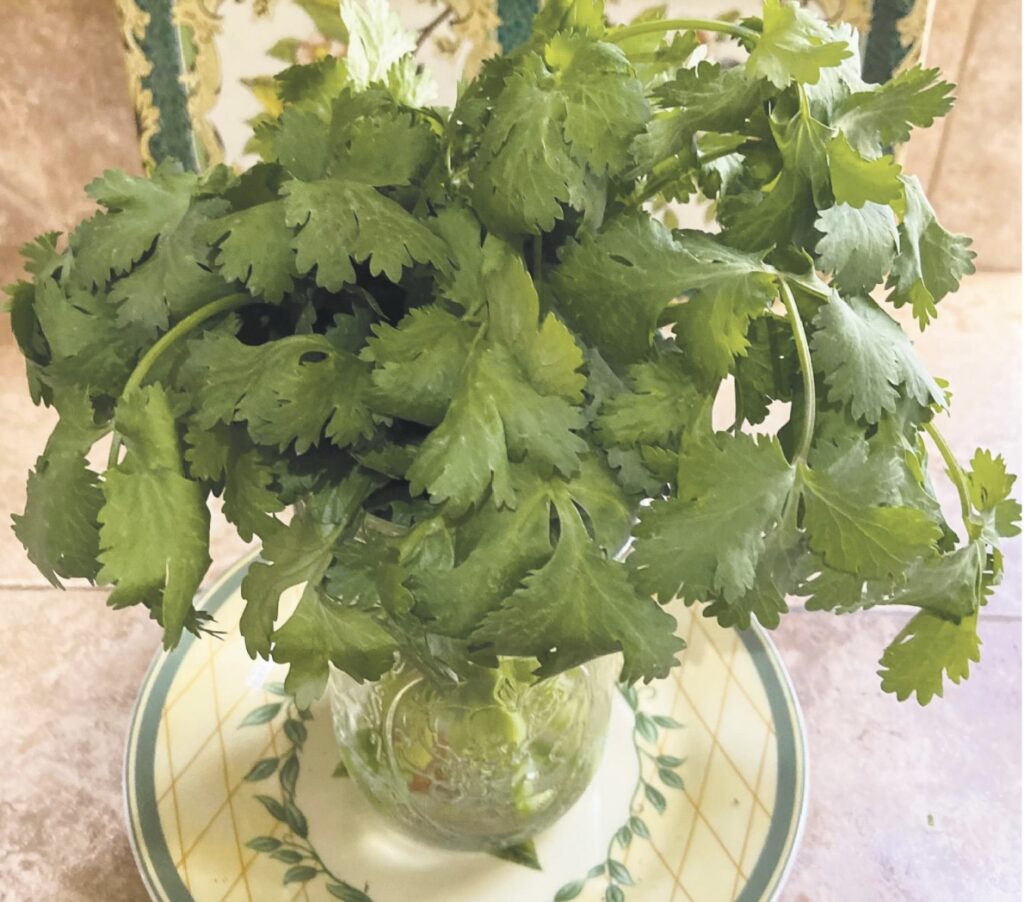
Cilantro and coriander are from the same plant, Coriandrum sativum. Cilantro, Spanish word for coriander, refers to the flat lacy green leaves, while coriander refers to the seeds. Cilantro and coriander were the International Herb Society’s “Herb of the Year” in 2017. This herb’s versatility makes it a popular choice in many cuisines, from Mexican to Asian and Middle Eastern cooking. The leaves are used in salads, salsas and meat dishes, and can be used crushed or whole, or as a garnish. The seeds are used as a spice, and can be used whole, or more commonly ground, and have a flavor similar to orange. Seeds are used in pastries, sausage and as an ingredient in curry powder. The flavor and smell of the leaves has been described as bold and pungent, and the seeds as citrusy. Cilantro is native to the southeastern corner of the Mediterranean and southern Europe. It belongs to the Umbellifrae family, which is the same family as parsley. In reading about the history, I learned that it has been cultivated for more than 3,000 years, and funeral offerings containing coriander seeds have been found in Egyptian tombs.
Coriander is believed to have some medicinal qualities. When seeds are chewed and consumed, they have been known to soothe upset stomachs and aid in digestion. In modern times though, they are primarily used to flavor food. Cilantro is easy to grow and is a cool-season annual. The best time to plant is in February/March and again in September/October – think sweater weather. Warmer temperatures and longer days trigger the plant’s bolting process, which causes the plant to send up a long stalk producing flowers and later seeds. When this happens, the leaves tend to be smaller and bitter tasting. Bolting is the plant’s way of ensuring its survival by its way of dropping seeds.
Choose a spot in your herb or vegetable garden that gets early morning or late afternoon sun but has some shade during the hottest part of the day. When planting either purchased plants or seeds, the soil should be light and well- draining. Fertilize once or twice during the growing season using a nitrogen-based fertilizer. Plant seeds to a depth of ¼ to ½ inch and in rows 12 inches apart. Thin seedlings to six inches apart in order to give plants room to grow and produce healthy leaves. Be sure to keep seeds moist during germination. Afterwards add mulch and water regularly. Use insecticidal soap if insects are spotted under leaves.
Cilantro leaves can be picked individually or the whole plant can be cut off at the base. Keep in mind though, that if you do the latter, you will not get additional production from the plant. Store cilantro in the refrigerator by wrapping the stems in a wet paper towel inside a zip lock baggie or air tight container. You can also fill a mason jar with an inch or so of water and place stems inside with a baggie covering all. If you are a fan of cilantro like me, try purchasing and planting this versatile herb or buy a package of seeds to plant. It’s nice to be able to go out into your garden and pick what you need, when you need it.