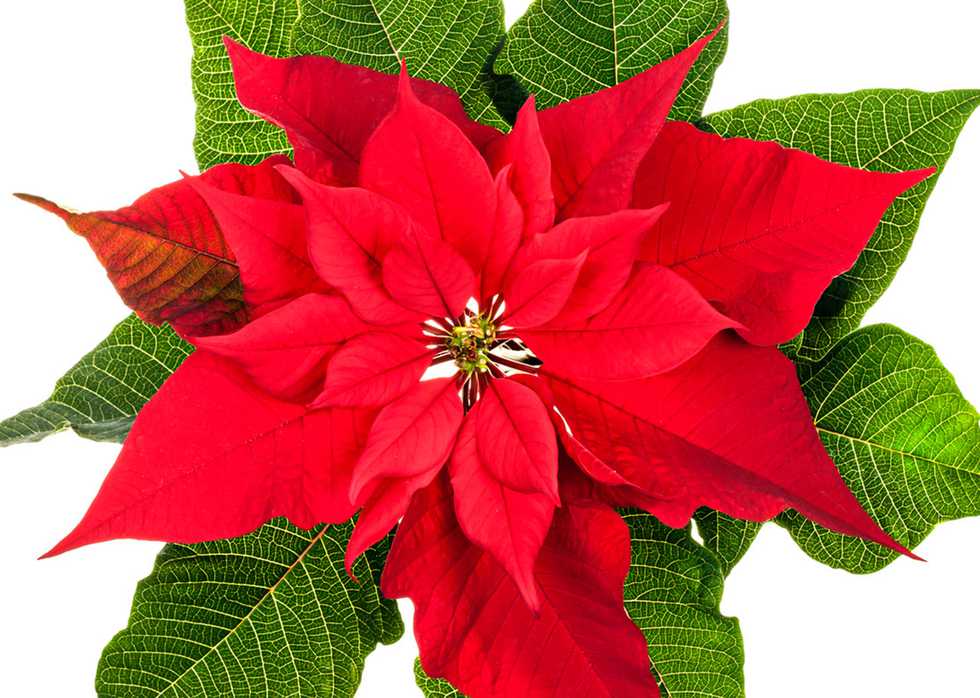
Ever wonder how the Poinsettia became the flower of Christmas? Click on the picture and read this fascinating story.
Somervell Master Gardener November CHES program
Tool Maintenance with Harold Annis
Nov 13, 2023 6:30pm
Somervell Citizens Center 209 SW Barnard, Glen Rose
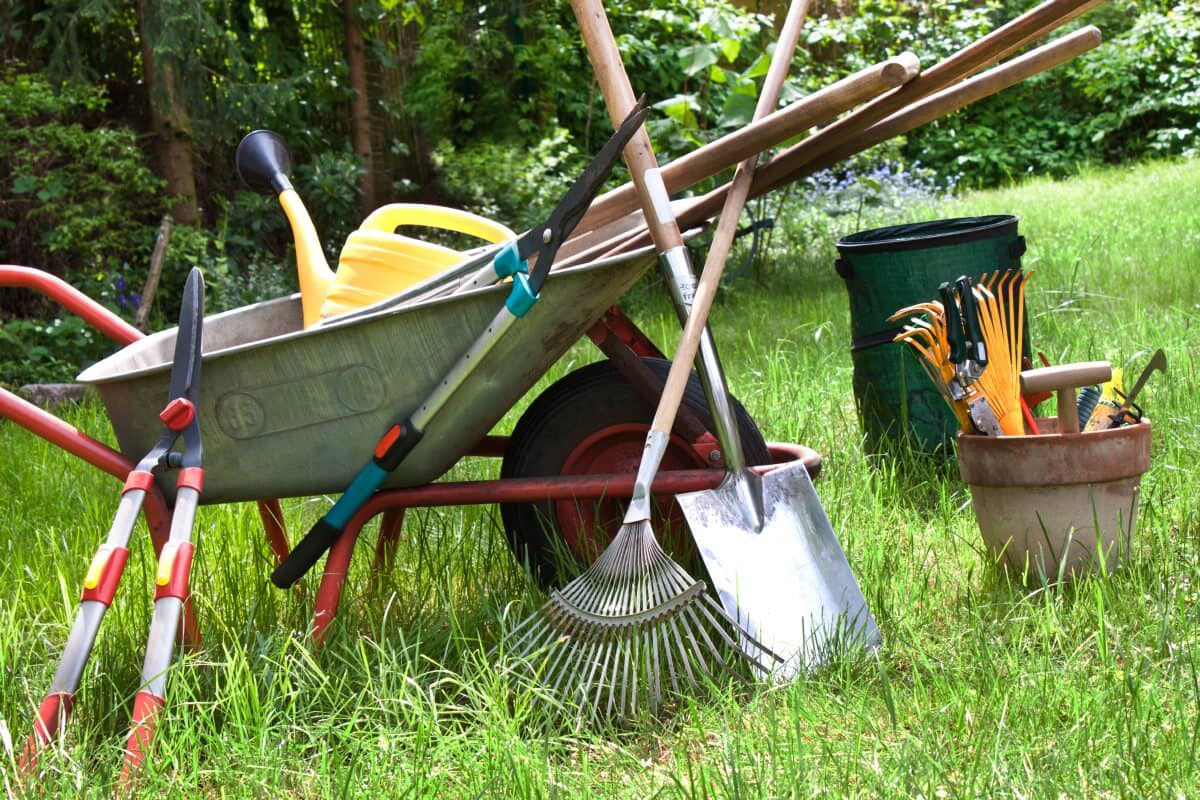 Harold Annis, a 13-year veteran of the Tarrant County Master Gardeners is also Vegetable Gardening and Plant Propagation Advanced Training certified. Harold began gardening with his grandmother in the 1950’s in Shawnee, Oklahoma and got a great education in vegetable gardening and many other life lessons from her. For over 30 years, he has maintained a 2-acre vegetable garden in Southlake, giving him ample opportunities to maintain and repair garden tools. Come and learn the finer points of caring for garden tools and equipment from a tried-and-true master!
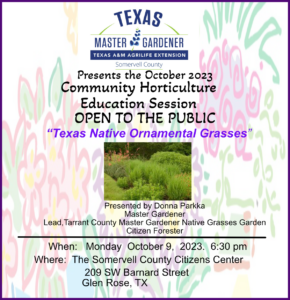 Our Speaker is Donna Parikka. Donna was born in Merced and raised in Citrus Heights, California on a mini family farm. Gardening was always a large part of her childhood as they raised their own vegetables, fruit and beef. She participated in 4-H for 7 years with horse, beef, clothing, food and leadership projects. She has lived on Cleburne and Burleson Texas for the last 53 years. She attended University of Texas at Arlington and worked for 50 years as an accountant, most of which were with the same CPA firm in Cleburne. Her interests are gardening or anything outdoors including hanging out with her two very spoiled Australian Shepherds..
A lifetime gardener she became a Tarrant County Master Gardener in the class of 2018 as part of her retirement plan. She is now the lead over the demonstration native grasses garden and serves as the TCMGA as treasurer in 2023. She is a master gardener advanced tree and propagation specialist and a Citizen Forester.
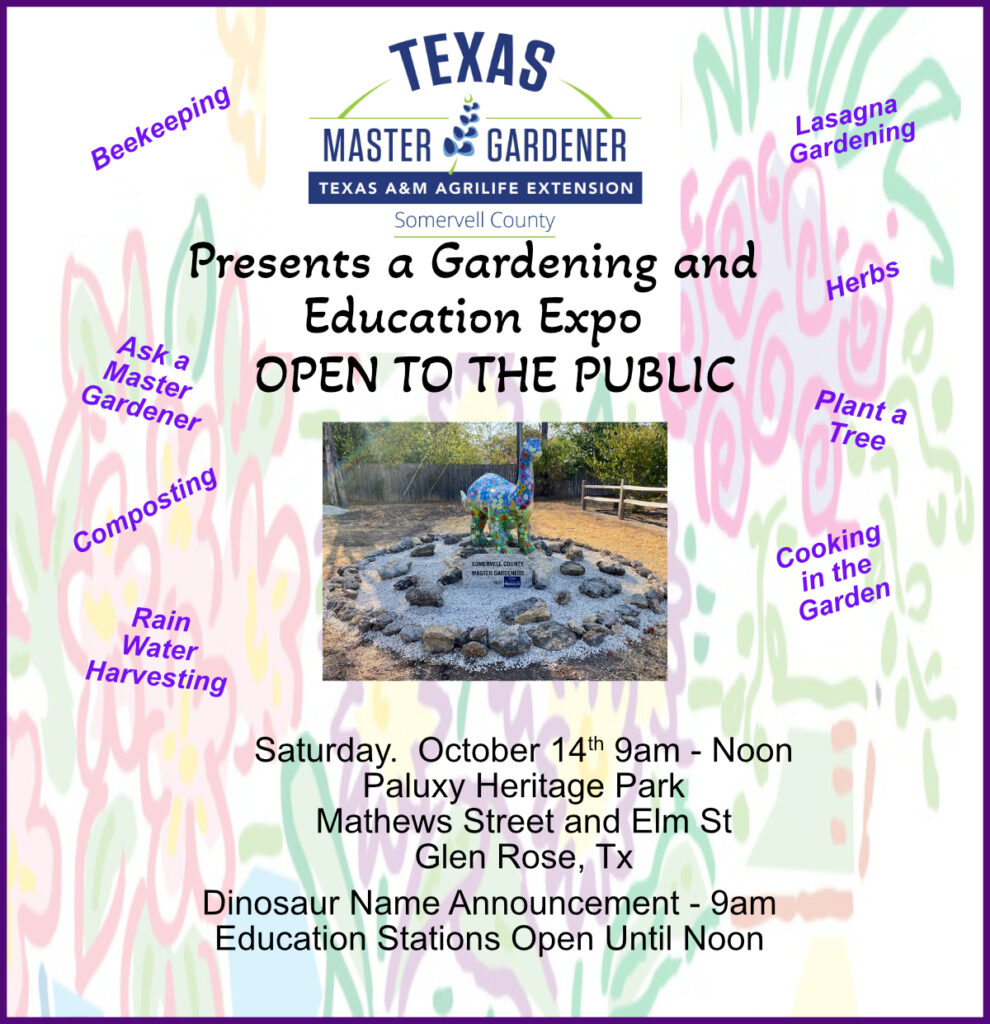
Come see The Somervell County Master Gardeners Dino at her new home in Paluxy Heritage Park – 103 Heritage Place, Glen Rose.
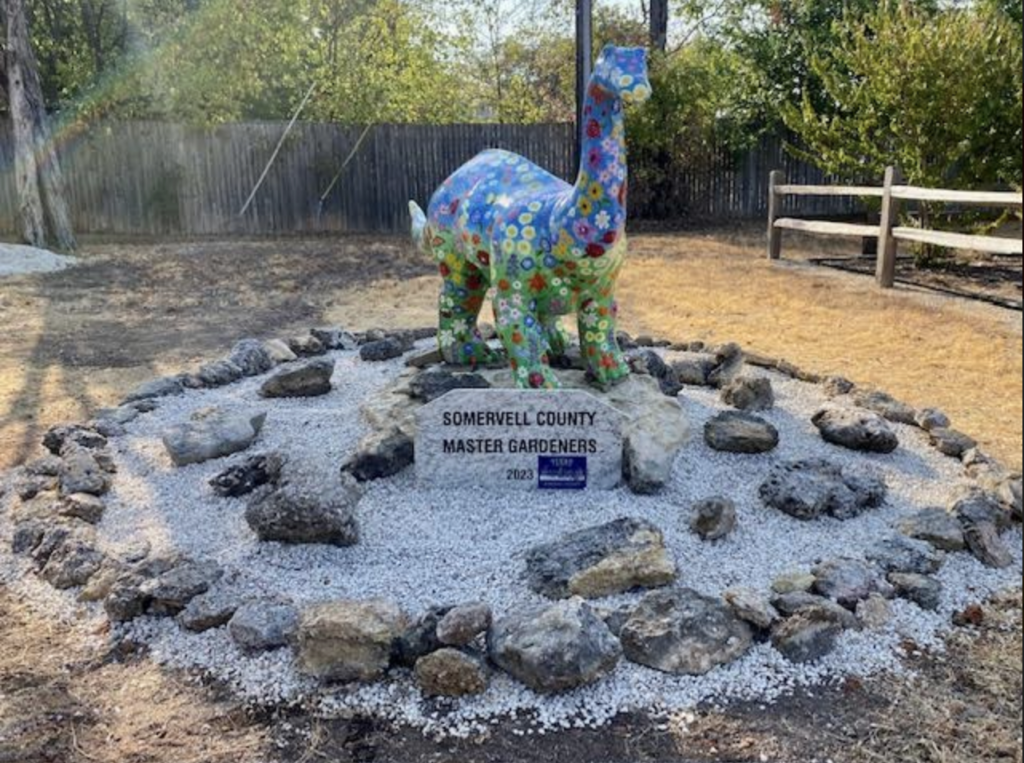
Kudos to the artist Molly Golson for painting such a beautiful dino.
Our dino still needs a name. If you would like to submit a name for consideration, click on the link below.
Her name will be announced on October 14 at the Master Gardener Learning Expo. Come join the fun from 10:00am to 2:00pm. More details to follow
Monty Anderson – Master Gardener. Master Composter. Certified Propagation Specialist.
Monday, September 11, 2023
6:30 – 7:30pm
Somervell County Citizens Center, 209 SW Barnard, Glen Rose

Monty Anderson has been a Master Gardener
since 2016, and participates in both the Tarrant
County and Somervell County Master Gardener Program.
Monty was born in Fort Worth. He holds B.A
and M.A. degrees. After 38 years with Bell
Helicopter Monty retired in 2013. He and his wife, Lisa,
live in Somervell County.
Megan Lee and Cara Phillips of The Glynn – Cut Flower Farm
Monday, June 12, 2023
6:30 – 7:30pm
Somervell County Citizens Center, 209 SW Barnard
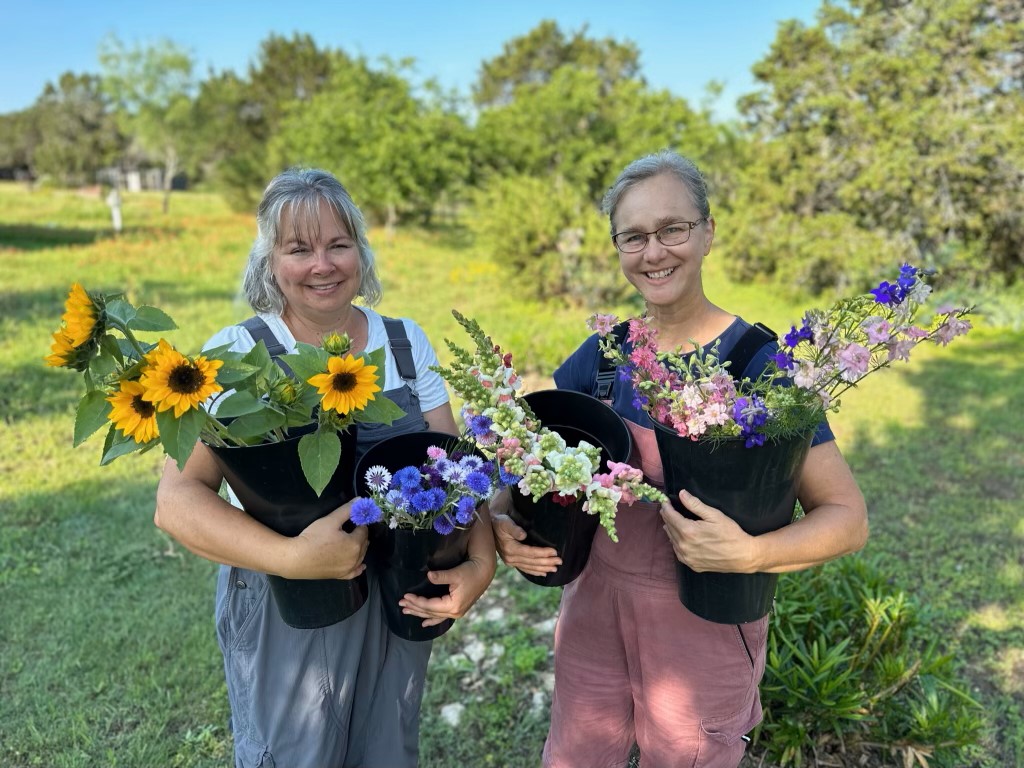 Megan Lee and Cara Phillips, residents of Glen Rose, started The Glynn, a cut flower farm in the spring of 2022. They are finishing their first year in June and will be discussing their experiences with the business. It has been a year of lots of learning and they look forward to sharing some of that with you.
Update…Join us May 8, 2023, 6:30pm at the Somervell County Citizens Center, 209 SW Barnard.
Yes, it usually helps to include a location and time for our programs! This one is definitely one you will want to attend.
 Join us Monday, May 8, 2023, 6:30pm at the Somervell County Citizens Center, 209 SW Barnard.
A graduate student at Tarleton State University in the department of Wildlife and Natural Resources, Addison specializes in pollinator ecology and plant-pollinator interactions. Her current research focuses on improving pollinator diversity and resource use under drought stress in North-Central Texas. Addison has been collecting data on 20 species of drought tolerant landscape perennials and will be showcasing some of my results thus far. She is fascinated by how pollinators choose which flowers to visit and how flowers attract pollinators. Her hope is to inspire others to see these relationships or at least learn to respect insects for all their services.
Join us Monday, May 8, 2023, 6:30pm at the Somervell County Citizens Center, 209 SW Barnard.
A graduate student at Tarleton State University in the department of Wildlife and Natural Resources, Addison specializes in pollinator ecology and plant-pollinator interactions. Her current research focuses on improving pollinator diversity and resource use under drought stress in North-Central Texas. Addison has been collecting data on 20 species of drought tolerant landscape perennials and will be showcasing some of my results thus far. She is fascinated by how pollinators choose which flowers to visit and how flowers attract pollinators. Her hope is to inspire others to see these relationships or at least learn to respect insects for all their services.