Yaupon Holly Dwarf
Ilex vomitoria (Dwarf)
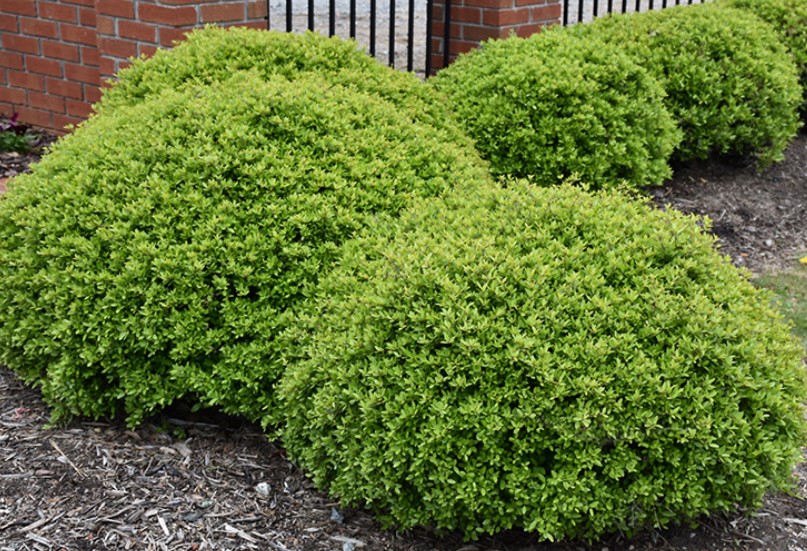
Characteristics
- Type: Broadleaf Evergreen
- Zone: 7 – 9
- Height: 2 – 4 Feet (Mounded Shrub)
- Width: 4 – 5 Feet
- Sun: Full Sun – Partial Shade
- Soil: Well Drained
- Tolerates Drought
- Red Berries Fall into Winter
Culture
Dwarf Yaupon Holly is a mounding broadleaved evergreen plant with shiny dark green leaves. New growth appears on smokey purple stems in spring. Favorite cultivars are ‘Nana,’ and ‘Schillings’ (‘Stokes Dwarf’). Once established, plants are drought and heat tolerant and have good resistance to insects and diseases. It is a tough plant that tolerates a range of soil conditions as long as the area is ultimately well-drained; it prefers to grow in average to moist conditions. Pruning is necessary; if left unpruned, a dwarf yaupon holly shrub will keep growing at a rate of about 3 to 5 inches in width and slightly less in height every year. Although it’s called “dwarf”, most varieties of small yaupon holly are simply slow growing.
Noteworthy Characteristics
Yaupon holly is native to a variety of areas including sandy woods, dunes, open fields, forest edges and wet swamps, often along the coastal plain and maritime forests, from Virginia to Florida, Arkansas, and Texas. Native American Indians used the leaves to make a ceremonial emetic drink which, when consumed in large quantities, caused a cleansing now memorialized by the specific epithet (vomitoria).
Problems
- Potential insect problems include holly leaf miner, spider mites, whitefly, and scale.
- Potential disease problems include leaf spot, leaf rot, tar spot, and powdery mildew.
- To have berries, you need to plant female dwarf yaupon cultivars with at least one male variety nearby. In other words, cross-pollination is needed.
- Berries are not as prevalent on dwarf cultivars as on full size yaupon holly plants.
Garden Uses
Very popular in the deep South where it makes a great groundcover, rock garden shrub, or for use as edging. Small greenish-white flowers in spring; they are fragrant but generally inconspicuous. Pollinated flowers on female plants give way to berry-like red fruits (1/4” diameter) which ripen in fall and persist into winter. Birds are attracted to the fruit. Dwarf yaupon holly will grow in containers as long as the pot drains well.