Penstemon Showy Desert
Pensteimon pseudospectablis
Characteristics
- Type: Perennial
- Zone: 5 – 9
- Height: 32 – 36 Inches
- Spread: 18 – 20 Inches
- Flower: Showy
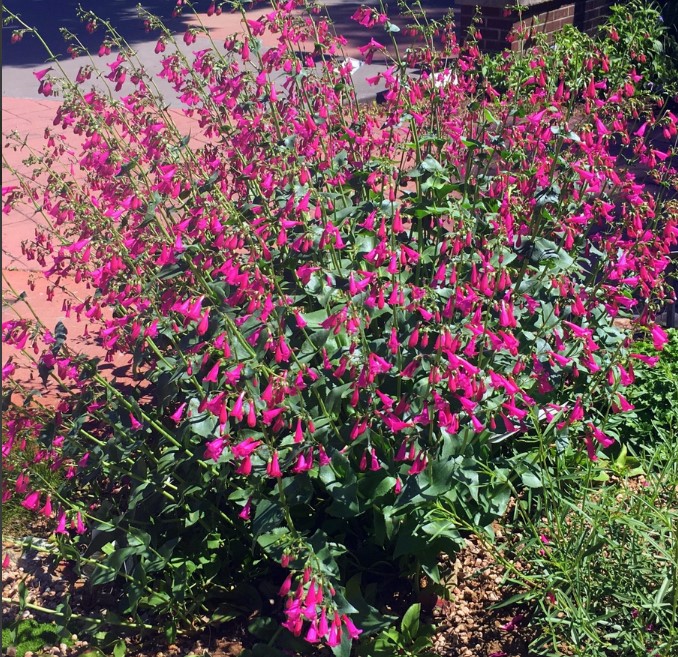
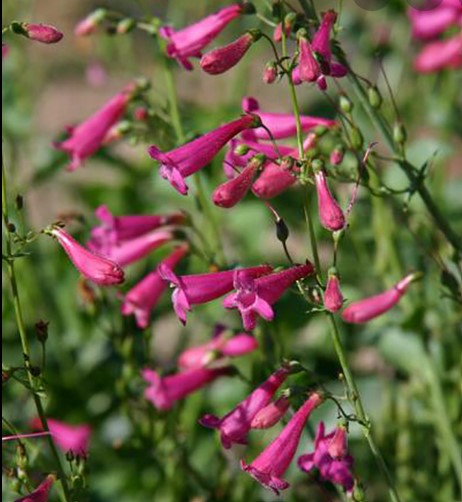
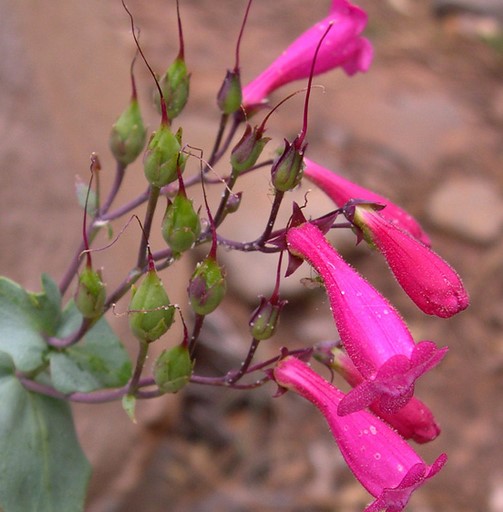
- Bloom Color: Bright Pink
- Bloom Time: May – July
- Sun: Full Sun – Part Sun
- Water Use: Low
- Soil Moisture: Dry, After Established
- Attracts: Birds, Bees, Hummingbirds, Butterflies
- Tolerates: Deer
Culture
Penstemon Showy Desert has mounds of deep blue green, toothed foliage are topped with wands of vivid purple-magenta trumpets for much of the growing season. This long-lived perennial thrives in water-thrifty gardens or xeriscapes where it attracts hummingbirds in daylight and hawkmoths at dusk. Penstemon Showy Desert makes a striking contrast alongside yellow daisies, especially chocolate flower, both thriving on neglect. Nearly evergreen through mild winters.
Noteworthy Characteristics
Showy Desert Penstemon, also known as Desert Beardtoungue, is native to the southwestern United States, where it grows in desert and plateau habitat types, such as sandy washes, scrub, and woodland. The plant is generally a shrub growing to one meter, with many erect stems. The thin leaves are oval with wide, pointed tips and serrated edges. A few deep soakings during the growing season will prolong bloom time. Wait and cut back in spring to ensure hardiness.
Problems
No serious insect or disease problems.
Garden Uses
Although native to hot, arid locations it is adaptable to and is tolerant of garden conditions. Do not overwater. Give it plenty of sun and fast drainage. When in bloom it will be constantly in use by bees, butterflies and hummingbirds. Can be grown in containers if not overwatered. Xeriscape.