With a particularly harsh north Texas summer finally heaving its last hot breaths, we eagerly anticipate the welcome relief cooler fall days and nights are sure to bring. As crisp fall days drift into cold winter nights, we invariably begin to long once again for those gentle spring breezes. Our eager eyes search for signs of renewed life in our flower beds. A great way to ensure we are rewarded with vibrant pallets of spring color is by planting a variety of fall bulbs such as daffodils, lilies, and hyacinths to name a few.
Daffodils belong to the plant genus Narcissus. Colors include white, cream, yellows, oranges, pink and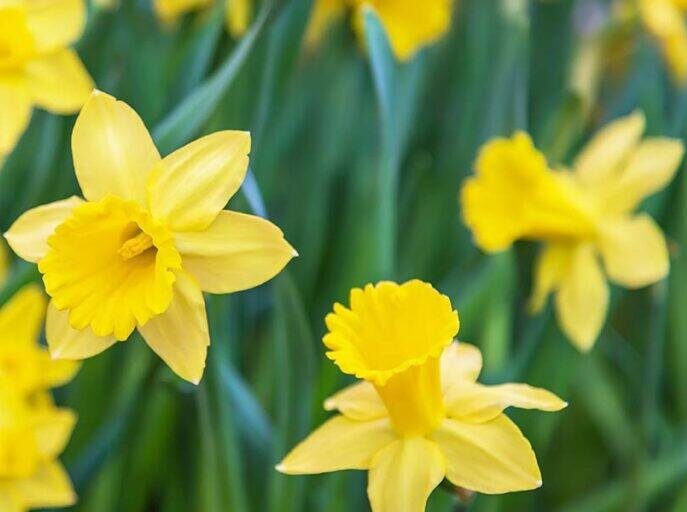 even light green. Plant the bulbs in early fall here in north Texas so the bulbs can have time to store nutrients prior to the first hard freeze. The ideal soil should be fertile and well-drained. Add compost and a small amount of bone meal to each hole and top with a light covering of soil. Daffodils should be planted no deeper than about one and a half times the width of the bulb. These perennial plants can be divided to prevent overcrowding and create more plants.
Grape Hyacinth (g. Muscari) is another perennial flowering bulb. It produces grass-like foliage and tiny bell-shaped flowers. Color choices for this little beauty include blue, white, pink, and yellow. Hyacinths prefer full sun to partial shade and tolerate a variety of soil types including clay, chalk, sandy or sandy loam with a neutral to acid pH. Plant these bulbs 2-3 inches deep and about 3 inches apart in moist, well-drained soil. Again, these bulbs are best planted in the fall. Consider them for borders or rock gardens or as pollinators. They typically grow to about six inches tall and wide.
Lillies (g. Lilium) add delightful color to early and midsummer gardens. These perennial flowers grown from bulbs require minimal care when planted in the right garden spot. The color pallet for them is quite extensive depending on the type of lily chosen. Early fall is an optimal time to plant garden lilies. Plant bulbs at a depth equal to 3 times their diameter. Most lilies perform best in well-drained slightly acidic soils in full sun. Make sure the soil has good drainage as lily bulbs tend to rot in poorly drained areas. Mulching fall-planted lily bulbs with several inches of good quality mulch will delay their freezing and help the plant’s roots to get more established.
Have fun planting!
References:
- Jauron, Richard and Klein, Willy: Iowa State University Extension and Outreach -Yard and Garden: Planting Lilies, August 2019
- North Carolina State Extension -Extension Gardener Plant Toolbox: Muscari Common Name Grape Hyacinth
- Texas A&M Agrilife Extension -Aggie Horticulture: Ornamental Production-Daffodils