• Skip to primary navigation
  • Skip to main content
  • Texas A&M Forest Service
  • Texas A&M Veterinary Medical Diagnostics Laboratory
  • Texas A&M AgriLife Extension Service
  • Texas A&M AgriLife Research
  • Texas A&M College of Agrculture and Life Sciences
Brazos County Master Gardeners
Brazos County Master GardenersTexas AgriLife Extension Service
  • Menu
  • Home
  • About Us
  • Central Texas Gardening
    • Central Texas Gardening
    • Earth-Kind Landscaping
    • Edible Gardening
    • Rainwater Harvesting
    • Insects (Good & Bad)
    • Monthly Gardening To-Do List
  • Events
  • Members Only
  • Contact Us
  • Garden Articles
    • Fall Tips for Gardening Success
    • Cole Crazy: Broccoli, Cabbage and Cauliflower
    • Sage Advice: A Look at Ornamental Salvia
    • Use Best Practice to Conserve Water
    • Hardy Hibiscus for the Garden
    • Groundcovers for Garden Beauty

Family Friendly Event: Wings in the Garden

June 12, 2026 by stephenbrueggerhoff

Celebrate pollinators at Wings in the Garden, a free family friendly event hosted by Brazos County Master Gardeners. Buzz through the garden – kids are invited to come dressed up in their favorite pollinator costume!

Explore interactive displays with partners Brazos Valley Master Naturalists, an observation beehive with a Master Beekeeper candidate, talk pollinators with a Brazos County 4-H Agent, learn about trees as habitat for pollinators and visit the water harvesting system with Brazos County Master Gardeners. Visit a crafting station and make seed balls and go on a pollinator scavenger hunt.

This event is open to the public at no charge.

Persons with disabilities needing accommodations for effective participation in the program should contact the County Extension Office at least one week prior to the program or event to request mobility, hearing, visual or other assistance. Phone: 979-823-0129
Tagged With: Brazos County AgriLife Horticulture, Brazos County Master Gardeners, butterflies, pollinators

Planting for Pollinators

October 14, 2025 by stephenbrueggerhoff

By Stephen Brueggerhoff, CEA – Horticulture, Brazos County AgriLife Extension; published 08/14/2024

Pollinators play a vital role maintaining regional ecosystems and agriculture. USDA reports that an estimated 75 percent of plants rely on animal or insect pollination, with 35 percent food crops depending on the same. Homeowners can support this important service by planting for pollinators, creating habitat and sources of food to maintain biodiversity in the urban landscape.

Take a moment to review basic pollination biology and understand the process. Pollination is the act of transferring pollen produced by the anther (male) to the stigma, a receptive part of the pistil (female) and both within a flower. The vector can be wind or water, and in the case of animals or insects, pollination is a byproduct of the organism searching for food such as nectar or pollen for sustenance.

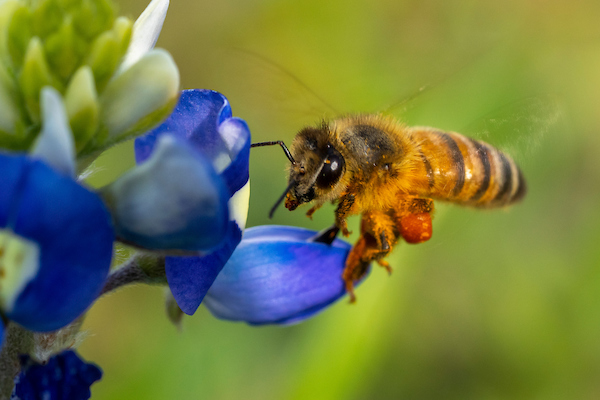
Bee image: Michael Miller/TAMU Marketing & Communications

Imagine a bee attracted to a plant through flower or plant colors or chemical signals from fragrance. Once the bee finds the food source, they inadvertently transfer pollen gathered on their bodies by brushing up against specific flower parts. If pollination is successful from this happy accident, result is the formation of fruit and seeds.

We can increase biodiversity in our home landscape and enhance habitat by choosing native and appropriate non-native pollinator-friendly plants. Perennial native Blue mistflower (Conoclinium greggii) is a butterfly magnet, seasonal fall blossoms that resemble soft lavender-colored pastel brushes atop two-feet high foliage.

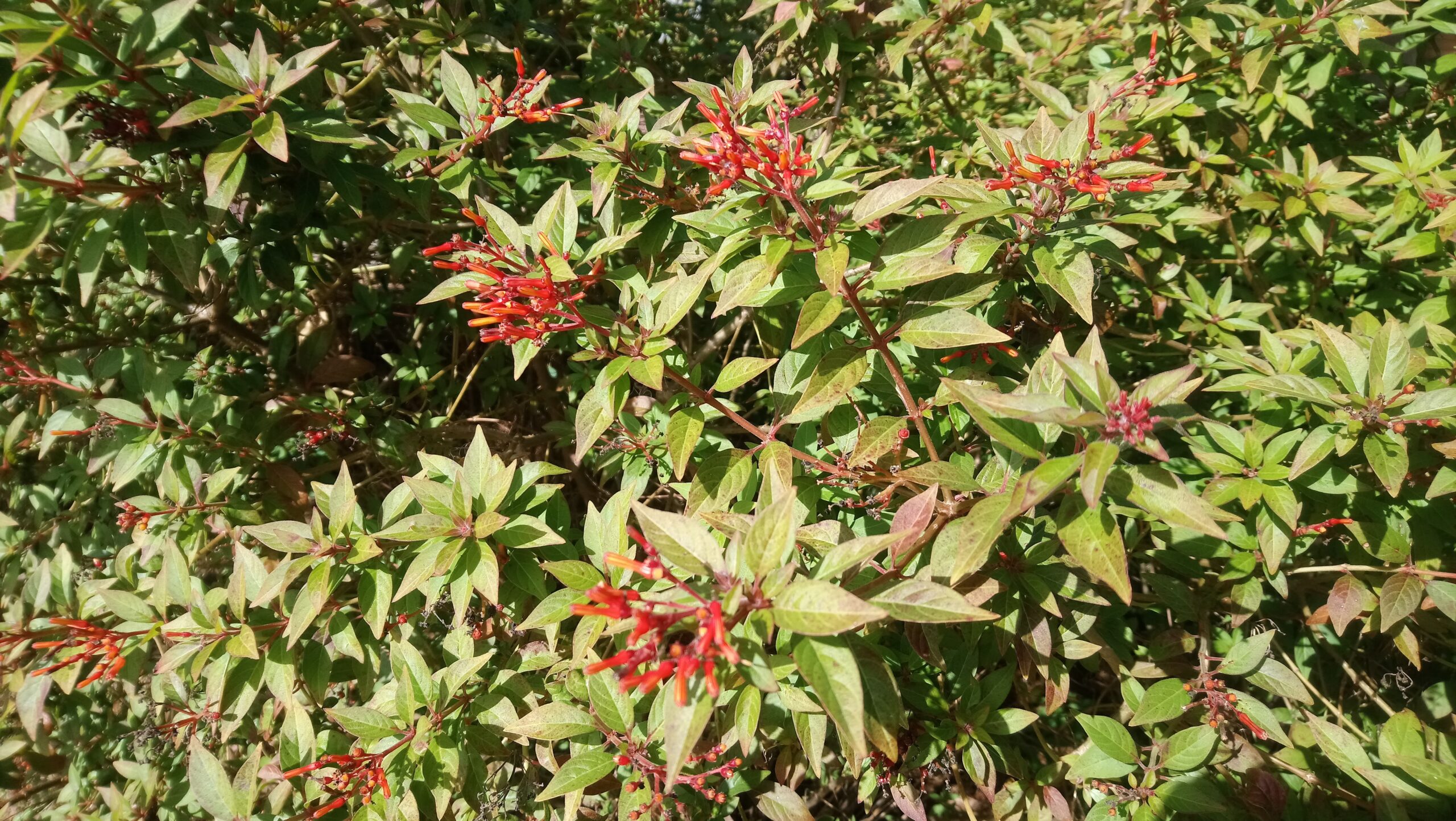
Firebush, Image: Stephen Brueggerhoff

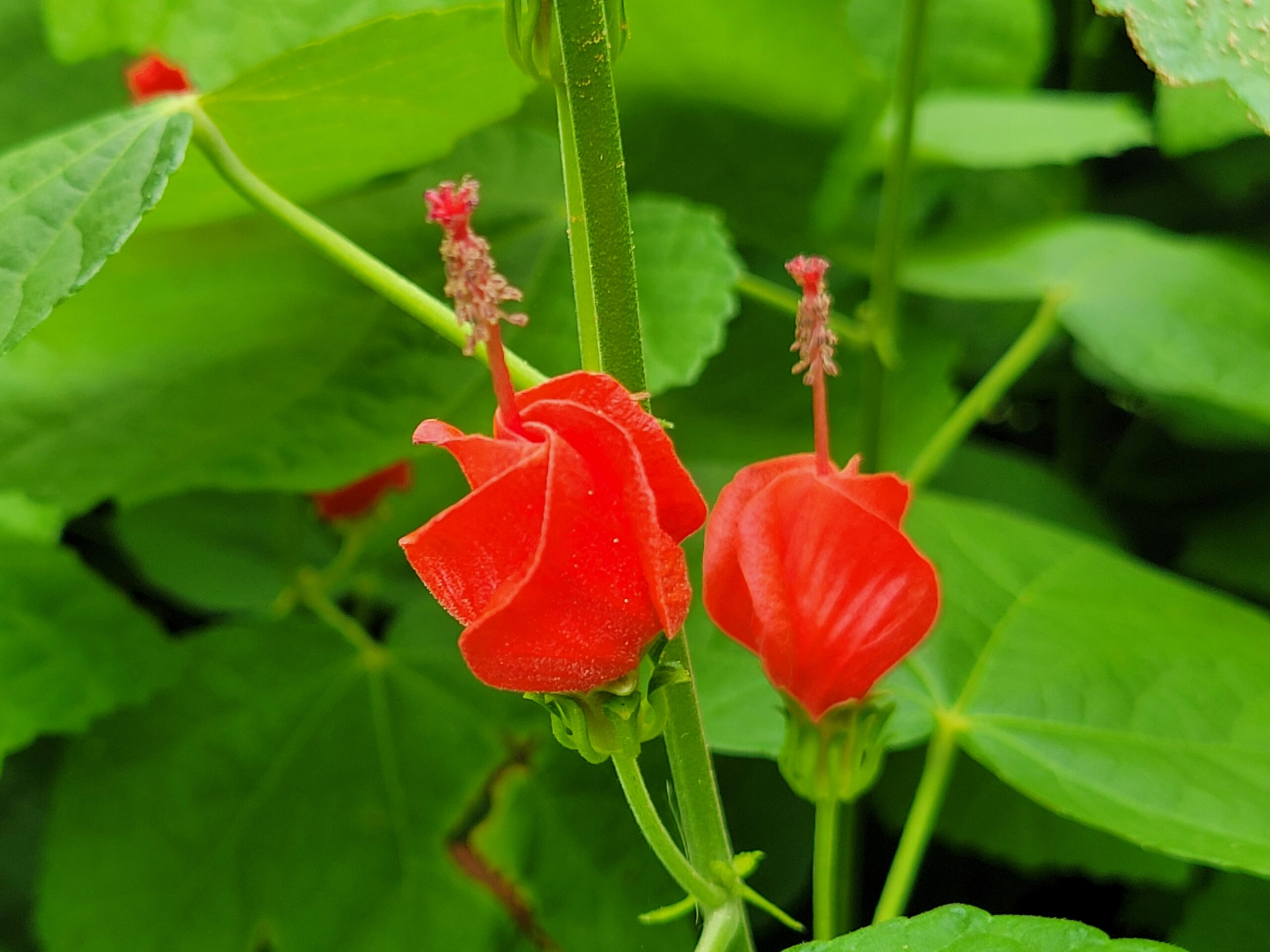
Plan for spring pollinators by planting native Gulf coast penstemon (Penstemon tenuis), offering clusters of delicate purple bell-shaped flowers that gracefully arch almost two feet above mounded foliage. Texas A&M AgriLife Extension offers Texas Superstar®, a program listing tested plants for reliability performing well for Texas consumers. A few choice Texas Superstar® plants visited by hummingbirds as nectar source are four-foot-tall native Turk’s cap (Malvaviscus arboreus var. drummondii), a drought tolerant upright shrub sporting turban-shaped red flowers in spring and fall, and adapted Firebush (Hamelia patens) growing to a mounded three feet with terminal clusters of scarlet tubular blossoms from summer to fall.

Turk’s Cap, Image: Stephen Brueggerhoff

Using different plants from low-growing herbaceous varieties to shrubs and trees enhances habitat by creating vegetative layers and increasing canopy density, additionally providing shelter and nesting sites for animals and insects. Let your garden grow a little messy and create micro-habitats with small brush piles, dead tree trunks and a water feature for thirsty pollinators.

Additional action we can take to attract and sustain pollinator populations is reducing broadcast pesticide application, using pesticides sparingly and depending on the circumstance. Texas A&M AgriLife Extension’s Earth-Kind® offers a set of landscaping principles as a guide to best gardening practices, as well as a Plant Selector tool that enables you to identify plants appropriate for the purpose and your aesthetic. Find more information about Earth-Kind® and best gardening practices from Aggie Horticulture online: aggie-horticulture.tamu.edu. Another resource with valuable information is offered by the Xerces Society, an international science-based nonprofit organization working toward invertebrate and habitat conservation: xerces.org/. They have posted regional fact sheets in their publications section with lists of plants and the kinds of pollinators they attract. I urge you to seek out local and regional resources that will help you improve your landscape and plant wisely for pollinators.

Brazos County Master Gardeners host seasonal programs, including hands-on programs at our Demonstration Idea Garden (DIG). Find out more about these events and programs that make a positive difference in our lives by visiting our website: txmg.org/brazos. I also encourage you to share your gardening stories and let me know what you are interested in reading by browsing online to my Facebook page: facebook.com/horticulturiststephenb. Late Summer is abuzz with great ideas, and I’ll see you in the garden.

Filed Under: In the Garden Blog Tagged With: bees, Brazos County AgriLife Horticulture, Brazos County Master Gardeners, hummingbirds, pollinators

Texas A&M AgriLife Extension Service
Texas A&M University System Member
  • Compact with Texans
  • Privacy and Security
  • Accessibility Policy
  • State Link Policy
  • Statewide Search
  • Veterans Benefits
  • Military Families
  • Risk, Fraud & Misconduct Hotline
  • Texas Homeland Security
  • Texas Veterans Portal
  • Equal Opportunity
  • Open Records/Public Information