• Skip to primary navigation
  • Skip to main content
  • Texas A&M Forest Service
  • Texas A&M Veterinary Medical Diagnostics Laboratory
  • Texas A&M AgriLife Extension Service
  • Texas A&M AgriLife Research
  • Texas A&M College of Agrculture and Life Sciences
Brazos County Master Gardeners
Brazos County Master GardenersTexas AgriLife Extension Service
  • Menu
  • Home
  • About Us
  • Central Texas Gardening
    • Join Us in Our Garden
    • Central Texas Gardening
    • Earth-Kind Landscaping
    • Edible Gardening
    • Rainwater Harvesting
    • Insects (Good & Bad)
    • Monthly Gardening To-Do List
  • Events
  • Members Only
  • Contact Us
  • Garden Articles
    • Going Nuts for Pecans
    • Planting Trees and Wildflowers In the Fall
    • Fall Tips for Gardening Success
    • Cole Crazy: Broccoli, Cabbage and Cauliflower
    • Sage Advice: A Look at Ornamental Salvia
    • Use Best Practice to Conserve Water

Cole Crazy: Broccoli, Cabbage and Cauliflower

September 30, 2026 by stephenbrueggerhoff

Stephen Brueggerhoff, CEA – Horticulture, Brazos County AgriLife Extension; published 9/29/2026

All images unless otherwise noted by Stephen Brueggerhoff

This fall weather is predictably unpredictable as we are patiently waiting for a little consistency and temperance with our daily and nighttime temperature. Regardless of the current state of weather, it is high time to work with cold tolerant cole crop champions in our vegetable garden: broccoli, cabbage and cauliflower.

Know Them to Grow Them

Growing conditions for these veggies are similar, when daytime temps are moderate between 60 and 80 degrees and cool to cold nights at 40 to 50 degrees. It may be counterintuitive based on this information, but cole crops start from seed about 3 to 4 weeks before transplanting for a fall garden. For our region, transplants are placed in the garden mid-September through October. They perform best in fertile, well-drained soils, so planting in raised beds with supplemental composted organic matter is optimal. A general rule of thumb for watering these vegetables is keeping the soil moist but not soaked and modifying the water schedule dependent on seasonal rains. About four weeks after transplanting, apply a half cup of complete fertilizer for each 10-feet of row and beside the plants.

Broccoli
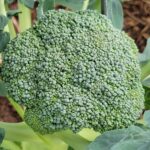
Broccoli head

Broccoli is one of my favorite cool season vegetables to grow. Make sure to space them about 24-inches apart so that they have a chance to produce large heads and side shoots as you harvest. Both broccoli and cauliflower will weather a light freeze and will perform adequately in a sustained freeze if allowed to acclimate from an early planting ahead of winter and covered to prevent freeze damage.

For the novice grower, cauliflower curds and broccoli heads are made up of tightly packed unopened flowers. Harvesting the floral mounds is a simple matter: you would cut the center head when the individual buds begin to swell and are tightly packed. Supporting stems, regrowth of side shoots and leaves from the broccoli can be eaten. Not so with cauliflower as the entire head is harvested for the family meal. A few broccoli varieties that perform well in Brazos County and can begin harvest in less than two months are Calabrese (48 days), Green Comet (40 days), Packman (50 days), Green Magic (57 days) and Lieutenant (60 days). Both Green Magic and Lieutenant are heat resistant and produce adequate secondary side shoots.

Cauliflower and Cabbage
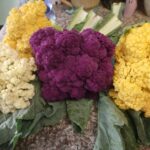
Cauliflower varieties

Cauliflower varietals include Snow Crown (55 days), forming a 2-pound, full dome curd. If you wish to cultivate and keep the snow-white color of Snow Crown, bring the leaves up over the dome and secure at the top, completely covering the developing curd like a blanket to blanch it. If you don’t blanch it, the head will begin to take on a light purple hue and may cause the curds to taste bitter. Colorful cauliflower varietals include bright purple Graffiti (80 days) and orange-yellow Cheddar (68-days). These colored varietals remain sweet, the colors of each appear to improve without blanching.

Like cauliflower, cabbage is a one and done harvested vegetable and relatively easy to grow. I am coordinating a small research demonstration trial at our Demonstration Idea Garden, 2619 West Highway 21 in Bryan to compare their performance and harvest weight. One varietal is Early Jersey Wakefield (75 days), an heirloom introduced in the 1840s and considered a successful standard for home growers. They form a conical head measur ing up to 15-inches long and 7-inches wide, sweet flavor and final harvest weight up to 3 pounds. Early Flat Dutch is another heirloom that is heat tolerant (80 days), producing a more flattened head and finishing at 11-inches wide and averaging 6 to 8 pounds.
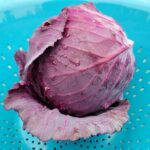
Ruby Ball cabbage

Modern hybrid Red Ball (75 days) forms a compact. rounded 7-inch head and average harvest at 3 pounds. For more veggie related information, browse online to the Brazos County Master Gardener webpage, txmg.org/brazos, to find links to vegetable varieties and vegetable planting guides for the Brazos Valley. Remember you can talk to me about veggie gardening on my radio show Garden Success, a live program hosted on KAMU-FM 90.9 every Thursday and starting at noon. Go cole crazy, my friends and as always, I’ll see you in the garden.

Filed Under: In the Garden Blog Tagged With: Brazos County AgriLife Horticulture, Brazos County Master Gardeners, broccoli, cabbage, cauliflower, vegetables

Second Spring – Fall Gardening

October 14, 2025 by stephenbrueggerhoff

By Stephen Brueggerhoff, CEA – Horticulture, Brazos County AgriLife Extension; published 09/03/2025

I consider our annual fall season to be our second spring, a time of year projecting a promise of cooler weather and just in time to establish a fall vegetable garden. In a way, the fall gardening season is just like asking for second helpings at the table; we’re working our garden beds for a second serving of vegetables in one year, and we can be successful for our efforts with a little preparation and planning.

Time to Refresh and Dig In

Proper Plant Spacing, image Stephen Brueggerhoff

You would use the same set of criteria for your fall garden if you were starting from bare soil as we use for spring gardening. Establish new garden beds in early September, then wait a few weeks to plant. Choose a good location in your landscape that receives 6 to 8 hours of direct sunlight. Remember that light duration and quality diminish in the fall and to compensate with an appropriate garden location. Have a water source nearby for ease of garden watering and consider connecting a drip irrigation system for resource conservation. Develop your vegetable beds to properly space your plants for good air circulation and ease of harvest. You may wish to build garden rows up to 10-inches to provide adequate water drainage if you are having challenges with periodic saturated soils. You can also construct prefab raised garden beds. Make sure to add composted organic matter to your soil as a general practice when establishing veggie beds. If you haven’t done so, I recommend committing a soil test to check on soil nutrient availability, pH and soil salinity levels. Our Brazos County AgriLife Extension office has forms, instructions and collection bags you can use to submit your samples to the Texas A&M AgriLife Extension Soil, Water and Forage Testing Laboratory, and you can always download forms and instructions from their website for the convenience of sending from home: http://soiltesting.tamu.edu/.

Choose Frost Tolerant Vegetables for Planting

In your planning and garden preparation stage, take into consideration the average first frost date for our county, which can range from December 2 to the end of the month and depending on where you live and your local climatic conditions. This information is very useful when planning on the right type of vegetable to put in your garden. I was given sage advice from a colleague, and I offer this to you: when choosing vegetable varieties for a successful fall garden, think of plants in terms of frost susceptible or frost tolerant. This method of choice considers the biology of plants. Frost tolerant plants can withstand light to moderate freezes, and frost susceptible plants cannot. You can continue to successfully cultivate already planted frost susceptible plants in the fall with varieties of tomatoes, bush beans and even okra. Just pay attention to information on days to harvest specific for each variety. You will have a much longer growing season with frost tolerant plants that include the usual suspects like broccoli, carrots, kale, and collards. Plant cool season vegetables like beets, radish and turnips by seed, broccoli, Brussel sprouts, cauliflower and cabbage by transplants. Get ready to germinate carrot and spinach seed by mid-October.

Selected Cole Crops for Fall Veggies

Cauliflower ‘Snow Crown’, ‘Graffiti’, ‘Cheddar’, Image Stephen Brueggerhoff

A few broccoli varieties that perform well in Brazos County and can begin harvest in less than two months are Calabrese (48 days), Green Comet (40 days), Packman (50 days), Green Magic (57 days) and Lieutenant (60 days). Both Green Magic and Lieutenant are heat resistant and produce adequate secondary side shoots. Cauliflower varietals include Snow Crown (55 days), forming a 2-pound, full dome curd. Colorful cauliflower varietals include bright purple Graffiti (80 days) and orange-yellow Cheddar (68-days). To find out when to plant and information related to varietal days till harvest, visit the Brazos County Master Gardener webpage and look for links listed toward the bottom of the home page: txmg.org/brazos.

I invite you to share your ideas and successes by joining me for my live call-in garden show Garden Success airing weekly on Thursdays at 12 pm on KAMU-FM 90.9, podcast available online kamu.tamu.edu/radio/radio-programs/garden-success/

A second helping of seasonal gardening activities can be beneficial to your health and extend your nutritional options throughout the season. Enjoy this second spring, and as always, I look forward to seeing you in the garden.

Filed Under: In the Garden Blog Tagged With: Brazos County AgriLife Horticulture, Brazos County Master Gardeners, broccoli, cauliflower, fall gardening

Cole Crazy For a Winter Garden

October 14, 2025 by stephenbrueggerhoff

This fall weather is predictably unpredictable as we experience warmer temps than average. Texans like to brag ‘if you don’t like the weather, just wait a minute’, and we are patiently waiting for a little consistency and temperance with our daily and nighttime temperature. Regardless of the current state of weather, it is high time to work with two cold tolerant champions in our vegetable garden: broccoli and cauliflower.

Broccoli Harvest, Image: Stephen Brueggerhoff

Growing conditions for cole crops such as broccoli and cauliflower are similar. Optimal growing conditions are when daytime temps are moderate between 60 and 80-degrees and cool to cold nights at 40 to 50-degrees. They perform best in fertile, well-drained soils, so planting in raised beds with supplemental composted organic matter is optimal. A general rule of thumb for watering these vegetables is keeping the soil moist but not soaked and modifying the water schedule dependent on seasonal rains. About four weeks after transplanting, apply a half cup of complete fertilizer for each 10-feet of row and beside the plants.

Broccoli is one of my favorite cool season vegetables to grow and one of the easiest plants to work with. While broccoli is best started from seed in late August, we typically purchase transplants and you may still be able to find a few varieties at your local retail outlet to place in the garden. Make sure to space them about 24-inches apart so that they have a chance to produce large heads and side-shoots as you harvest. Both broccoli and cauliflower will weather a light freeze and will perform adequately in a sustained freeze if allowed to acclimate from an early planting ahead of true winter and covered to prevent freeze damage.

For the novice grower, cauliflower curds and broccoli heads are made up of tightly packed unopened flowers. Harvesting the floral mounds is a simple matter: you would cut the center head when the individual buds begin to swell and are tightly packed. Supporting stems, regrowth of side shoots and leaves from the broccoli can be eaten. Not so with cauliflower as the entire head is harvested for the family meal. A few broccoli varieties that perform well in Brazos County and can begin harvest in less than two months are Calabrese (48 days), Green Comet (40 days), Packman (50 days), Green Magic (57 days) and Lieutenant (60 days). Both Green Magic and Lieutenant are heat resistant and produce adequate secondary side shoots.

Cauliflower varietals include Snow Crown (55 days), forming a 2-pound, full dome curd. If you wish to cultivate and keep the snow-white color of Snow Crown, bring the leaves up over the dome and secure at the top, completely covering the developing curd like a blanket to blanch it. If you don’t blanch it, the head will begin to take on a light purple hue and may cause the curds to taste bitter. Colorful cauliflower varietals include bright purple Graffiti (80 days) and orange-yellow Cheddar (68-days). These colored varietals remain sweet, the colors of each appear to improve without blanching. For more veggie related information, browse online to the Brazos County Master Gardener webpage to find links to vegetable varieties and vegetable planting guides for the Brazos Valley. Broccoli and cauliflower are a good source of protein, minerals and vitamins when properly prepared for the table. Information about these cole crops and other vegetables supports the Texas A&M AgriLife Extension Service initiative Path to Plate, a research-based education program that helps consumers understand how food choices impact their health. Veggie on, my friends and as always, I’ll see you in the garden. The following images are by Stephen Brueggerhoff.

Cauliflower ‘Snow Crown’, ‘Graffiti’, ‘Cheddar’
Left, sunscald on cauliflower

Filed Under: In the Garden Blog Tagged With: Brazos County AgriLife Horticulture, Brazos County Master Gardeners, brocolli, cauliflower, cole crops

Texas A&M AgriLife Extension Service
Texas A&M University System Member
  • Compact with Texans
  • Privacy and Security
  • Accessibility Policy
  • State Link Policy
  • Statewide Search
  • Veterans Benefits
  • Military Families
  • Risk, Fraud & Misconduct Hotline
  • Texas Homeland Security
  • Texas Veterans Portal
  • Equal Opportunity
  • Open Records/Public Information