Stephen Brueggerhoff, CEA – Horticulture, Brazos County AgriLife Extension; published 9/01/2026
All images unless otherwise noted by Stephen Brueggerhoff
Spring rain is a memory that evaporates when faced with maintaining our landscape and lawns during these dog days of summer. As of this writing, there are watering restrictions enacted in Wellborn (Stage 2) and Wickson Creek (Stage 1) Special Utility District to alleviate the pressure from increased residential water usage. We all need to be mindful of our irrigation management practice to conserve our precious resources, and I offer a few tips and tools to serve and conserve.
Estimating Water Application Rate
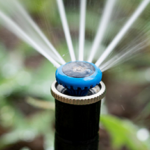
The challenge we face calculating an appropriate watering rate is specific to the site itself as well as fluctuating environmental conditions. A useful resource to aid Brazos County residents in this effort is offered by BVWaterSmart (bvwatersmart.org), an educational partnership between Brazos Valley Groundwater Conservation District, cities of College Station, Bryan and the Wickson Creek Special Utility District and consultation with Texas A&M University. BVWaterSmart offers interactive maps of the Bryan/College Station area displaying weekly water schedule recommendations based on rainfall and plant water needs. The program also provides links to irrigation tips, lawn care videos and assessment tools to guide neighbors toward best water conservation practices. You can fill out a form on the website to receive weekly watering recommendations via email and based on weather in your neighborhood. AgriLife Extension also offers an online application called Water My Yard (watermyyard.org), a science-based tool broader in scope and serving major metropolitan areas like the greater Houston and Dallas-Fort Worth Metroplex. Advice offered is also calculated from real-time data collected from a network of local weather stations, rain gauges and plant biology. You can download an app to your mobile device for ease of use. Once at the website, you create a personalized account and set up your irrigation profile that includes the type of irrigation used such as oscillating, in-ground spray, or drip. Then based on your location, experts send customized weekly water application advice to your email or via text.
Visual Cues, Do Not Fertilize and Common-Sense Tips
Your lawn is going to appear stressed, potentially a little patchy and not as green as you like. It is always best to visually inspect your lawn for initial signs of water-related stress before irrigating your landscape. A simple method for checking on stress is to walk across your lawn and look for reduced leaf bounce-back; grass leaves don’t immediately bounce-back and you leave a trail of steps in your wake. Extension offers a general statement for watering: one to two times per week for a 1 to 2-inch total application during hot and dry weather. And when you are setting your irrigation timers or using an oscillating sprinkler, use the cycle and soak method for watering, meaning deep and infrequent to reduce water runoff. Our goal is to effectively infiltrate the soil to promote a deep rootzone and increase a plant’s resistance to drought. With cycle and soak irrigation, we are dividing the total recommended runtime into multiple applications, of course observing restrictions and recommendations from your local water authority. The minimum time between cycles will vary from 30 minutes to an hour depending on your soil texture. You can find additional information about the cycle and soak method, irrigation tips for home application and more from agrilifelearn.tamu.edu, a website hosting free downloadable fact sheets and sponsored by Texas A&M AgriLife Extension Service.
Warm season grasses are focusing energy for growth in the cooler seasons of spring and fall. While they are not truly dormant in summer, performance and root growth is not as vigorous. Because of this biological activity and environmental stressors, fertilization for grass should not be applied at this time of year. Remember that we fertilize our lawns once in the spring, and if needed once in the fall. Don’t forget to keep your ornamental gardens mulched with at minimum 3-inches bark chips to conserve water and reduce ambient temperature at the soil interface.
Remember to include technology and data with observable conditions to avoid overwatering. There are excellent local water conservation programs supported by the City of College and managed by Water Resources Coordinator Jennifer Nations. Jennifer hosts a weekly program on KAMU-FM 90.9 called Waterful Wednesdays airing at 7:42 am available on KAMUs website. You can also check out my live call-in garden show Garden Success airing weekly on Thursdays at 12 pm on the same radio station and chat about best gardening practices. Cycle and soak, my fellow Brazos County residents, to serve and conserve and I’ll see you in the garden.