Stephen Brueggerhoff, CEA – Horticulture, Brazos County AgriLife Extension; published 11/10/2026
All images unless otherwise noted by Stephen Brueggerhoff
Friends, relatives and neighbors have a personal connection with pecans, a highly nutritious and prized nut that is a treasured food in home life. I rediscovered our collective affection for pecans when our Brazos County Master Gardeners and I exhibited at the Brazos Valley Fair and Rodeo at the end of October. We offered families to crack a few pecans with three different pecan crackers. It was fun to help the kids figure out the best method to crack these morsels and get a few stories from the parents about the joy they had in their youth cracking pecans with their families. We shared best methods for cultivating pecans at home and varieties for growing in our area, as well as best gardening practices for Brazos Valley.
Pecan Varietal Choices
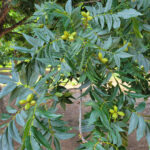
Pecan (Carya illinoinensis) is indigenous to southern North America and northern Mexico, a subsistence food for ancestral Native Americans within the plant’s natural range. The species, referred to by George Washington as the Illinois Nut, was oftentimes small, half to one inch in size with a hard shell. The paper shell varieties we love to cultivate had its origins in San Saba, Texas in the late 1880s by the hybridization efforts of entrepreneur E.E. Risien. There are hundreds of varieties that have been developed to date, with a handful that are appropriate for home or commercial production within our region. A few are Lakota, Kanza and Caddo, each offering a distinctive look, disease resistance and high-quality kernel. Varietal choice should also consider the plants’ pollination biology. Pecans are wind-pollinated and are monoecious, meaning they produce separate male and female flowers on the same plant from mid to late-spring. Varieties are identified as Type I, those shedding pollen before the female flowers are receptive, and Type II varieties are shed after the female flowers are receptive. While some varieties are described as self-pollinating, it is always best to consider planting both types of trees in your orchard. Texas A&M Aggie Horticulture provides fact sheets to identify pecan varieties that perform best in our area, as well as planting and cultivation information. Aggie Horticulture also offers a world-renowned Pecan Orchard Management Short Course cultivating producers this coming February 23 to 26, 2027.
Cultivating Pecan Trees
While they often become ornamental shade trees in time, they require annual maintenance for quality nut production. Be aware that grafted pecans can take up to seven years to bear nuts. Keep in mind you must give them room to grow as our stately trees can reach 100-ft in height and spread 50-foot or more at maturity. A modest-sized lot in the city may provide enough space to grow a single pecan variety. Pecan trees can be planted from late November through February. Whether locating in the front yard or out in the pasture, ensure planting them in well-draining soil.
Consider Entering a Pecan Show
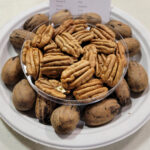
You may be cultivating prized varieties on your property, gaining a reputation for growing the best pecans in your community. You can extend that pride by participating in a regional pecan show. The Extension offices in Austin County and Washington County annually host pecan shows, no entry fee for submission, and open to the public and producers alike. Austin County is accepting submissions through November 23 and Washington County through November 17. Contact me via email to explore participating in their shows or check each counties’ website to submit prior to stated deadlines. Each county has similar rules for submission, and each hosts public program and identifies winning entries that are then sent to regional pecan shows for judging this coming January. All state regional winners will compete at the Texas Pecan Growers Association Annual Conference and Trade Show mid-July 2027.
Enjoy Texas Pecans
Pecan harvest is in full swing, and fresh cracked and in shell pecans are available at local retail outlets. Except for Thanksgiving week, The TAMU Pecan Orchard hosts a weekly pecan sale every Friday, from 8 am to 4 pm, at TAMU Research Park, 1500 Research Parkway, Lot 109 on campus until mid-December. Are you interested in learning more about pecans, fruits and vegetables, and serving your neighbors with knowledge? I am accepting applications for the 2027 Texas Master Gardener Training program. We start the classes in January, have limited seating and would I would be delighted to help improve your gardening skills. Contact me via email [email protected] to learn more. Enjoy your pecans, and I’ll see you in the garden.