• Skip to primary navigation
  • Skip to main content
  • Texas A&M Forest Service
  • Texas A&M Veterinary Medical Diagnostics Laboratory
  • Texas A&M AgriLife Extension Service
  • Texas A&M AgriLife Research
  • Texas A&M College of Agrculture and Life Sciences
Brazos County Master Gardeners
Brazos County Master GardenersTexas AgriLife Extension Service
  • Menu
  • Home
  • About Us
  • Central Texas Gardening
    • Central Texas Gardening
    • Earth-Kind Landscaping
    • Edible Gardening
    • Rainwater Harvesting
    • Insects (Good & Bad)
    • Monthly Gardening To-Do List
  • Events
  • Members Only
  • Contact Us
  • Garden Articles
    • Cole Crazy: Broccoli, Cabbage and Cauliflower
    • Sage Advice: A Look at Ornamental Salvia
    • Use Best Practice to Conserve Water
    • Hardy Hibiscus for the Garden
    • Groundcovers for Garden Beauty
    • The Joy of Composting

Conserving Water in the Lawn

May 1, 2026 by stephenbrueggerhoff

Stephen Brueggerhoff, CEA – Horticulture, Brazos County AgriLife Extension; published 4/14/2026

Images by Laura McKenzie and Michael Miller, Texas A&M AgriLife Marketing and Communications

Fresh water is a necessary and limited natural resource that we all can play a part conserving by adjusting our landscape irrigation practices. According to the US Drought Monitor (drought.gov/states/texas/county/brazos), Brazos County is bisected undergoing Extreme Drought (southern region) and Severe Drought (northern region) conditions, applying stressors that affect us daily and into the future. I encourage you to make a difference and offer a few resources and tips to conserve this precious resource.

Estimating Water Application Rate

Lawn irrigation image by Laura McKenzie, TAMU Marketing & Communications

Calculating your watering rate is specific to the site itself, the grass species that make up our lawn, as well as fluctuating environmental conditions. There is a resource offered by BVWaterSmart (bvwatersmart.org) developed in partnership between Brazos Valley Groundwater Conservation District, cities of College Station, Bryan and the Wickson Creek Special Utility District with consultation from Texas A&M University. BVWaterSmart offers interactive maps of the Bryan/College Station area displaying weekly water schedule recommendations based on rainfall and plant water needs. The program also provides links to irrigation tips and assessment tools to guide neighbors toward best water conservation practices. You can fill out a form on their website to receive weekly watering recommendations via email and based on weather in your neighborhood. AgriLife Extension also offers an online application called Water My Yard (watermyyard.org), an app that helps take the guesswork out of when and how much to water. Advice offered is also calculated from real-time data collected from a network of local weather stations, rain gauges and plant biology. You can download an app to your mobile device for ease of use. Once at the website, you create a personalized account and set up your irrigation profile that includes the type of irrigation used such as oscillating, in-ground spray, or drip. Then based on your location, experts send customized weekly water application advice to your email or via text.

Timing is Key to Fertilization

St. Augustinegrass image by Michael Miller, TAMU Marketing & Communications

Turfgrass such as Bermudagrass, St. Augustinegrass and Zoysiagrass are actively growing with the warmup of early spring. While they are not truly dormant in summer, performance and root growth is not as vigorous. Because of this kind of biological activity, fertilization of turfgrass should be applied once in the spring, and if needed once in the fall. A good rule of thumb for scheduling spring fertilizer application is an estimated 4 to 6 weeks after the last frost date, basically the second time you have mowed your lawn and estimated mid-April for the Brazos Valley region. Like most plants, grass utilizes several available nutrients in the soil for growth, and nitrogen is the nutrient required in the highest quantity. My recommendation is to commit a soil test to determine if there are any potential nutrient deficiencies. Urban soil tests are administered for a minimal fee from the Texas A&M AgriLife Extension Soil, Water and Forage Testing Laboratory in College Station. Forms can be found online soiltesting.tamu.edu or visit our Brazos County Extension office for forms. You will receive a report with recommended landscape application rates and based on said deficiencies.

The general formula for annual application is 1-pound of the percentage of nitrogen in the product per 1,000 square feet. Example: a bag of fertilizer has a 21-0-0 ratio (21 percent nitrogen.) Divide 1-pound by 21-percent to apply 4.75 pounds of product per 1,000 square feet. Don’t forget to measure the square footage of your lawn to put advice into action. I offer reconsidering products containing a combination of herbicide and fertilizer. Pre-emergent herbicides and fertilizer should be applied individually and specifically to an identified lawn weed or nutrient deficiency. The best method of weed control is encouraging optimal lawn health with scheduled watering, maintaining appropriate mowing height and sensible fertilizer application.

Visual Cues and Commonsense

You can visually inspect your lawn for initial signs of water-related stress prior to automatically watering. A simple method for checking on water-related stress is to walk across your lawn and look for a reduced leaf bounce-back; grass leaves don’t immediately bounce-back and your steps leave an indention. Time to water on! Extension offers a general statement for watering – one to two times per week for a 1 to 2-inch total application during hot and dry weather. However, it is prudent to include technology and data with observable conditions to avoid overwatering. There are excellent local water conservation programs supported by the City of College and managed by Water Resources Coordinator Jennifer Nations. Jennifer hosts a weekly program on KAMU-FM 90.9 called Waterful Wednesdays airing at 7:42 am available on KAMUs website. You can also check out my live call-in garden show Garden Success airing weekly on Thursdays at 12 pm on the same radio station and chat about best gardening practices. Conserve water when you can, my fellow Brazos County residents, and I’ll see you in the garden.
Filed Under: In the Garden Blog Tagged With: Brazos County AgriLife Horticulture, Brazos County Master Gardeners, Brazos Valley WaterSmart, fertilizer, lawn, water conservation, Water My Yard app

Texas Sage Brings Color to Drought Tolerant Landscapes

April 2, 2026 by stephenbrueggerhoff

Stephen Brueggerhoff, CEA – Horticulture, Brazos County AgriLife Extension; published 3/31/2026

All images unless otherwise noted by Stephen Brueggerhoff

Texas sage (Leucophyllum frutescens), also called Cenizo, has made quite an impact in the commercial and retail trade over the past decades. They are woody evergreen shrubs valued for low maintenance, silver green foliage and contrasting pink to mauve flowers. Its native distribution in Texas is in to calcareous soils of the Rio Grande Plain, Chihuahuan Deserts, and Edwards Plateau Ecoregions. There are two additional species found in Texas; Brewster County barometer bush (Leucophyllum candidum) that is endemic to its namesake county, and Big Bend barometerbush (Leucophyllum minus) that has a distribution from Pecos, Brewster and Presidio County, and travelling north into Eddy County in New Mexico.

Texas Sage Valued for Foliage Form and Flower Color

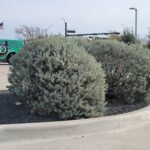
Pruned Texas Sage Shrubs image

The beauty of Texas sage is expressed through bicolored foliage, gray green to green on the upper leaf surface and silvery gray below from a fine matte of silver hairs. The species expresses sparse branches that can reach 10-foot tall and 6 feet wide.  The plants’ height and spread can be controlled by either selective limb pruning or shearing. There are varieties such as ‘Compacta’ that reaches 4-foot tall and wide. A newer hybrid ‘Microburst’ (L. frutescens x candidum) reaches 3.5-feet tall, keeping a consistent uniform shape, is tolerant of variable soil texture and offers fragrant flowers. All species and varieties are drought tolerant, and care should be taken to cultivate them in well-draining soil. The plants require minimal maintenance once established and should not be fertilized unless there is a nutritional deficiency documented through soil test.

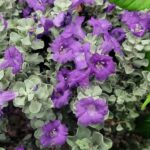
Texas Sage variety 'Microburst' image

Texas sage is valued for floral displays of magenta bell-shaped flowers that contrast with foliage color. They are effectively used as a hedge, can add focus as a mid-accent and grouped planting in a xeriscape landscape bed. They can also be cultivated as specimen planting in a patio container. Flowers are produced on new wood, and the shrub can be pruned early to mid-spring and then maintained with light pruning in a natural shape for the remainder of the year. Discontinue pruning in fall as the plant begins a period of winter dormancy. The plant is also called Barometer bush for a coincidental habit of flowering after seasonal rain. They typically begin blooming in early summer and then sporadically dependent on environmental conditions through to fall. While the plant responds well to formal pruning into box or ball shape, continued techniques used to create topiary will reduce flower production. While shrub flowering is induced in a high humid environment, care should be taken to not overwater the plant as they are susceptible to root rot.

A Number of Varieties To Fit Your Aesthetic

There have been quite a number of varieties that have become available over the past few decades to fit your lifestyle and aesthetic:

  • ‘Silverado’ produces fuchsia flowers on silver foliage with denser canopy than the average Texas sage
  • ‘Silver Spirit’, a 2026 release, is reported to be tolerant of wetter soil conditions and have modest growth at 5-feet tall and 3-foot wide
  • ‘Green Cloud’ is a standard and was released in 1983 by what was then called the Texas Agricultural Experiment Station (Texas A&M AgriLife Extension Service today). ‘Green Cloud’ offers consistent shades of green foliage with dark pink to magenta blooms and is a more prolific bloomer than other varieties. ‘White Cloud’ was also released in 1983 by the Texas Agricultural Experiment and produces white blooms.
  • ‘Lynn’s Legacy’ is a selection derived from species L. langmaniae, native to mountains in the Chihuahuan Desert of Mexico. The variety is named in honor of plantsman Lynn Lowery (1917-1997). The shrub offers a longer flowering period than others on the market and grows 5 feet tall and wide.
  • ‘Desperado’ is 5 feet tall and 5 feet wide with silvery-green foliage and lavender-pink blooms.

Springtime allows us an opportunity to rejuvenate our gardens, and Texas sage may just fit your needs as you redesign your landscape. Just remember to keep Texas sage high and dry for continual enjoyment throughout the year. You can always chat with me on Garden Success, my live call-in garden radio show every Thursday at 12 pm on KAMU-FM 90.9 with your spring planting. I always look forward to sharing gardening tips with you, and I’ll see you in the garden.

Filed Under: In the Garden Blog Tagged With: Brazos County AgriLife Horticulture, Brazos County Master Gardeners, In the Garden blog

Brazos County Master Gardeners Make a Difference

March 17, 2026 by stephenbrueggerhoff

Stephen Brueggerhoff, CEA – Horticulture, Brazos County AgriLife Extension; published 3/17/2026

All images unless otherwise noted by Stephen Brueggerhoff

Our Texas A&M Extension office enriches our community with programs related to agriculture and natural resources, 4-H and youth development, family and community health, and horticulture. We are a team making a positive impact to the benefit of our community through education programs. I am privileged to have the support of our Brazos County Master Gardeners, a dedicated team of volunteers promoting best practices in gardening and resource conservation to our community.

Brazos County Master Gardeners Educating the Public

Learning at the Library series - Keyhole Gardens

Brazos County Master Gardeners are 36 years old and growing. We offer programs to improve gardening skills and share best practices from our garden with you through seminars, outreach events, training and education. We recently offered seminars at the Greater Brazos Valley Builders Association Home and Lifestyle Expo on March 14 and 15, exploring growing tomatoes, native plants, trees, edible and pollinator gardening, and more. We invite the public to our monthly member meetings exploring gardening topics such as container gardening and seasonal color change-outs with horticulturist Henry Flowers on March 24. At the Clara B. Mounce Library in Bryan, we are hosting a gardening display through end of March promoting science literacy and home gardening practices. Also at the library, our Brazos Valley Gardening series starts in May supporting our Learning at the Library programs. Our planner is jam-packed with gardening education programs, and I recommend one signature “be at” event that can help with your spring garden itch and support our efforts.

BCMG Plant Sale image

Mark Your Calendar – Spring Plant Sale

Brazos County Master Gardeners are hosting our annual Spring Plant Sale on March 28, Saturday from 8 a.m. to noon at the Brazos County AgriLife Extension office parking lot located at 4153 County Park Court in Bryan. Our Master Gardeners are excited to offer a variety of plants that will fit your gardening needs. This year’s spring plant sale features ornamentals to liven up your landscape, Texas native plants, culinary herbs, a plethora of tomatoes and pass-along plants lovingly hand-raised from members’ homes. Don’t forget butterflies and hummingbird plants for habitat gardening. Experienced Brazos County Master Gardener members and I will be on hand to answer your gardening questions. Brazos County Master Gardeners is a nonprofit organization, and all proceeds support our education programs and maintenance of our demonstration garden we call The DIG. Find out more about the event from our Master Gardeners’ website at txmg.org/brazos.

Visit Us at the DIG

BCMG The DIG image

Speaking of The DIG and never resting on our mountain laurels, we are hard at work cultivating thematic gardens that demonstrate a wide range of plants that can be grown with minimum care under Brazos County growing conditions. The DIG is located at 2619 Texas 21 West in Bryan. We invite you to stroll through the individual gardens that focus on Texas A&M AgriLife select Texas Superstar® and Earth-Kind® plants, an arboretum with trees appropriate for our region, vegetables, Texas native plants, roses, pollinator plants, bulbs and many more plant varieties. Our rainwater harvesting system is inspirational for conservation of a precious resource. We are continuing a research demonstration project with our Texas Master Gardener training class, trialing 5 tomato varieties for performance and yield. Celebrity, Independence Day, Green Zebra, Texas Superstar® designated variety called Tycoon, and dwarf tomato Fred’s Tie-dye. I will post a report on the Brazos County Master Gardener’s website about mid-June of our intern’s success with best performing tomato recommendations for our residents. While it is open daily during daylight hours for self-guided exploration, we host seasonal monthly garden-related programs and are looking forward to a public tomato tasting event in late May with fruit cultivated from our tomato research plots. I am proud of our Brazos County Master Gardeners and proud to be part of a dynamic AgriLife Extension team of professionals that continue to make a positive impact in our community. You can always chat with me on Garden Success, my live call-in garden radio show every Thursday at 12 pm on KAMU-FM 90.9 with your landscaping plans, challenges and successes. We’ll see you at the annual Spring Plant Sale on March 28, remember we are friends when we meet and of course, I’ll see you in the garden.

Filed Under: In the Garden Blog Tagged With: Brazos County AgriLife Horticulture, Brazos County Master Gardeners, Learning at the Library, Spring Plant Sale, The DIG

Native Flowering Trees: Mexican Plum and Redbud

March 5, 2026 by stephenbrueggerhoff

Stephen Brueggerhoff, CEA – Horticulture, Brazos County AgriLife Extension; published 3/03/2026

All images unless otherwise noted by Stephen Brueggerhoff

I received questions from residents about tree recommendations appropriate for the home landscape. I ask my clients to make a base map of their property and include documentation of existing conditions: size of the lot, use of the outdoor environment, buildings adjacent to the home regarding height and casting shadows, existing vegetation, H.O.A. and municipal restrictions, and location of water source. I also ask the client their intent for planting a tree; is the reason aesthetics such as seasonal leaf color or flower, food source for animals, erosion control, cooling the house by shading, etc.

There Is A Useful App for Tree Choices

On average, homes are built on a quarter acre lot. The size of the property and house, as well as footprint of the open space are foundational to the kind and size of tree that can be planted. Texas A&M Forest Service offers design and tree choice tools from Texas Tree Planting Guide (https://texastreeplanting.tamu.edu). The link to Tree Planting and Care section offers design considerations when choosing the right tree for the right place in your landscape. The site also offers a Tree Selector section with choices for large, medium or small trees, as well as for leaf duration (deciduous or evergreen) and native trees. Imagine that you would like a unique small Texas native tree offering seasonal flowers or fruit for wildlife. Two that immediately come to mind are Mexican plum (Prunus mexicana) and Redbud (Cercis canadensis).

Mexican Plum for Flower and Fruit

Image - Mexican plum in flower

Mexican plum is a deciduous tree naturally distributed from Kansas to Missouri, on down to Louisiana and into Central to Texas southeast Upper Gulf Coast Bend. Habitat and soil type is variable, found at woodlands edge in river bottoms to pastures. They are often single-trunked, non-suckering trees considered to be a small stature tree to 35-ft. I have seen mature specimens in the city measured 25-ft tall, and I keep in mind that tree height can be affected by local environmental conditions and stressors such as soil compaction via foot traffic, or drought and malpruning and not reach its full potential. This tree’s bark varies as it matures; from a smooth and shiny mahogany color like a mature cherry tree, to contrasting striations presented within large, stacked chunky plates. The canopy can become somewhat dense, and each leaf tends to curl with age. Leaves turn a copper-red color in fall, standing out amongst a mosaic of yellow and brown colors typically seen from other plants in fall.

Mexican plum flowers prior to foliage emergence at this time of year, providing a much-needed nectar resource for insects at winter’s end. I adore the simple open petals expressed from each flower. The fragrance offered by Mexican plum flowers depends on your personal experience. I have caught a scent that is fresh like baby powder from a single tree and have been bowled over from a cloud of sweetly pungent fragrance offered by a crowd of these trees. Pollination gives rise to 2-inch diameter berries that turn golden yellow color to magenta, and ripen August to September. The berries are edible and you can make an excellent jam with them, or if you prefer, a tolerable adult beverage.

Redbud for Limited Space

Image - Redbud variety 'Oklahoma' in flower

Redbud is a smaller tree and may be a better choice for your yard. The definition of the height for small trees is those reaching up to 20 feet and only require a 60 square-foot planting area. These beauties can reach 30 feet, are sparse-branched and produce heart-shaped leaves. A profuse number of blooms develop prior to spring leaf emergences along the branches rather than at the ends of stems, a phenomenon called cauliflory. They also provide an outstanding nectar resource for insects in early spring. Redbud will bear flowers by the fourth year after transplant.

There are three Redbud species naturally distributed in our state. Eastern redbud (C. canadensis var. canadensis) is found from the Atlantic coast towards central Texas and is more commonly available from nurseries. The Texas redbud (C. canadensis var. texensis) ranges from Oklahoma through central Texas and into northern Mexico, and Mexican redbud (C. canadensis var. mexicana) is distributed west of the Pecos River down into northern Mexico. There is a Texas redbud selection named ‘Oklahoma’ that performs quite well in our region. This species was discovered in the Arbuckle mountains of Oklahoma in 1964 and released to the public soon thereafter. ‘Oklahoma’ redbud is more compact in growth and perfect for small spaces, topping at maturity with an estimated 18 feet. The flowers are a deeper magenta color than the Eastern redbud, and the foliage retains species characteristics of thick and wavy waxy leaves, making this selection a bit more drought tolerant. There are many more small native trees that are appropriate for your needs, and resources such as Texas A&M Forest Service Texas Tree Planting Guide is a valuable tool. Always focus on your intent for planting a tree, be flexible with your choice dependent on existing site conditions and your aesthetics in choosing the right plant for just the right space. We can always talk about trees on Garden Success, my live call-in garden radio show every Thursday at 12 pm on KAMU-FM 90.9. Tree cheers to you, take care and I’ll see you in the garden.

Filed Under: In the Garden Blog Tagged With: Brazos County AgriLife Horticulture, Brazos County Master Gardeners, Mexican plum, native Texas trees, Redbud

Cultivating Potatoes and Bulb Onions

February 23, 2026 by stephenbrueggerhoff

Stephen Brueggerhoff, CEA – Horticulture, Brazos County AgriLife Extension; published 2/017/2026

All images unless otherwise noted by Stephen Brueggerhoff

Potatoes and onions go together like peas in a pod, veggies that are often cooked together and are a staple in the Brueggerhoff household. These veggies are also cultivated and harvested around the same time, each with their own unique origins and growing habits.

Global Travelers

Modern potatoes originate in South America along the Andes, from coastal Chile to Argentina, Bolivia and Peru and estimated to arrive in Europe in the 1500s. Commercial Texas production includes the High Plains (Panhandle), the Rolling Plains, the Winter Garden (generally north of Laredo and south of San Antonio); and the Rio Grande Valley. Bulb onions (Allium cepa) have been domesticated over centuries and originate from central Asia. Historically, members from the Columbus expeditions cultivated bulb onions in Hispaniola as early as 1494, introducing a commodity that became well established as a staple in North America by the nineteenth century.

The Eyes Have It: Potato Cultivation

Potatoes are starchy tubers with vegetative buds (eyes) that produce above-ground leafy stems and eventually form tubers at the tips of root structures. The tubers we use for planting are called seed potatoes that have been cured and stored from previous years’ harvest. Irish potatoes are the tubers appropriate for cultivating in our area and include varietals like red flesh Norland, La Soda and Viking, white Kennebec and Superior, and popular yellow flesh Yukon Gold.

Chitting Lasoda Potatoes image

Choose well-formed seedlings three to four inches in length, about the size of a large hen’s egg. You can cut larger seedlings into quarters or half depending on their size and make you have at least one good eye on these new seed pieces. If cut, dry for several days in a well-ventilated room, allowing the pieces to scab over and seal the large wound. You can pretreat these pieces with dusting sulfur applied by coating pieces in a paper lunch bag. Wear a mask, gloves and old clothes. Sulfur will stain clothes, can irritate your respiratory system, some may have an allergic reaction to the dust, and keep in mind that slightly rotten egg smell will linger in the room. You may not have time to chit your potatoes, which is the process of sprouting about 4 weeks before planting. Chitting potatoes gives them a shorter growing time in the soil for potentially heavier yield.

To plant, prepare a well-draining, enriched bed forming 12-inch-high berms. Flatten the berms to 8-inches and 12-inches wide. Prep the planting site with a band of fertilizer in 4-inch-deep trenches and on each side of the row. Apply 2 cups in each trench per 30-foot row. Create a 3-inch-deep trench down the middle of the row and space seedlings 12-inches apart, cover and water in the rows. We don’t want to plant the seed pieces too deep as they have the potential to rot. The seed potato will develop new tubers along the stem below ground and above the seed potato. You will be pulling up soil along the sides of the row as the emerging stems elongate. Apply 3 tablespoons of fertilizer per 10 feet of row alongside when the plants are about four inches tall. The basic rule of thumb for watering is maintaining adequate moisture but not oversaturating the soil. Harvest time relies on visual cues from the plant; once the above-ground plant begins to die, it is time to harvest and on average about 100 days from planting. To dig out, use a spading fork and aim for about ten inches away from the plant to prevent damaging the spuds. Push down the fork and lever up the soil. Shake away soil from the tubers but don’t hose them down. We want them to dry and harden their skin first before dusting off excess soil. Store in a cool, well-ventilated room such as a bench in your garage or in a dark pantry.

Don’t Cry Now: Bulb Onion Cultivation

Onion harvest image

The onion bulb is a storage organ for the plant. The bulb produces a fan of hollow, blue-green leaves that facilitate photosynthesis. Each leaf is associated with the inner ring of the bulb, so when you laterally cut open an onion you see rings that are made of fleshy modified leaves. Bulb onions enlarge and form in response to specific day length and temperature, identified as long and short-day onions. Onions have a habit of bolting when ambient temps become too hot, and for our region it is best to transplant short day varieties like yellow 1015 Texas Supersweet, Sakata Red, Yellow Granex or Texas Early White that require up to twelve daylight hours for production in fall or late winter. Each can take up to 110 days to harvest.

The starts are purchased in a gathered bunch of around 30 to 40 plants. Transplant with full sun exposure in well-draining soil in beds raised 6 to 10-inches high. Bed prep should include 3 pounds of fertilizer over 100 square feet of garden area mixed within the top 3-inches of soil. Plant at 3/4 –inch deep at 3-inches apart. Cultivation includes keeping the garden bed free of weeds that will compete for natural resources and impact the size of the developing bulb. Apply another round of fertilizer when the plants form 6 leaves, about 1/2 cup for each 10-feet of row, spread evenly between the rows and water in the product. Water evenly and as the soil begins to dry. Harvest when the leaves begin to fall over, then leave in the garden to dry for up to two days. Remove the tops and roots and allow them to continue to dry and paper up in well-ventilated boxes. You can then store the cured onion bulbs in your refrigerator crisper or in a wire or ventilated mesh bag in a cool garage or utility room.

Growing these veggies can be a rewarding experience, patience is key to cultivation and conserve water resources in any gardening endeavor. Keep conserving natural resources while growing your veggies and I will see you in the garden.

Filed Under: In the Garden Blog Tagged With: Brazos County AgriLife Horticulture, Brazos County Master Gardeners, bulb onions, potatoes, vegetables

Time to Prune Trees and Shrubs

February 6, 2026 by stephenbrueggerhoff

Stephen Brueggerhoff, CEA – Horticulture, Brazos County AgriLife Extension; published 2/03/2026

All images unless otherwise noted by Stephen Brueggerhoff

Are you ready for spring pruning? Hands trembling in anticipation of cleaning up the yard after the freeze? I offer caution for a few weeks, assess the extent of the damage to your ornamental trees and keep your eye on a ten-day forecast to begin landscape maintenance tasks.

Make a Plan Before Pruning Trees

Cleaned and sharpened hand pruners

The best way to start any activity is with intention and a plan rather than jumping in with loppers at the ready. The reason we prune trees is to train, improve flower quality, restrict growth, and maintain basic architecture. Pruning during late winter is an appropriate season regarding a tree’s reduced metabolism. Keep in mind that pruning some plants such as azalea or gardenia will have to wait until after they express seasonal flowers. Follow guidelines promoted by Texas A&M Forest Service regarding pruning maintenance for oak trees to reduce the potential for oak wilt infection. More info online at texasoakwilt.org. Ornamentals with berries such as hollies and pyracantha produce fruit on old or second-year growth and require strategic pruning in the current year.

Thinning and Heading Pruning Cuts

Identify pruning angle image

Two types of pruning cuts used are thinning and heading. Thinning is the removal of entire branches to its point of origin, minimizing overall tree size and enhancing the structure. Heading cuts inhibit apical dominance, which is growth concentrated at the tip of a branch or stem. Once committed, heading cuts support shoot development along the side of a branch and below the cut. Limit your pruning by looking at the overall structure of your tree or shrub. Identify and remove all dead, broken or diseased limbs and prune the material back into a strong lateral branch. Removing this kind of material may be enough activity to maintain a natural shape for your trees. Commit additional corrective pruning such as removing narrow branch crotches or water sprouts on trees. A general rule of thumb for shaping is to trim no more than one third of the total canopy. You may have to delay additional pruning for another year depending on the amount of material to be removed.

Branches should be cut just outside a bark ridge and branch collar where the branch attaches to the trunk. With pencil-thin branches, make your pruning cut at a 45-degree angle above an outward facing bud or node. Make purposeful, clean cuts and always clean your tools and keep the blades sharp after use.

Shaping Shrubs

Formal pruning shrub image

Two forms of shaping shrubs are formal and shaggy. If formal, the best practice is shearing the hedge form wider at the base than at the top. This technique avoids shading foliage at the base of the hedge. Shading can cause sparse growth at the bottom of the form and can create holes in the canopy. Species often trained into a round or box shape are Dwarf yaupon (Ilex vomitoria), Chinese fringe-flower (Loropetalum chinense), Glossy abelia ‘Sunrise’ (Abelia x grandiflora), Purple sage (Leucophyllum sp.), and even Barbados cherry (Malpighia glabra). Shrubs like American beautyberry (Callicarpa americana) or multi-trunk trees like Crape myrtle (Lagerstroemia sp.) perform best by keeping them a bit shaggy and in their natural form using selective thinning cuts.

Basic Techniques for Pruning Fruit Trees

Fruit trees will soon show signs of annual growth, and it is now time to prune and shape them. Annual pruning fruit trees is essential for maintaining a balanced architecture supporting fruit development, increases new growth for next year’s production and enhances air circulation and light penetration through the canopy. Pruning is committed from mid-February to mid-March at a time when the trees are growing out of dormancy. Strategic heading and thinning encourage bud expression and vegetative growth. I have had an experienced orchardist tell me to prune peach trees just as the branches begin to blush; prune when the pink petals of the tree show through opening buds as they emerge from dormancy. Thinning can also mean selectively culling fruit, lighten the load and promote development of larger fruit.

Pruning to Form Central Leader or Open Canopy

The two primary forms used for different types of fruiting trees are called central leader and open canopy. Central leader is a pruning form used for pear, plum, persimmon and apple trees. The habit of these fruit trees is to sprout branches with vertical growth, and shaping uses a combination of targeted heading cuts and limb spreaders such as wood shims or weights tied in the middle of a supple scaffold branch to force it into a lateral structure. The result looks like a pyramid, and you will maintain a central trunk combined with heading cuts to encourage lateral branches that maintain the structure. Open canopy pruning is committed to stone fruit like peaches and nectarines, creating an open center structure and scaffold branches forming a vase shape. We’re creating a structure where fruit weight is evenly distributed throughout the canopy. There is additional information for you to explore regarding best pruning practices from Texas A&M AgriLife Extension Earth-Kind® Landscaping program, as well as Fruit and Nut Resources online at aggie-horticulture.tamu.edu.

Keep conserving natural resources, maintain and sustain your trees and shrubs and I will see you in the garden.

Filed Under: In the Garden Blog Tagged With: Brazos County AgriLife Horticulture, Brazos County Master Gardeners, Earth-Kind® Series, pruning, Trees

« Previous Page
Next Page »
Texas A&M AgriLife Extension Service
Texas A&M University System Member
  • Compact with Texans
  • Privacy and Security
  • Accessibility Policy
  • State Link Policy
  • Statewide Search
  • Veterans Benefits
  • Military Families
  • Risk, Fraud & Misconduct Hotline
  • Texas Homeland Security
  • Texas Veterans Portal
  • Equal Opportunity
  • Open Records/Public Information